
 CLdN Heysham to Dublin 14 April 2026
14 April 2026


On a cloudy and wet Monday evening we boarded the Power at 22.45. The forecast was for clear skies and low winds from the south-west, but it didn’t feel very calm on boarding and so it was to prove for most of the survey.
The crew as always were very welcoming and friendly, so after a bit of supper we retired to our comfortable cabins hoping to start the survey at around 7am after breakfast.
In the morning we were greeted by grey, wet skies and a brisk southerly wind that was hitting the vessel broadside, inducing a 2-3 metre swell and a substantial roll and ensuring a challenging deck for tracking moving birds through our binoculars!
However, we were undeterred after a slightly delayed but good breakfast, we started surveying at around 07.45 after it became clear the weather going to persist. The first sightings were of Kittiwake and Gannet, with a real surprise visitor fluttering past – an all-white butterfly which unfortunately we couldn’t identify. Our only clue being the proximity of the Calf of Man as a possible destination as it was heading in a northerly direction. Our next unusual sighting was of a pair of Swallow heading north, on a reciprocal course to the pelagic birds which were all headed south without exception!
Auks and Kittiwake made up the majority of sightings in groups of up to 60, and the first Fulmar arrived at 08.50, followed by several more solo individuals. Our next unusual observation was of the number of Shag we started to record well out from the Irish coast, as neither of us had seen them so far out before – they usually occur in numbers close to shore in Dublin Bay and by the Point of Howth. They seemed to be actively seeking food. As we headed towards Dublin, Manx Shearwater started to become more visible as the winds and sea state rose.
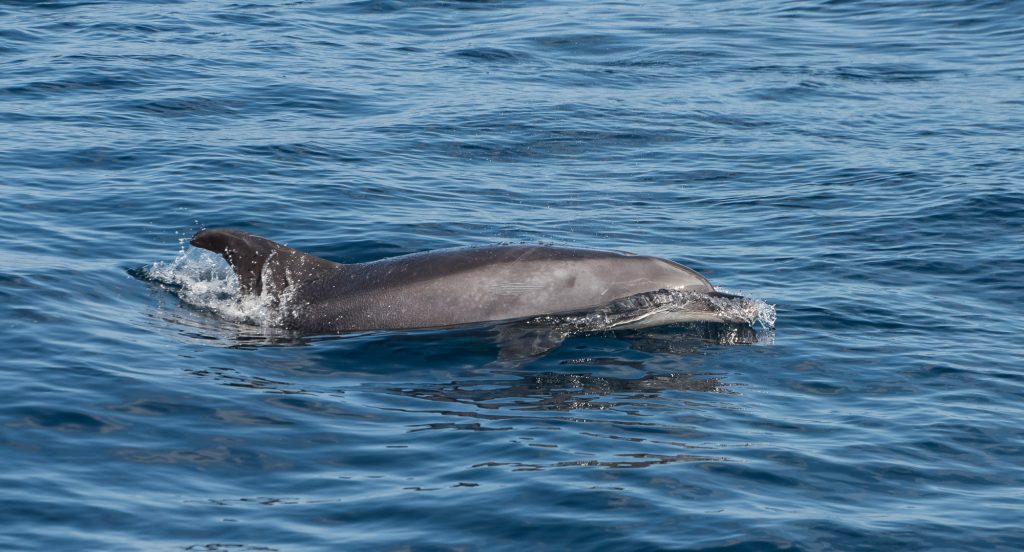
Only a single dolphin was viewed on the outbound leg, this a Bottlenose Dolphin tracking parallel to the ferry. The only addition to the mammal list was the resident Grey Seal as we headed into Dublin harbour inside the breakwaters.
After an exciting approach to the mouth of the River Liffey when winds had increased to 35 knots, we got onto the CLdN berth at 10.30 with assistance from the tug, with the captain and his crew showing consummate skill in the face of the very challenging conditions.
After the ferry’s loading turnaround, we departed Dublin at 14.00, and immediately after clearing the breakwaters to start the survey, two Grey Seal appeared in quick succession, bobbing about looking as at us looking at them, closely followed by a single Common Dolphin.
The sightings on the return leg seemed to be in much smaller groups or as individuals, with Fulmar, Guillemot, Razorbill, and Manx Shearwaters flicking by. Thankfully the weather had eased somewhat whilst we were in port, and conditions were much more comfortable.
The shags were again seen feeding out from Dublin Bay, and as we cleared the bay Manx Shearwater and Kittiwake appeared in greater numbers, taking advantage of the greater lift available from the wave height and increasing wind. Unfortunately, the rain returned and only a lone Manx Shearwater was seen after this, dramatically contouring the 3 metre troughs and shooting skyward into the stiff breeze.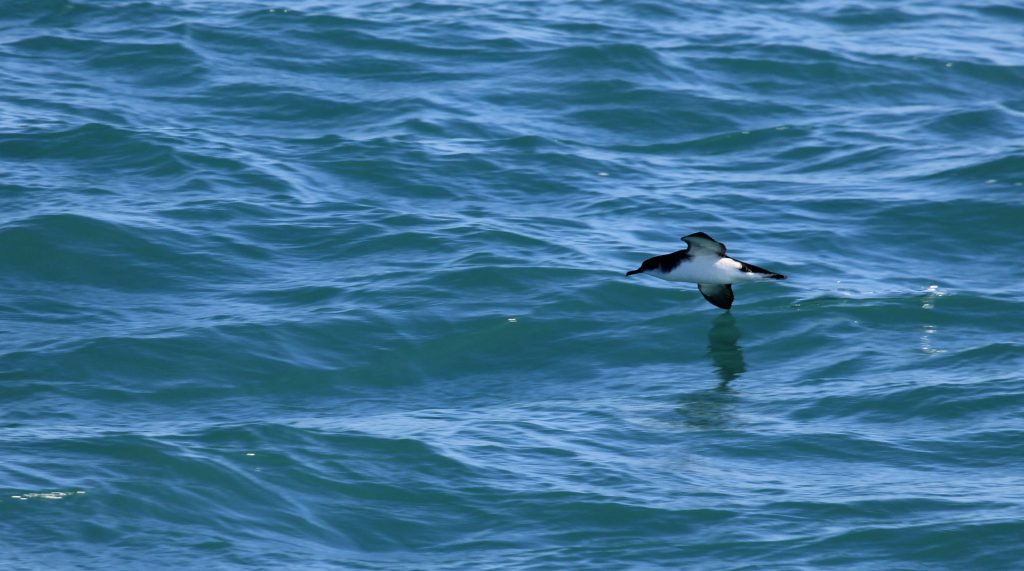
Manx Shearwater Photo: Steve McAustland
Sightings slowed for a couple of hours until we approached the Isle of Man, when the quiet was broken by a single seal, quickly followed by a pod of six Common Dolphin seeming to take flight from the top of the rolling 2-metre swell as they headed to ride the waves in the ship’s bow. Their antics were a welcome sight, and their enjoyment was clear to see as they tumbled about in the swell. One of them even completed a full somersault not 50 yards from the vessels bridge, exploding into crescendo of white surf in the following trough! The pod tracked us for three minutes, zig-zagging hither and thither and generally cavorting energetically in front of the vessel. Almost immediately another solo Common Dolphin appeared on the port quarter, a quarter of a mile distant. As usual, you blink and miss it! – the sightings that is!!

As we approached the calmer waters of Morecambe Bay, a single Common Gull sat alone on the lightening sea, with the weather moderating to a sea state of 3 from the 6 we had been through further out. The weather conditions through the survey were not what the weather forecast had predicted, with the ship’s crew confirming this – the Irish Sea can be a fickle monster! Dusk was slow coming in and we were able to survey un until 20.30.
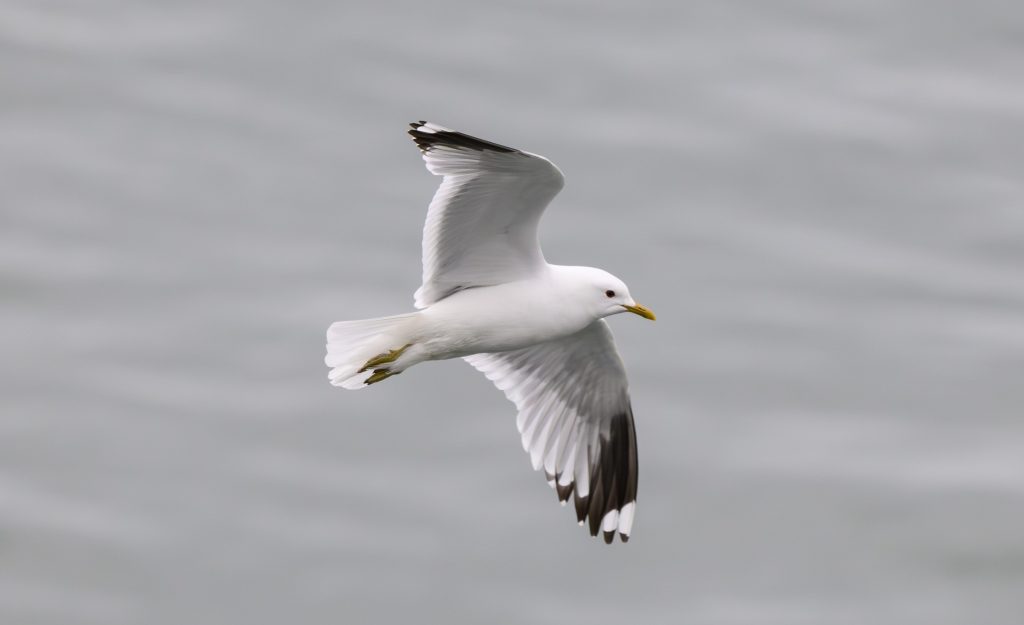
We were very well looked after and made very welcome by Captain Kalm and his crew of the Power, who are exceptional. From the delicious food the cook provided to the friendly assistance the crew offer, the ship is immaculate and runs like a well-oiled machine. All this really does make these surveys possible and a pleasure to do, a big thank you to CLDN for their continued support.
Jon Steele and Don Ainsworth, Research Surveyors for MARINElife (Registered Charity No. 1110884; Registered Company No. 5057367)
Weather
Outbound: Sea state 4-5, Visibility 2-4, Clouds 8, Swell 2-3m Wind 22-37knots S-SE
Return: Sea state 3-6, Visibility 1-5, Clouds 8, Swell 1-2m Wind 15-38knots S-SE
Summary of sightings
Seabirds
Auk sp. Alcidae 342
Black Guillemot Cepphus grylle 1
Common Gull Larus canus 1
Cormorant Phalacrocorax carbo 3
Fulmar Fulmarus glacialis 14
Gannet Morus bassanus 14
Guillemot Uria aalge 132
Herring Gull Larus argentatus 6
Kittiwake Rissa tridactyla 37
Manx Shearwater Puffinus puffinus 74
Razorbill Alca torda 47
Shag Gulosus aristotelis 18
Terrestrial Birds
Swallow Hirundo rustica 2
Marine Mammals
Bottlenose Dolphin Tursiops truncatus 1
Common Dolphin Delphinus delphis 8
Grey Seal Halichoerus grypus 3
Seal species 1
