
 MARINElife survey report: Dover-Calais 15 May
15 May 2026

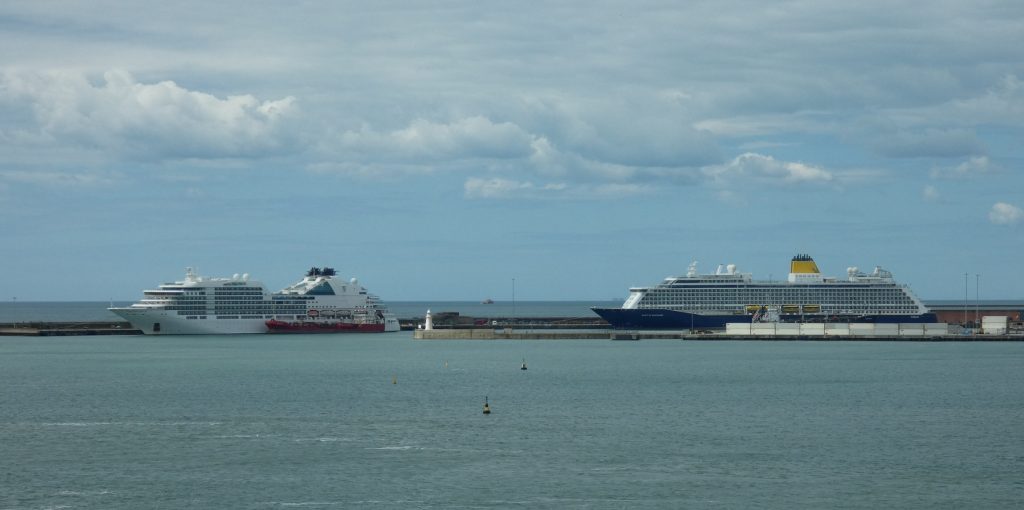
It was a lovely drive down to Dover on a sunny May morning. The cruise season is now underway and two cruise ships, the Seabourn Ovation (about to sail to Norway) and Saga’s Spirit of Discovery (sailing to Sweden) both moored at the cruise terminal.
I arrived at Dover port, parked my car and walked to obtain my port pass. During that walk I was fortunate enough to hear the call of a Chough, a rare corvid, recently reintroduced to the Dover area with collaboration of several charities including Kent Wildlife Trust and Wildwood Trust. On obtaining my pass I returned to my car and proceeded to the lanes for boarding the Cote d’Opale.
Once onboard the vessel, I was escorted to the bridge and prepared for the survey ahead. The survey transect is undertaken from the exit of the Dover outer breakwater to the entrance of the Calais breakwater. This is done to discount the birds inhabiting the port area as it is not strictly a pelagic environment. There are usually several hundred birds within this protected area, many of whom rest from inclement weather or take advantage of feeding opportunities created by the wash of the vessels docking and leaving the harbour.
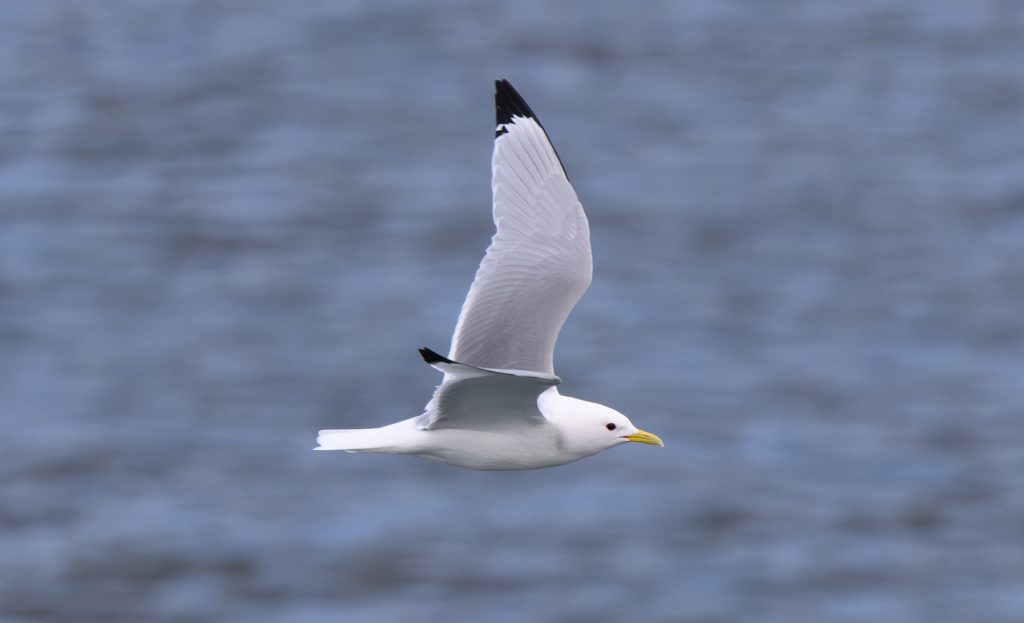
Bird sightings were sporadic comprising of Herring Gull, Great Black-backed Gull, Kittiwake, Gannet and a single auk and tern seen. Despite calm seas, no marine mammals were seen. The cuttlefish bones recorded in the April survey were also absent.
Approaching the French Coast, there was an increasing amount of spume on the surface. This results from dissolved organic matter in the water column being mixed vigorously in the turbulent surf zone near the shore. This action injects large amounts of air into the water and creates countless small air bubbles that are immediately surrounded by the surfactant molecules. This creates a flexible, stabilizing film around each air pocket that prevents the bubbles from bursting immediately. The resulting collection of persistent, stabilized bubbles is what we recognize as ocean spume.
On entering Calais harbour, off transect, I was rewarded by seeing some of the Harbour Seal that haul out in the protected harbour environment. Half a dozen animals were there, though sometimes as many as a dozen can be seen in the area.
Ninety minutes later, the Cote d’Opale was returning to England. During the turnaround the wind and sea state had increased, making the chance of mammal sightings more difficult.
Once again, bird sightings were sporadic, with sightings of Kittiwake, Herring Gull, Great and Lesser Black-backed Gull and the occasional Gannet. The increased wind resulted in Fulmar being seen, their mastery of the air currents evident.
Sadly, no marine mammals were recorded whilst on transect, but it was good to appreciate the presence of the seals and the organic biodiversity in the ocean creating the ocean spume.
As the vessel entered Dover outer breakwater, I collected my belongings and returned to the passenger area to disembark.
I wish to thank the DFDS Captains, officers and crew of the Cote d’Opale for enabling me to survey on this route. A special mention must go to the officer on the information desk for retrieving my thermos mug from the bridge that I’d left there.
Carol Farmer-Wright, Research Surveyor for MARINElife (Registered Charity No. 1110884; Registered Company No. 5057367)
Weather
Outbound: wind W-SW force 4, good visibility, sunny with initial glare
Return: wind SW force 6-8, good visibility, increased cloud
Summary of sightings
Seabirds
Black-headed Gull Chroicocephalus ridibundus 6
Common Gull Larus canus 3
Fulmar Fulmarus glacialis 5
Gannet Morus bassanus 8
Great Black-backed Gull Larus marinus 4
Herring Gull Larus argentatus 26
Kittiwake Rissa tridactyla 19
Lesser Black-backed Gull Larus fuscus 3
Auk sp. 1
Gull sp. 2
Larus sp. 15
Tern sp. 1
