
 Met Office 2026 May 28-29
29 May 2026


28 May Day 4
It would appear Cory’s Shearwater in the southwest approaches aren’t such a big thing after all. Having got excited about seeing two the previous day we saw 28 in four hours of surveying before we got to K1 and a further 50 while we were stationary at K1. However, there really weren’t many birds about and we only logged 78 birds in four hours, Cory’s turned out to be the most numerous followed by Manx Shearwater.
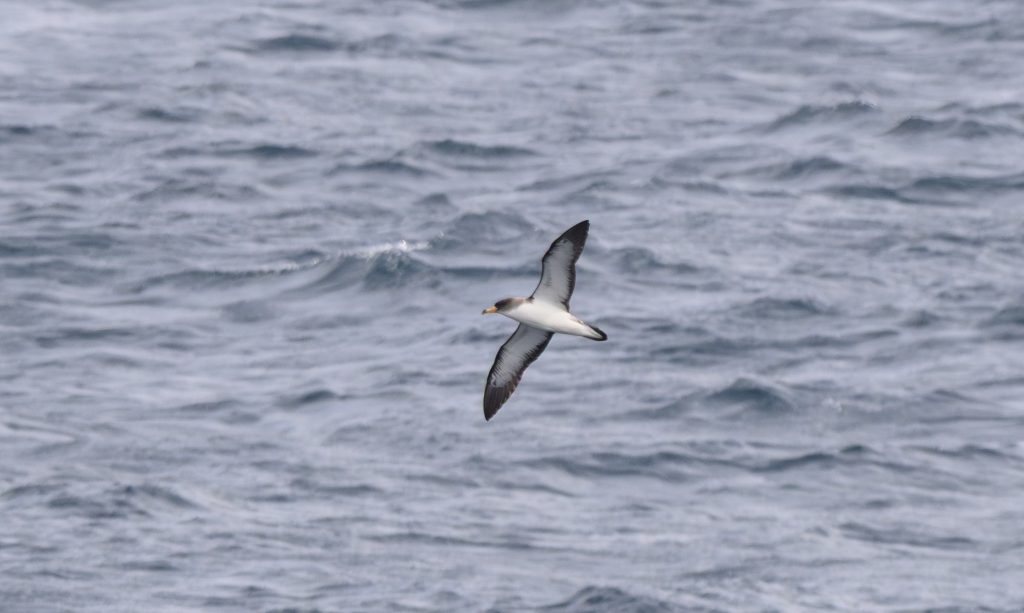
We also saw four Sooty Shearwater, these birds breed in the southern hemisphere and would be breeding at this time of year, so it was a little surprising to see them. However, as these birds don’t breed until they’re four or five years old perhaps one and two-year old birds choose to stay north rather than expend their energy flying all the way south. A rapid fly past by an adult Pomarine Skua also brightened the morning.
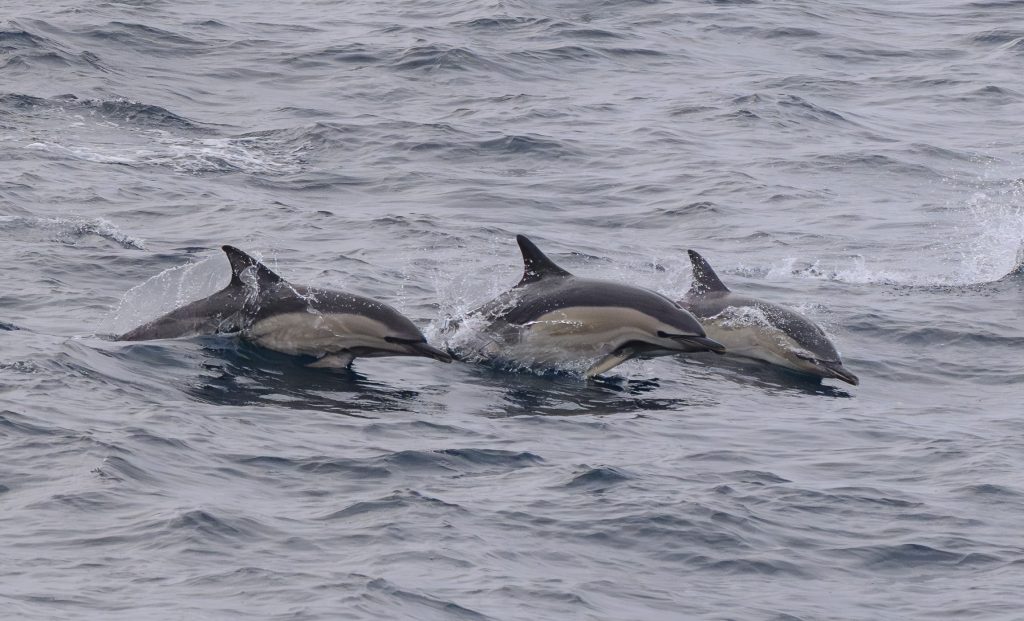
Sea conditions weren’t really kind to us though; we had a sea state five all morning and that made spotting cetaceans a challenge. We did, however, finally manage to log cetaceans while we were surveying with two groups of Common Dolphin recorded. One of the groups even coming into the bow.
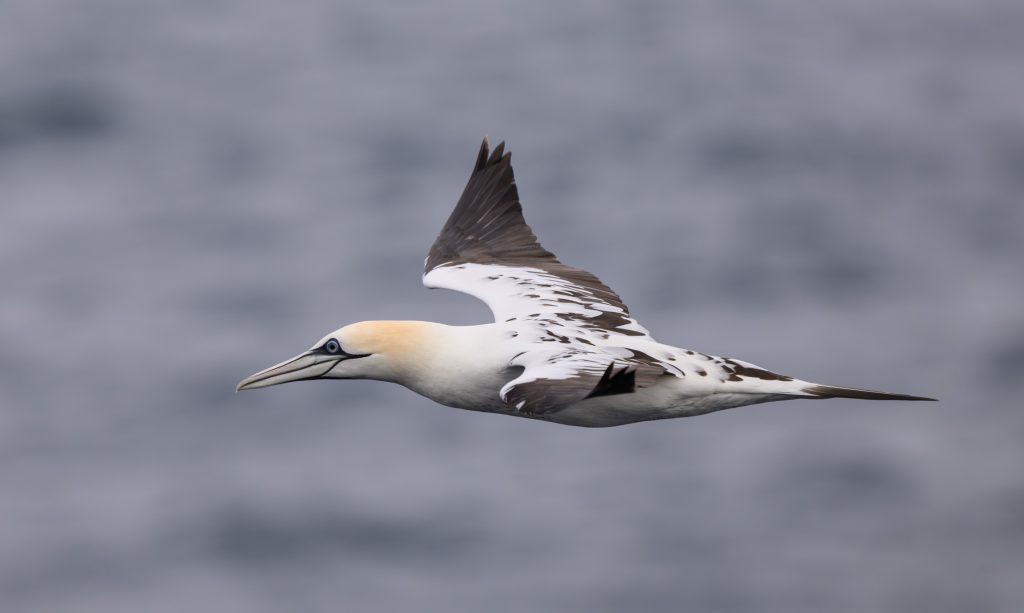
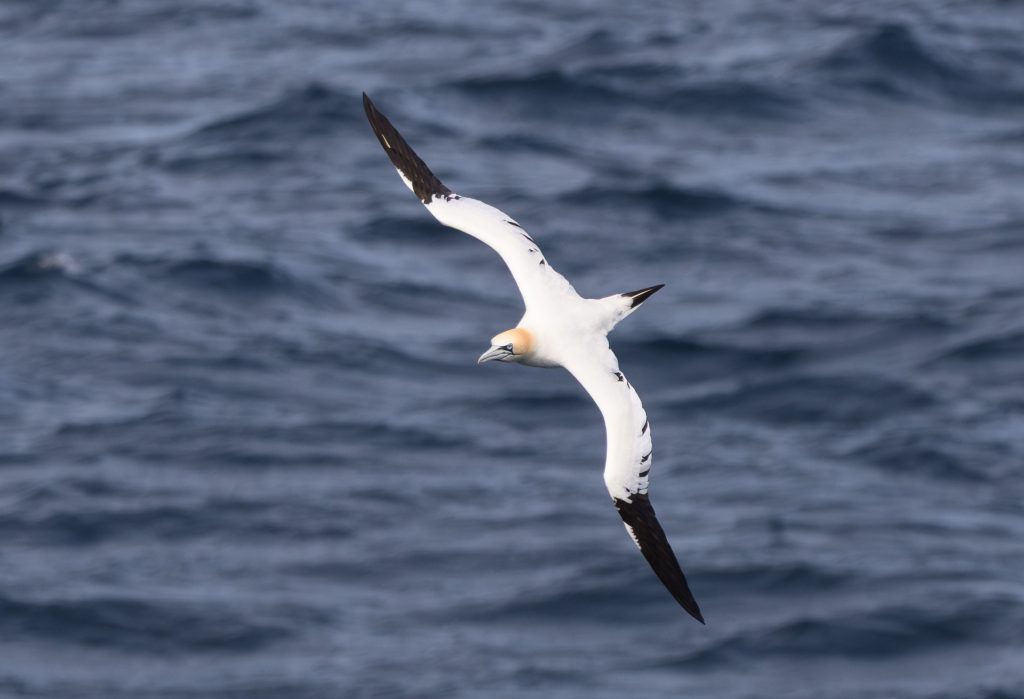
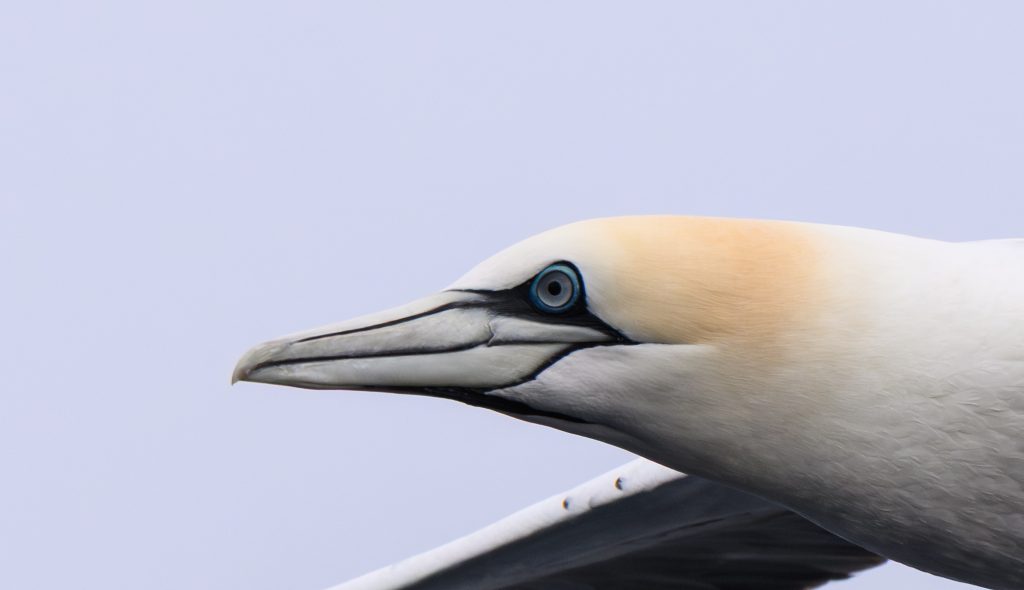
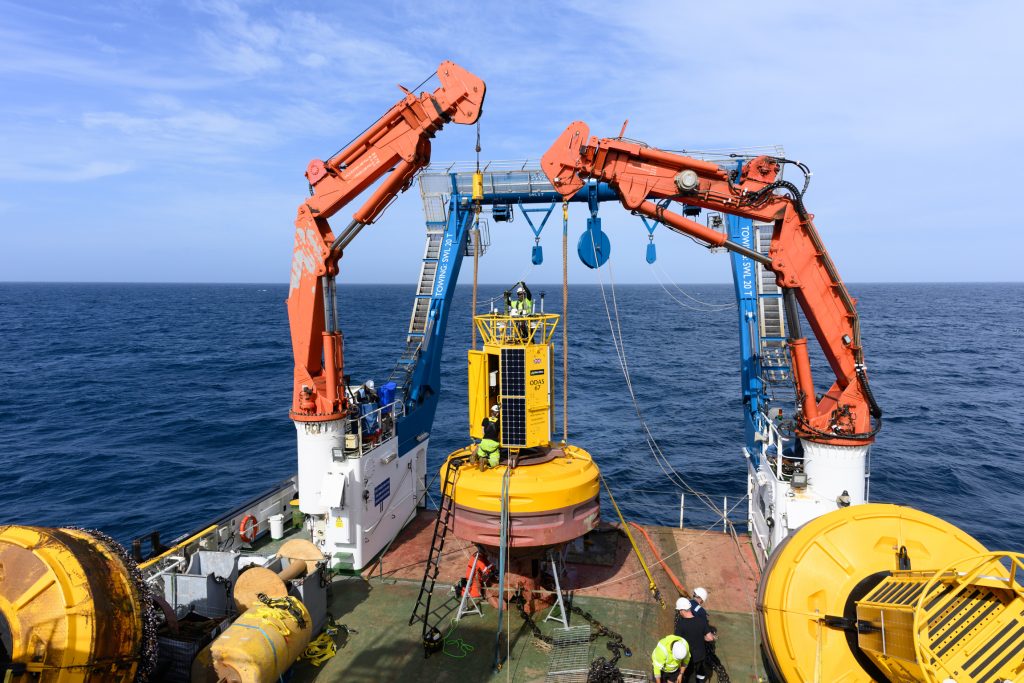
Once on site at K1 there was nothing for us to do except keep an eye open for wildlife and watch the crew get the buoy on board. For a couple of hours there were quite a few birds flying past, particularly Cory’s Shearwater and a few Gannet circled the Discovery when we stopped but they soon moved off when they realised we weren’t about to go fishing. Though it did give the opportunity to get photos of birds in the I3 and I5 plumages, approximating to three and five years old. After noon there was barely a bird to be seen for the rest of the day.
Once the buoy was on board it had to be stood up so that the tower could be swapped over. Even though securely lashed to the deck it still looked a little precarious sat on the deck of the Discovery.
There were some complications with the mooring chain on this buoy which meant that it wasn’t put back in the water until sunset – no evening surveying for us as we set off towards our next target – the Brittany buoy.
29 May Day 5
Today was going to be one of those rare days at sea, a whole day with flat calm seas. It started off with a very light breeze and sea state two but soon dropped to one and was either one or zero for the rest of the day. Skies were mainly clear too, so all in all a glorious day to be at sea.
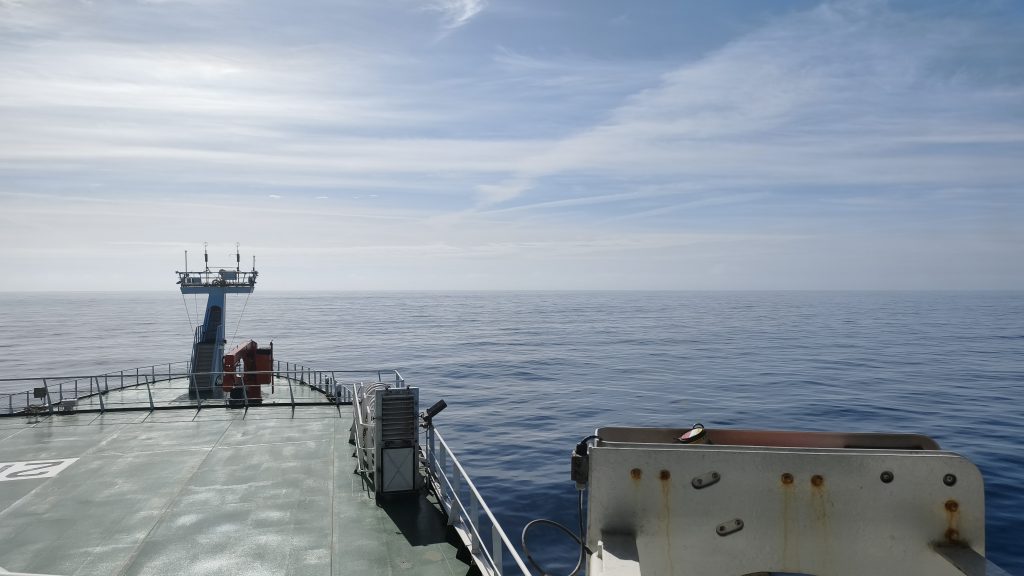
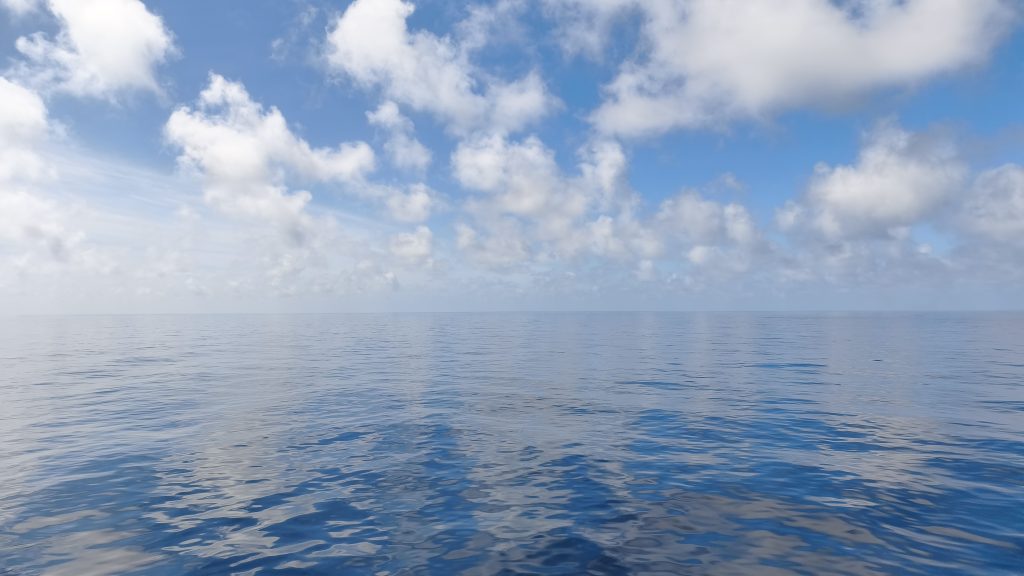
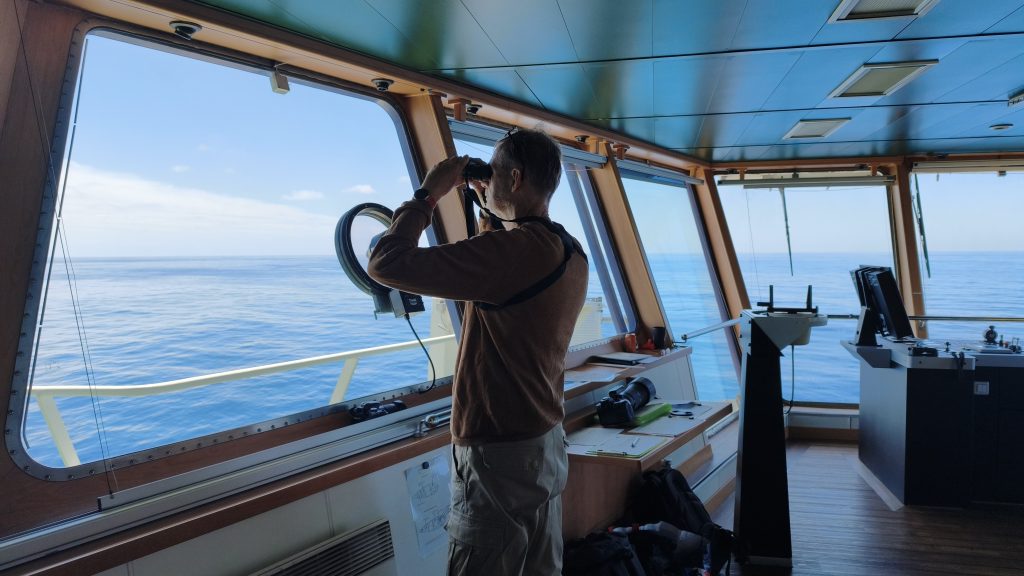
Unfortunately, light winds are often not great for birds because they must expend a lot more energy flying and quite a few of the birds we saw were just sat on the sea. There were also not that many of them, in 10 hours of surveying we only logged 135 birds. However, what we did see was quite interesting.
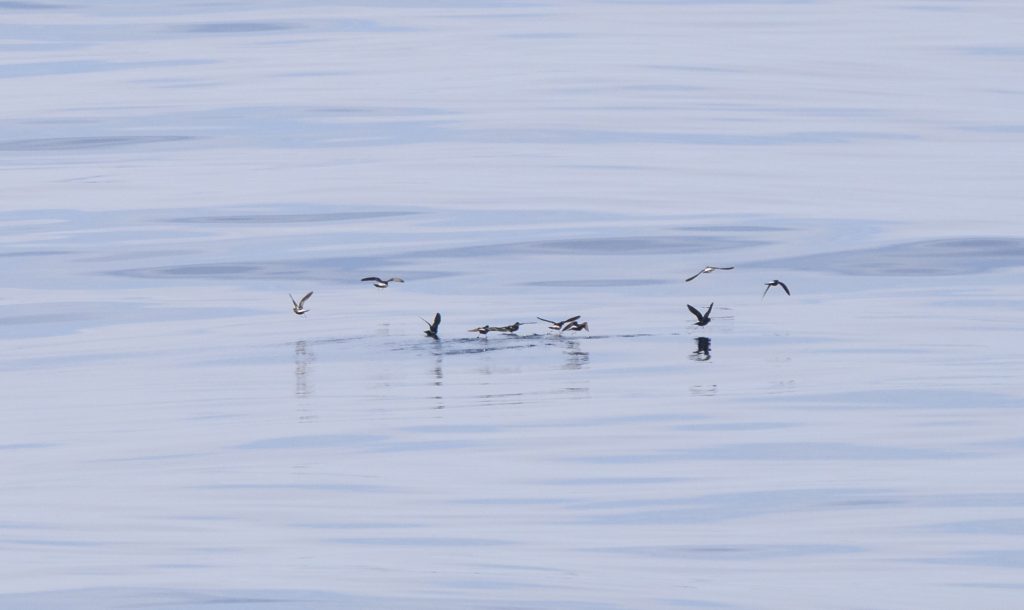
Storm Petrel were the most numerous with 48 seen. They really are amazing birds, only the size of a Swallow they spend most of their lives out at sea, migrate all the way to the South Atlantic off the coast of Africa, and can live for 30 or more years. Another 27 Cory’s Shearwater were logged, emphasising how numerous they are in this area in late May, and we saw another 11 Sooty Shearwater.
The original plan had us arriving at the Brittany buoy around 14:00 but the Met Office folk decided that it would be easier to arrive there late and start work on the buoy first thing the following day. The upshot of that was we reduced to speed to eight knots and arrived there at 16:00 instead, making it a long day for us.
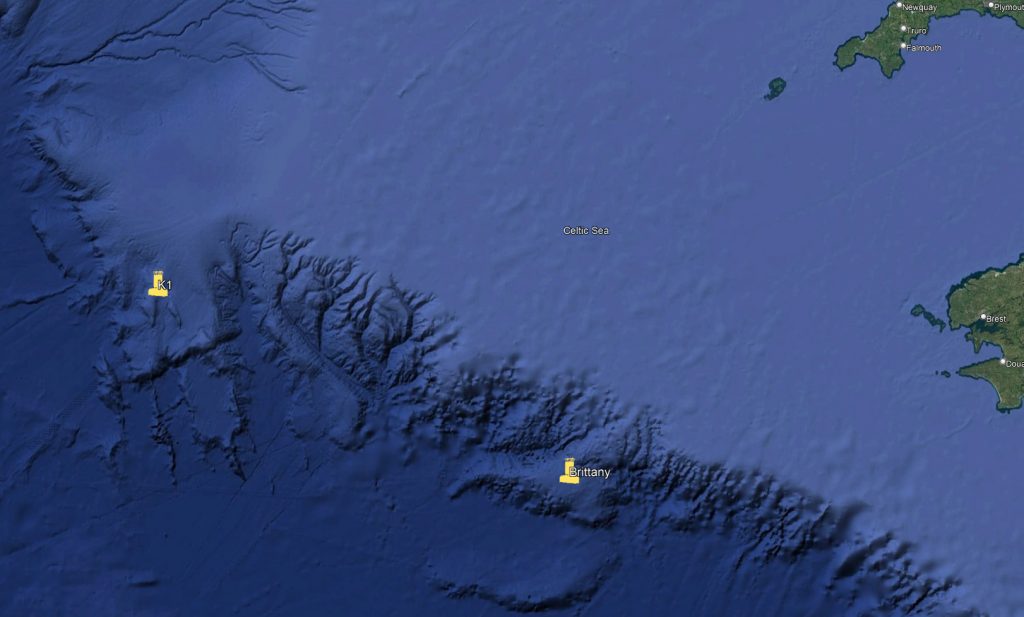
The route between the K1 and Brittany buoys took us along the edge of the continental shelf and, in theory, looked like it might be good for deep water species such as Sperm Whale or beaked whales like Cuvier’s Beaked Whale. The conditions we had were optimal for spotting these animals and so it was really frustrating that after 10 hours we hadn’t had a sniff of any deep-water cetacean.
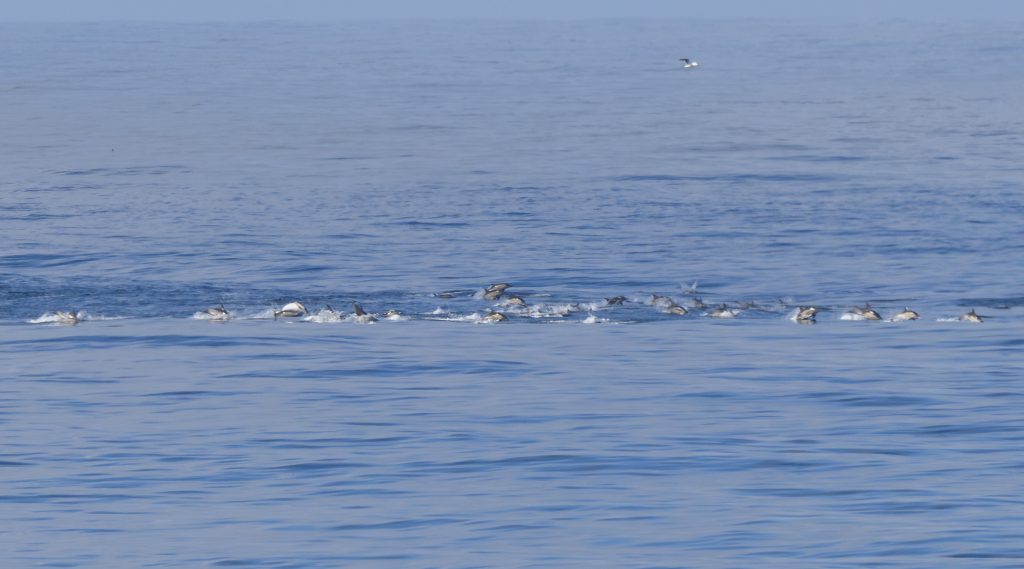
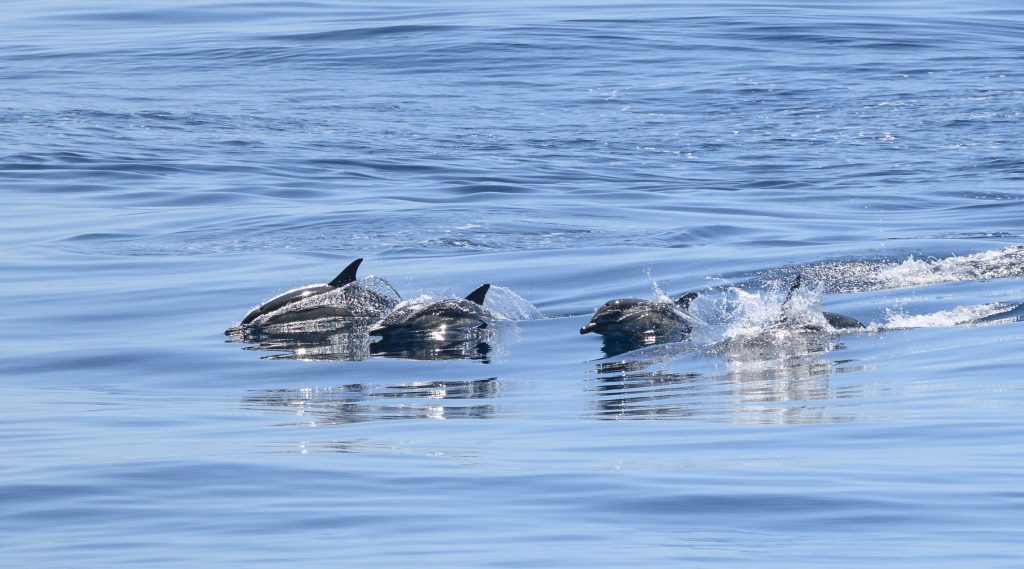
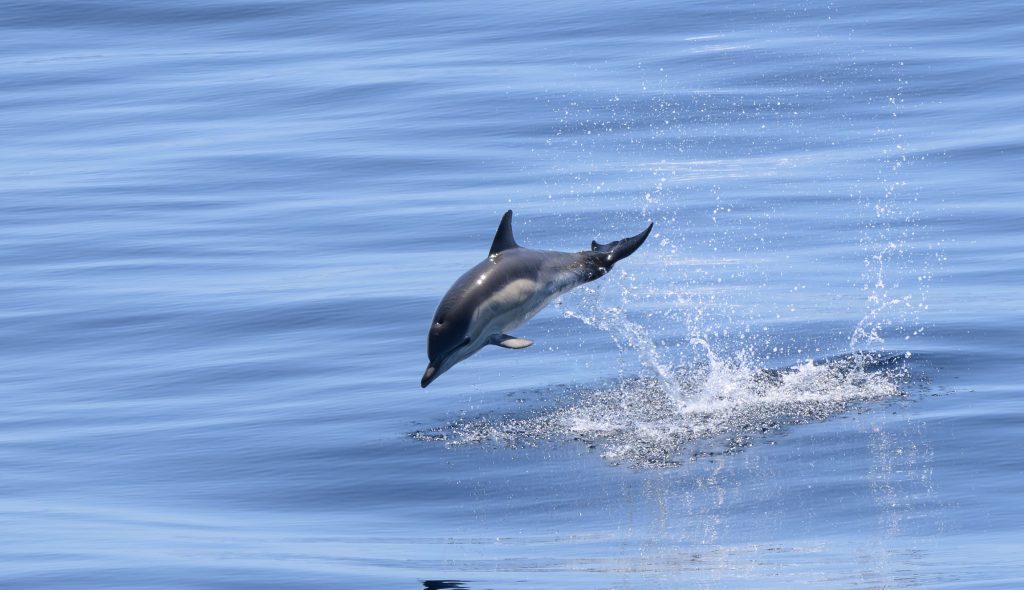
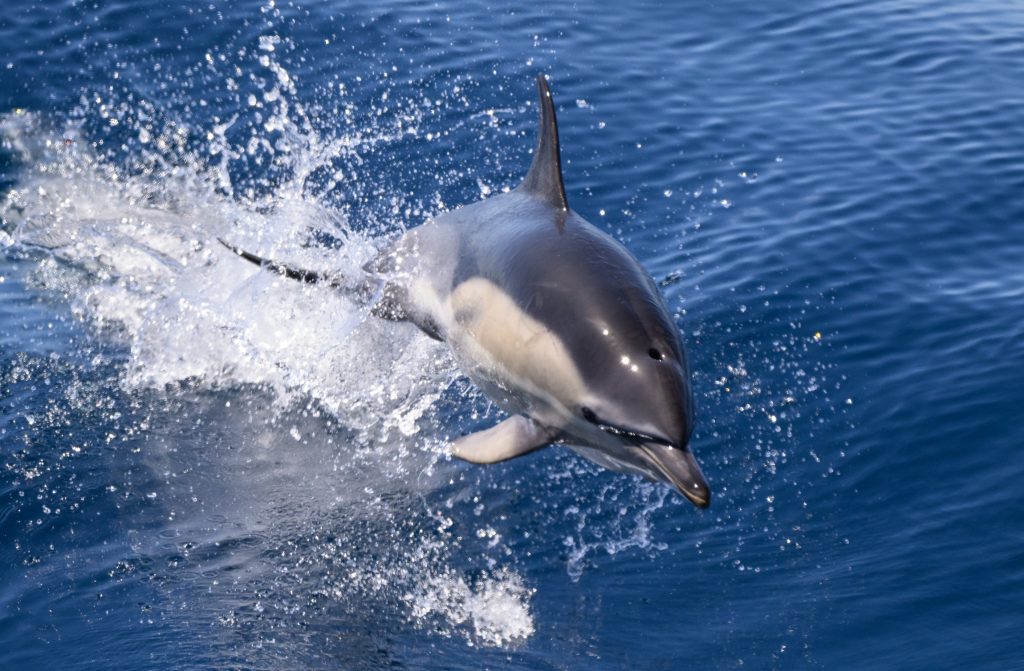
That’s not to say we didn’t see anything at all, Common Dolphins were – common – with 11 sightings involving 545 animals. Most of the sightings were of pods of around 100 animals. We also had one sighting of Risso’s Dolphin, or rather I did. I caught a glimpse of fins out of the corner of my eye, got Robin looking, then started to doubt myself as they didn’t show for ages. Then, two fins rolled in my view, definitely Risso’s, and they were gone, Robin couldn’t get on them, and we didn’t see them again.
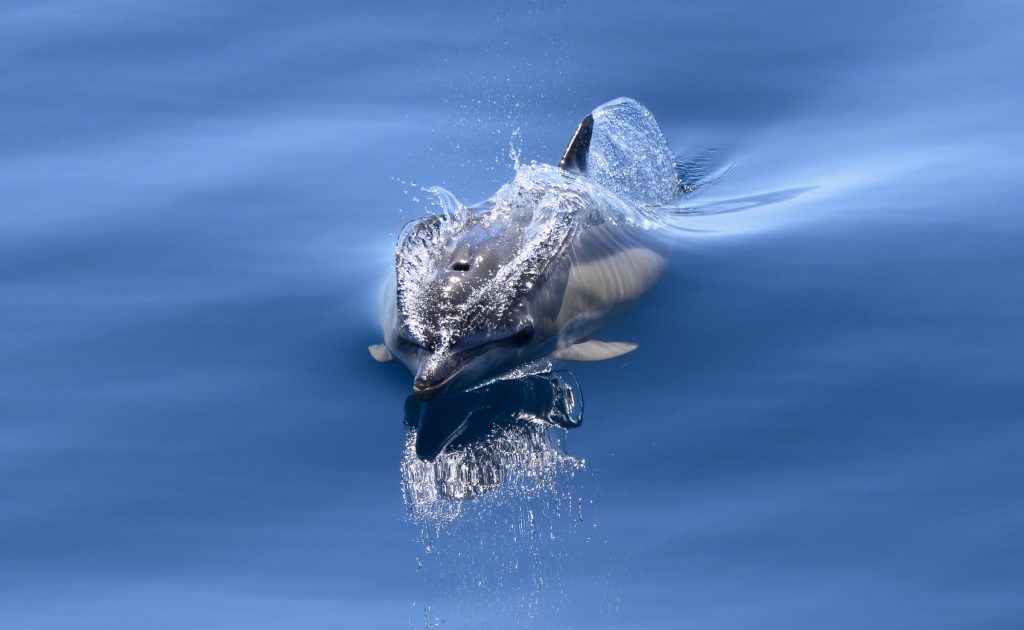
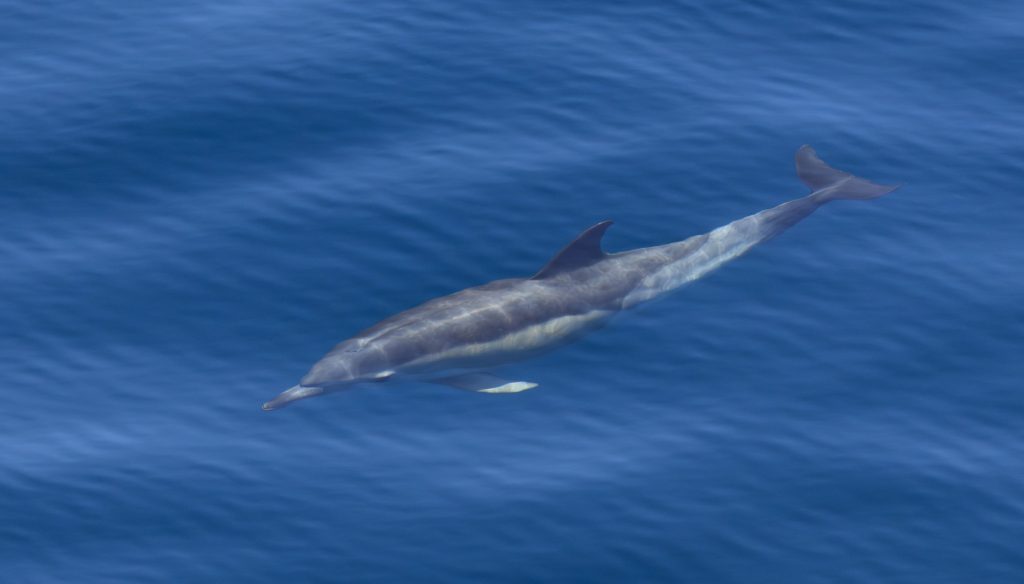
When we reached the Brittany buoy we ended the survey and were then able to relax for the rest of the day. Apart from a couple of hundred distant Common Dolphin in the evening, there was nothing to be seen – which was a real shame given the conditions.
Day 6 will give us the luxury of not having to get up before dawn as we’ll be on station for most of the day before heading off to deploy the Celtic Sea buoy.
Summary of sightings
Seabirds
Arctic Skua 1
Cory’s Shearwater 55
Fulmar 1
Gannet 45
Great Skua 1
Guillemot 2
Manx Shearwater 44
Pomarine Skua 1
Puffin 1
Sooty Shearwater 15
Storm Petrel 47
Terrestrial Birds
House Martin 1
Marine Mammals
Common Dolphin 589
Risso’s Dolphin 2
