
 CLdN Heysham to Dublin 9 September 2025
09 September 2025


After meeting in the car park, we were efficiently transferred to the ship in time for a chat before getting some sleep. Following a welcome breakfast with views of the nearly full moon shimmering on the waves we started the survey as the sun was rising.
A few Lesser Black-backed Gull got the survey started. Gannet were then regular with a few Kittiwake and Manx Shearwater. With Ireland just in sight a couple of large mixed flocks of Gannet, Kittiwake, Manx Shearwater and other species were encountered. Identifying them and their ages was a good test of our identification and memory skills!
A brief glimpse of a Harbour Porpoise twenty minutes before the end of the outward survey was the only cetacean seen during the day, this very different to the numerous sightings during the previous month’s survey.
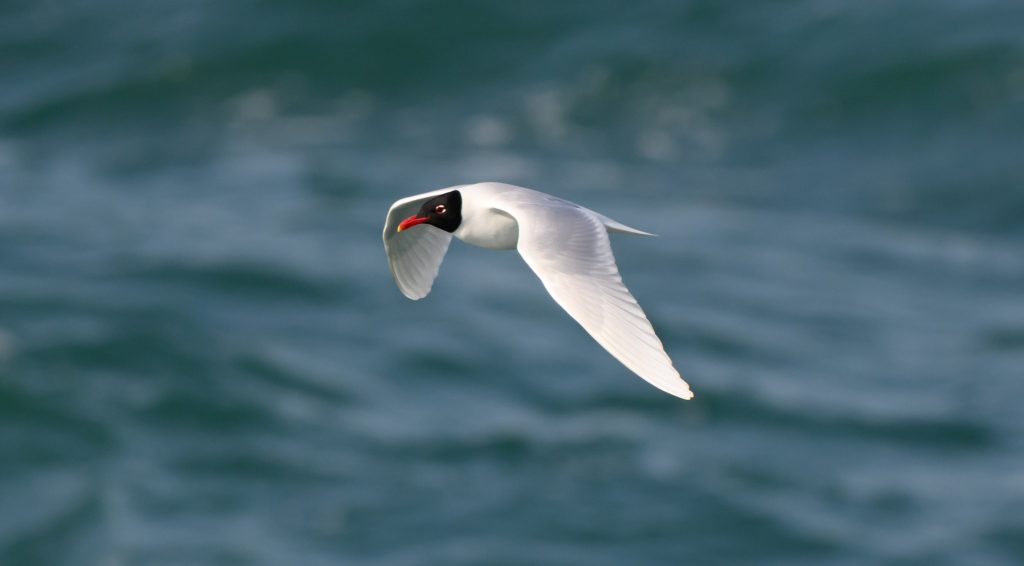
Many terns were seen flying out to sea as we approached Dublin, while low numbers of Great Black-backed Gull, Common Gull, Mediterranean Gull, and Black headed Gull were seen just outside the harbour entrance.
While our ship was docking, we watched the BAP Union depart for Vigo, northern Spain enroute back to Peru. This is a training ship of the Peruvian Navy, commissioned in 2016 and is the largest sail vessel in Latin America, and it had been in Dublin for the weekend. An unusual but interesting non-wildlife sighting.
Following an excellent lunch, we were back on the bridge in time for an early departure and the start of the return survey.
About half an hour after leaving Dublin we encountered a large flock of Common/Arctic Tern (Commic Tern). Bird numbers during the return seemed to be lower than during the summer with only occasional sightings of Guillemot and Razorbill. Many were seen flying so their non-flying moult time experienced the previous month was clearly over and perhaps the lack of numbers indicates that they are already on their way to their wintering grounds.
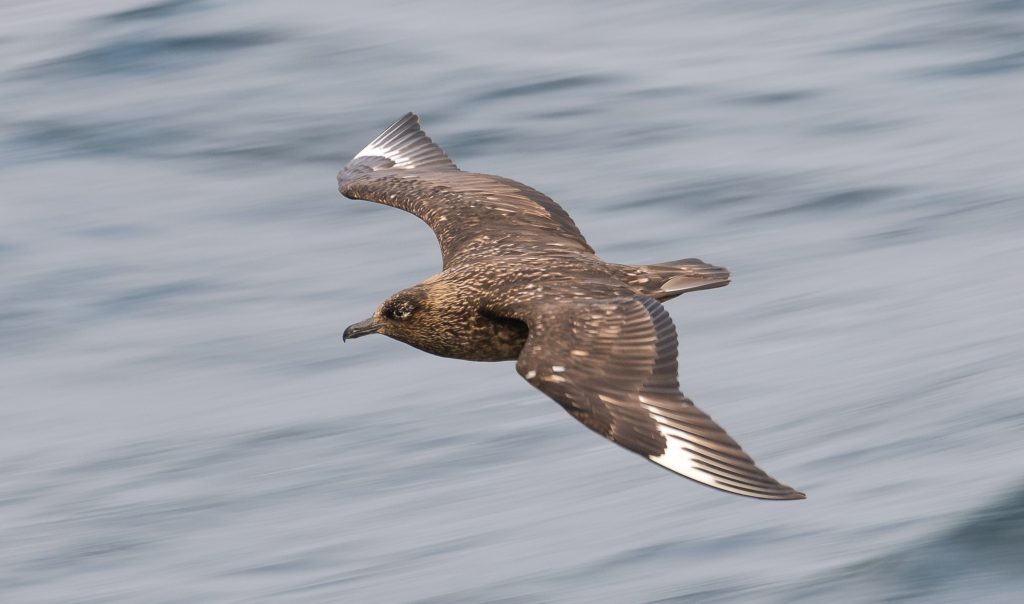
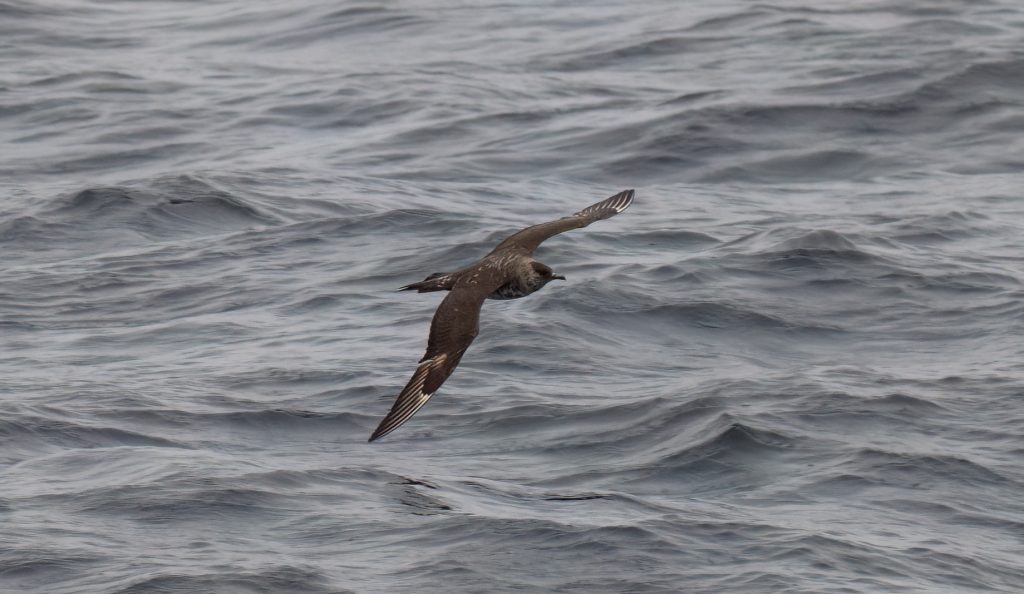
However, the highlights of the return survey were sightings of three skuas. Firstly, a Great Skua showing it characteristic white wing flashes, and then later on two individual dark phase Arctic Skua, less usual sightings for this route.
Almost the last bird seen was an I4 (year 4) Gannet which meant that during the survey we had seen every identifiable age class of Gannet! Adult and a few younger Gannet are regularly seen but to see all age classes is very unusual and made a nice end to the survey.
We docked back in Heysham on time and were soon on our way home.
We are very grateful to captain Jaak Karm and his crew and the CLdN shore staff who always look after us so well and allow us to undertake these surveys.
Jenny Ball and Tony Marshall, Research Surveyors for MARINElife (Registered Charity No. 1110884; Registered Company No. 5057367)
Weather:
Outbound: Sea state: 6-4; Visibility: 4-5; Clouds: 7-8; Swell: 1-2 metres; Wind: SE 30-24 knots
Return: Sea state: 7-3; Visibility: 4-6; Clouds: 8; Swell: 1-2 metres; Wind: SE 40-20 knots
Summary of sightings
Seabirds
Arctic Skua Stercorarius parasiticus 2
Auk sp. Alcidae 3
Black-headed Gull Chroicocephalus ridibundus 2
Commic Tern Sterna hirundo/Sterna paradisaea 25
Common Gull Larus canus 1
Cormorant Phalacrocorax carbo 4
Fulmar Fulmarus glacialis 14
Gannet Morus bassanus 99
Great Black-backed Gull Larus marinus 1
Great Skua Stercorarius skua 1
Guillemot Uria aalge 48
Herring Gull Larus argentatus 1
Kittiwake Rissa tridactyla 179
Large gull sp. Larus sp. 11
Lesser Black-backed Gull Larus fuscus 6
Manx Shearwater Puffinus puffinus 51
Mediterranean Gull Larus melanocephalus 10
Razorbill Alca torda 28
Sandwich Tern Thalasseus sandvicensis 25
Tern sp. Sternidae 12
Marine Mammals
Harbour Porpoise Phocoena phocoena 1
