
 MARINElife survey report: Dover-Dunkirk 28 February
28 February 2026


The road into Dover affords views out across the English Channel as one descends into the town and visibility over the sea appeared to be favourable as I drove down and entered the port. The sky was overcast, which is no bad thing at this time of year, when the bright glare of a low winter sun can affect a survey by reducing visibility.
Having driven aboard the waiting ferry, I reported to the information desk and was shown up to the bridge, where I was made very welcome.
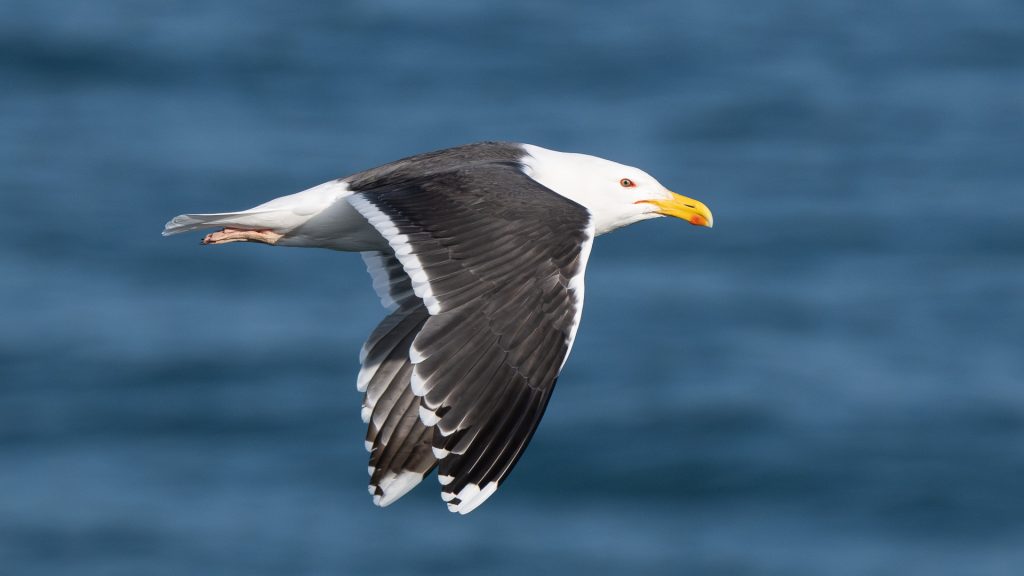
Once the ship was underway, the survey began, with a fine adult Great Black-backed Gull being the first record of the day, swiftly followed by the first Gannet. As is often the case with surveys in the Strait of Dover, this species was the most frequently encountered, including a small number of immature birds.
Among the gulls, Kittiwake and Herring Gull were the most numerous. Whereas Kittiwake take one year to reach maturity and adult plumage, Herring Gull take four years, with birds of each year having distinctive plumages. The majority of birds were adults, but first-year Kittiwake and first-year, second-year and third-year Herring Gull were also recorded.
Great Black-backed Gull and Lesser Black-backed Gull were recorded in lower numbers, including immature birds of both species.
As we neared the French coast, small numbers of Guillemot were observed sitting on the water.
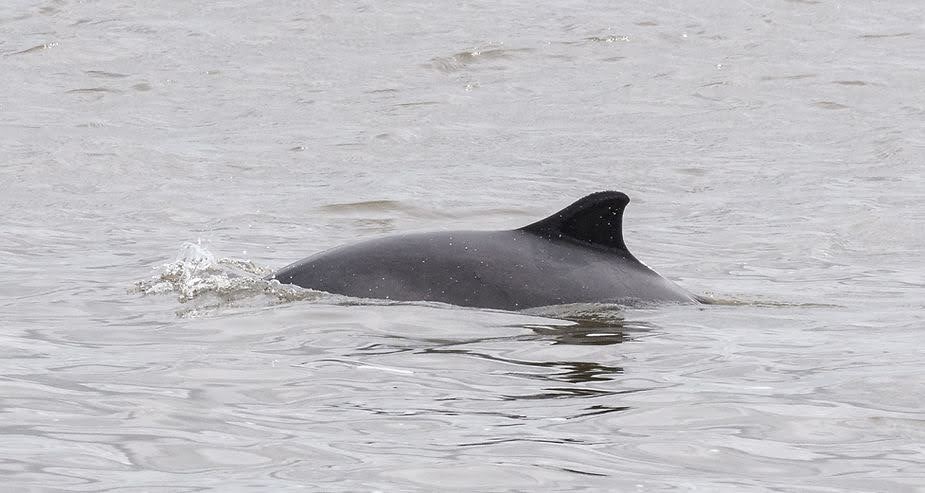
Approaching Dunkirk, a Harbour Porpoise was sighted a few hundred metres off the port bow, surfacing twice as it headed in the opposite direction to our vessel.
On the return crossing, bird species and numbers were similar to the outward journey. One new species was added as a Fulmar passed in front of the ship around mid-Channel, gliding by in the manner so characteristic of its species, on stiffly held wings with the occasional shallow flaps. A raft of ten auk was observed as we neared Dover, after which the final set of readings was taken from the ship’s instruments and the survey was concluded.
Thanks to Captain Maciez Szymanski, his officers and crew for their warm welcome and to DFDS for supporting our surveys.
Pat Hatch, Research Surveyor for MARINElife (Registered Charity No. 1110884; Registered Company No. 5057367)
Weather
Outbound: Dry and overcast, sea state 2-4, good visibility
Return: Dry and sunny, sea state 4-5, good visibility
Summary of sightings
Seabirds
Black-headed Gull Chroicocephalus ridibundus 1
Cormorant Phalacrocorax carbo 2
Fulmar Fulmarus glacialis 1
Gannet Morus bassanus 62
Great Black-backed Gull Larus marinus 12
Guillemot Uria aalge 9
Herring Gull Larus argentatus 17
Kittiwake Rissa tridactyla 73
Lesser Black-backed Gull Larus fuscus 5
Larus sp. 12
Gull sp. 10
Auk sp. 11
Marine Mammals
Harbour Porpoise Phocoena Phocoena 1
