
 MARINElife survey report: Felixstowe-Vlaardingen 14 April
14 April 2026


On the evening before the survey, I met up with fellow surveyor Vicki, and we drove into the Port of Felixstowe and reported to the DFDS office. The staff made us very welcome and arranged for transport to take us the short distance to the Suecia Seaways, which was being loaded with cargo prior to departure for Holland in the early hours of the following morning. We retired to our allotted cabins to get some sleep and await the dawn, the sun rising several hours after the ship had set sail.
We were taken up to the bridge around dawn, where we were welcomed by the crew on duty, and started our survey straight away. The sea conditions were favourable, although the glare of the low sun reduced visibility somewhat.
Sightings were slow at first, with several Gannet, a few Lesser Black-backed Gull and Great Black-backed Gull and larger numbers of terns, although the latter were all too distant to allow positive identification of species.
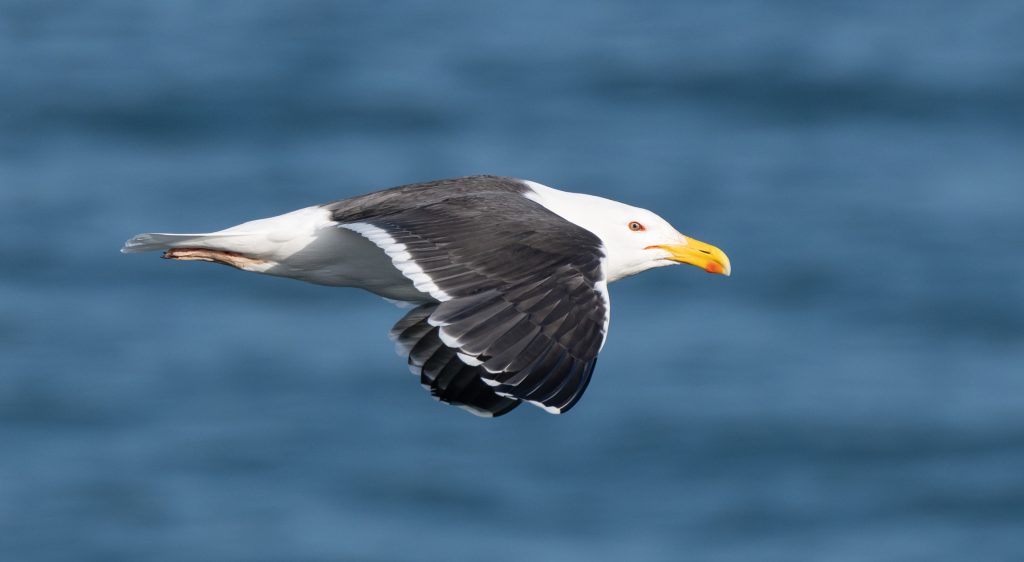
As we neared the Dutch coast, Captain Christensen came up to the bridge and gave us his usual friendly greeting. Numbers of sightings then began to increase as we entered the mouth of the Maas River for the final leg of the journey inland to Vlaardingen. Here we recorded our first Eider, first Common Gull and large numbers of Cormorant lining the sea defences. Progressing upriver, we encountered large numbers of Coot, Gadwall, Greylag Goose and Mute Swan and several Great Crested Grebe and Oystercatcher.
As our vessel reached Vlaardingen, we left the bridge and went below for a welcome rest.
Several hours later, having unloaded and loaded once more, Suecia Seaways set off for the return journey to Felixstowe. Once the ship had manoeuvred out into the Maas River, we were invited back up to the bridge to continue our survey.
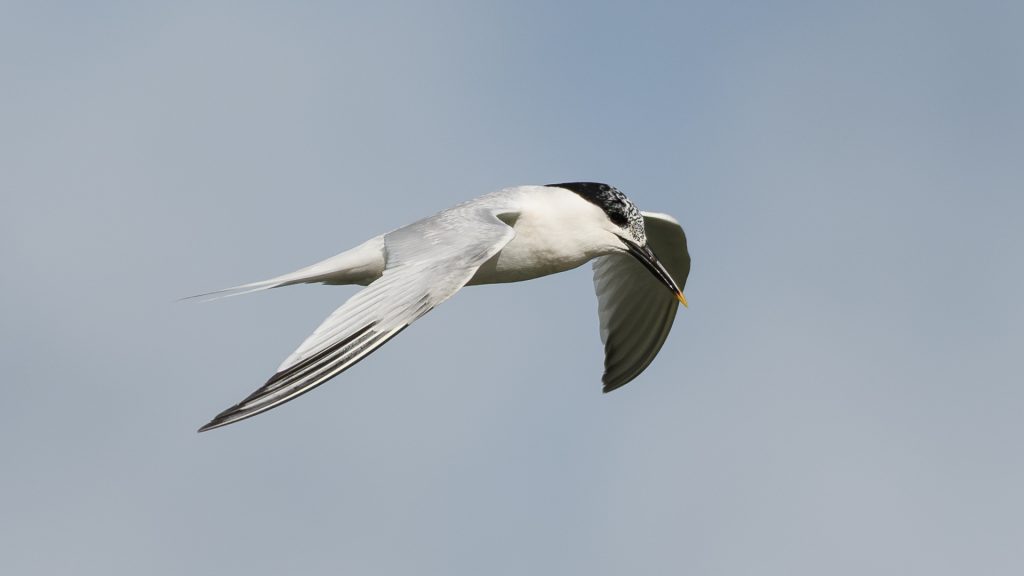
Species and numbers of birds on the return journey were similar to the morning survey, with the addition of a Sandwich Tern as we left the Maas River and emerged into the North Sea and a lone auk spotted on the water.
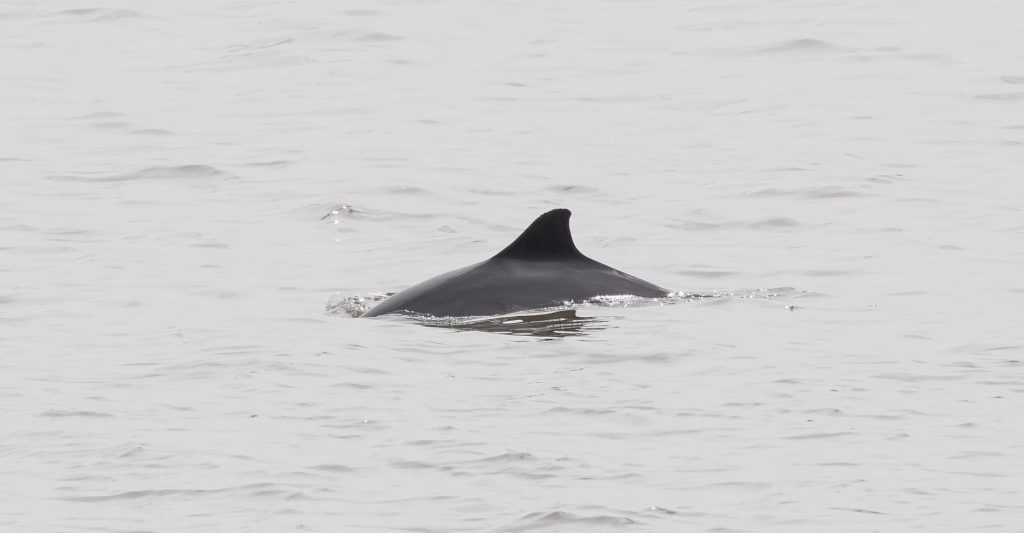
All through our survey we had been hoping to see some Harbour Porpoise, which are regularly but not always recorded on this route. Conditions were good for spotting these small cetaceans, with light winds and a calm sea. Sure enough, about an hour out from the Dutch coast, our vigilance was rewarded with three sightings in a few minutes, firstly two animals swimming together, then two sightings of apparently lone individuals, all off the port bow and fairly close to the vessel.
As light levels began to fall, we brought the survey to an end, thanked the bridge crew and retired below to await arrival at Felixstowe.
Our thanks to DFDS, Captain Kristian Christensen, his officers and crew for their warm welcome and co-operation, without which our surveys would not be possible.
Pat Hatch and Vicki Payne, Research Surveyors for MARINElife (Registered Charity No. 1110884; Registered Company No. 5057367)
Weather
Outbound – wind SW force 1-3, good visibility, clear sky
Return – wind SE-NNW force 1-3 good visibility, clear sky
Summary of sightings
Seabirds
Auk sp. 1
Gannet Morus bassanus 8
Great Black-backed Gull Larus marinus 28
Gull sp. 405
Herring Gull Larus argentatus 165
Larus sp. 269
Lesser Black-backed Gull Larus fuscus 17
Sandwich Tern Thalasseus sandvicensis 1
Tern sp. 33
Terrestrial Birds
River birds
Black-headed Gull Chroicocephalus ridibundus 11
Common Gull Larus canus 8
Coot Fulica atra 85
Cormorant Phalacrocorax carbo 282
Eider Somateria mollissima 9
Gadwall Mareca strepera 179
Great Crested Grebe Podiceps cristatus 6
Greylag Goose Anser anser 102
Grey Heron Ardea cinerea 3
Mallard Anas platyrhynchos 24
Mute Swan Cygnus olor 128
Oystercatcher Haematopus ostralegus 8
Marine Mammals
Harbour Porpoise Phocoena phocoena 4
