
 MARINElife Wildlife Ambassador report: Lundy 18 April
18 April 2026


An early start on this beautiful sunny day for the sailing to Lundy with a fresh wind but near cloudless skies. We left the harbour at Bideford and sailed along the Torridge Estuary, on the high tide. Several Shelduck patrolled the water’s edge, and some early Swallow flew past the ship, seemingly headed north on their migration.
The seas were a little choppy with some white water making cetacean sighting tricky, and indeed we did not see any on this trip. However, the fresh wind brought the birds in, several Fulmar and many Manx Shearwater glided over the wave tops past the ship. A couple of Gannets circled overhead, and one dived into the sea, but we couldn’t see any marine mammals underneath. As we neared Lundy, Guillemot, Razorbill and a single Puffin flew past just above the water with their rapid wingbeats or dived as we drew near.

Entering the harbour the noisy Oystercatcher on the rocks sounded the alarm with their piping call as we drew near and several Grey Seal were hauled out on the rocks under Rat Island.
We disembarked to hear the news that the Puffin had arrived on the island, which is what a high proportion of the day trippers wanted to see, so we traversed the island to look for them on the western cliffs.

Thankfully they were there to be seen alongside, and perhaps worryingly, close to a growing colony of Lesser Black-backed Gull. I say worrying, as gulls can harass Puffin returning to their burrows with fish when they are feeding their chick. The larger and, perhaps thankfully scarcer, Great Black-backed Gull will take adults and fledging chicks.
The Puffin were beginning to pair up and were billing – tapping their bills together which is part of their bonding ritual.

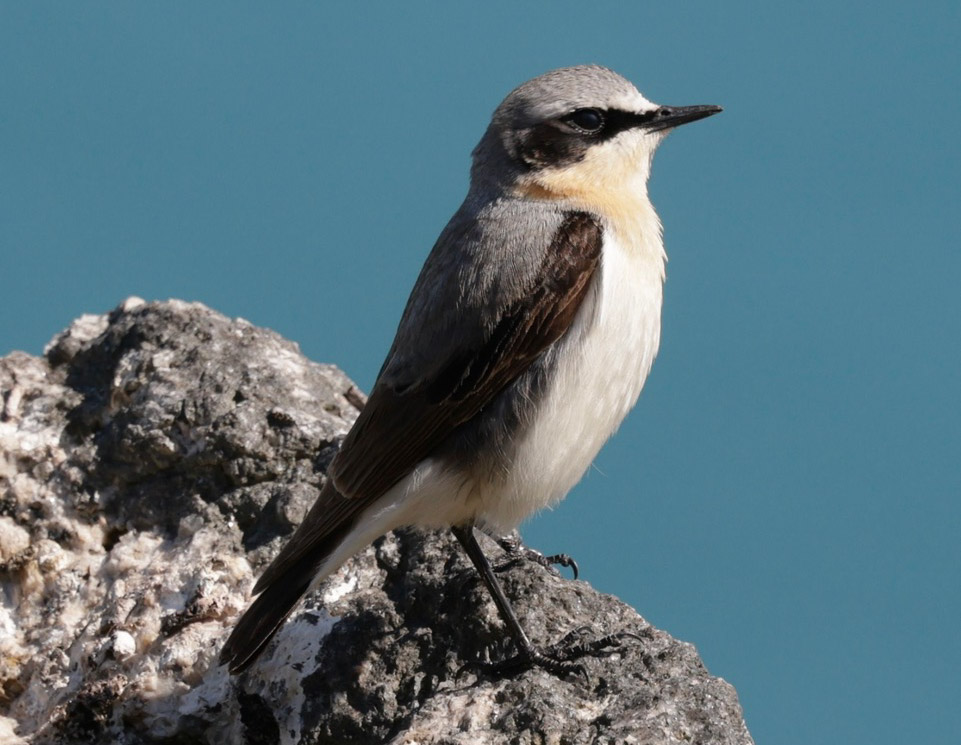
Across Lundy’s moors little flocks of Linnet chirruped on their way and many Wheatear were marking out territories.
There is concern that seabird numbers may be lower this year due to the winter storms as many Puffin, Guillemot and Shag, amongst others, were washed up dead on beaches along the coast of northwest Europe. That will remain to be seen as the season progresses, however, early news from other seabird islands such as Skomer is encouraging as they have had a record Puffin count this spring. Lundy is really a success story for ground nesting birds since the rat elimination program. There are now over 1000 Puffins and 25,000 Manx Shearwaters on the island. A formal count will take place later in the year.
In Millcombe Valley there was a ringing program ongoing with mist nets set up between trees and birds captured, ringed and released as part of studies by the Lundy Bird Observatory. These were mainly warblers such as Chiffchaff and Willow Warbler.
By mid-afternoon we returned to the harbour and embarked on the MS Oldenburg for what turned out to be a quiet journey home. The wind had dropped and so had the bird numbers and, despite calm waters, no cetaceans were seen. Just a few Fulmar and Kittiwake flew overhead before we returned safely to port. As always captain Jason Mugford and his crew were welcoming and helpful.
David Jenner, MARINElife Wildlife Ambassador
Summary of sightings
Seabirds
Puffin
Guillemot
Razorbill
Manx Shearwater
Kittiwake
Herring Gull
Great Black-backed Gull
Lesser Black-backed Gull
Manx Shearwater
Fulmar
Oystercatcher
Shag
Terrestrial Birds
Swallow
Starling
Blackbird
Meadow Pipit
Rock Pipit
Skylark
Linnet
Northern Wheatear
Carrion Crow
Willow Warbler
Chiffchaff
Marine Mammals
Grey Seal
