
 Met Office 2026 May 30-June 1
01 June 2026


30 May Day 6
The luxury of a lie-in – well until 06:00 at any rate – and then a short watch from the bridge to see if there was anything to be seen. We still had light winds, only five knots or so but it meant we didn’t have the mirror calm seas of the previous day. Unfortunately, it was soon apparent that there were no birds around, and it remained that way all day.
We did, however, have the work on the Brittany buoy to watch for a few hours. The process today was the same as for K1, lift the buoy on board then stand it up so that the instrument tower can be replaced. Conditions were ideal for this as there was no swell and very little wind, so by early afternoon the tower had been replaced and tested and the buoy ready to put back in the water.
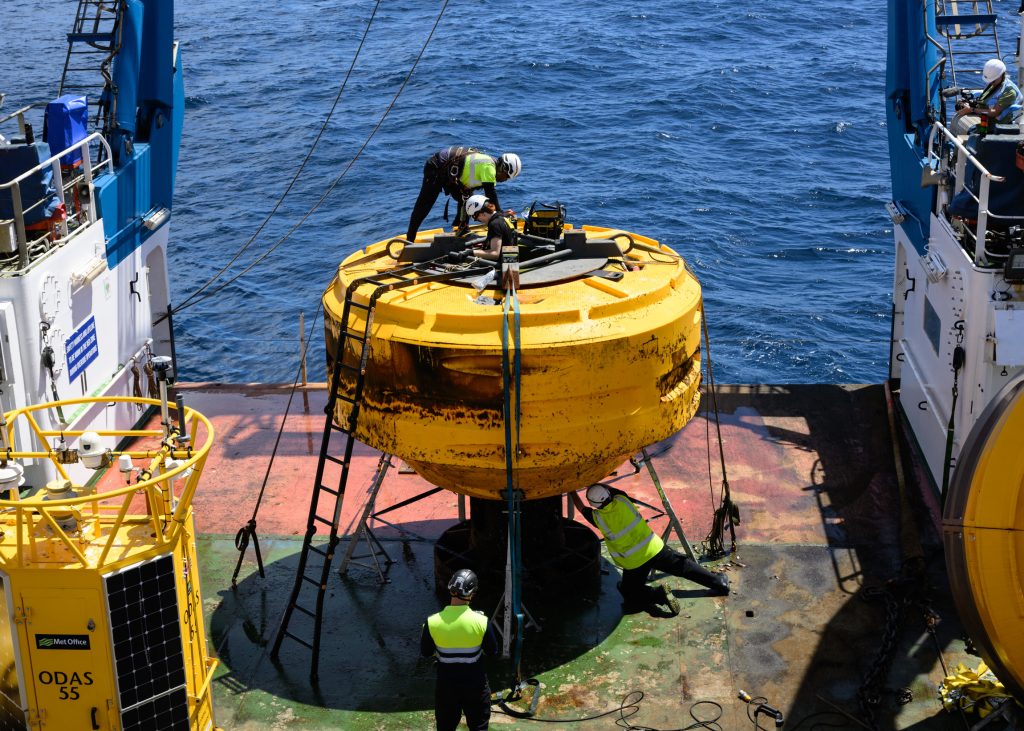
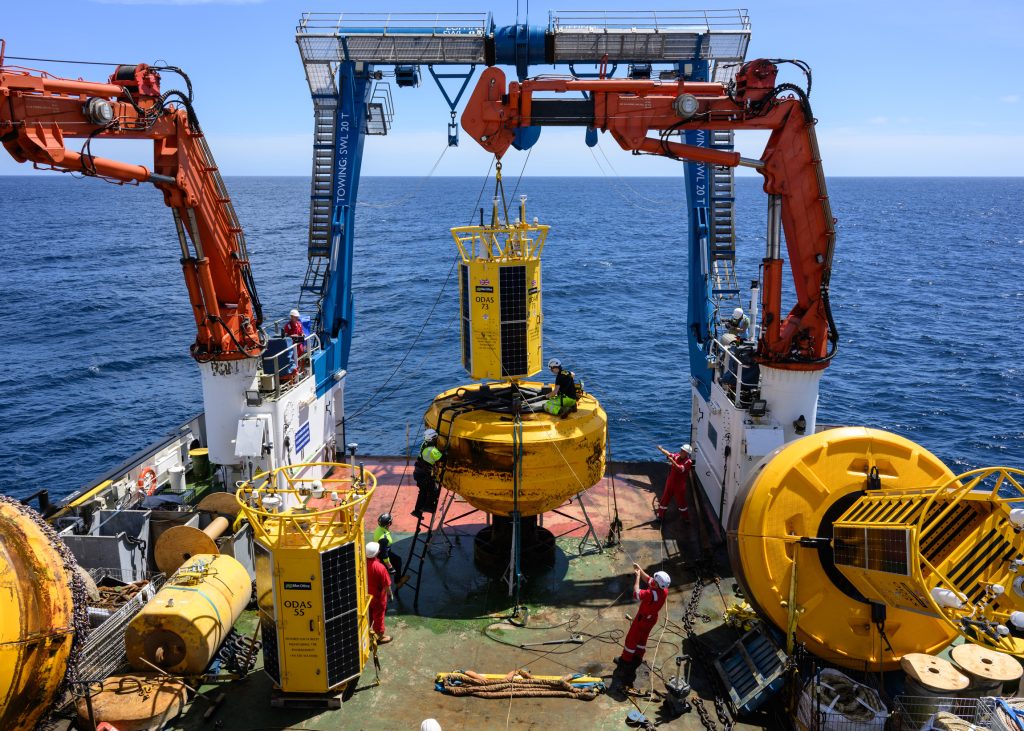
There was a technical issue which delayed the deployment by an hour or so meaning we finally set off at 16:30 and we could start surveying at 16:45. By this time the wind had freshened a little to 15 knots and there were a few white caps flecking the sea. A significant two-two and a half metre swell from the southwest had also appeared during the day and, as we were moving across it, enough to set up a bit of a roll on the Discovery.
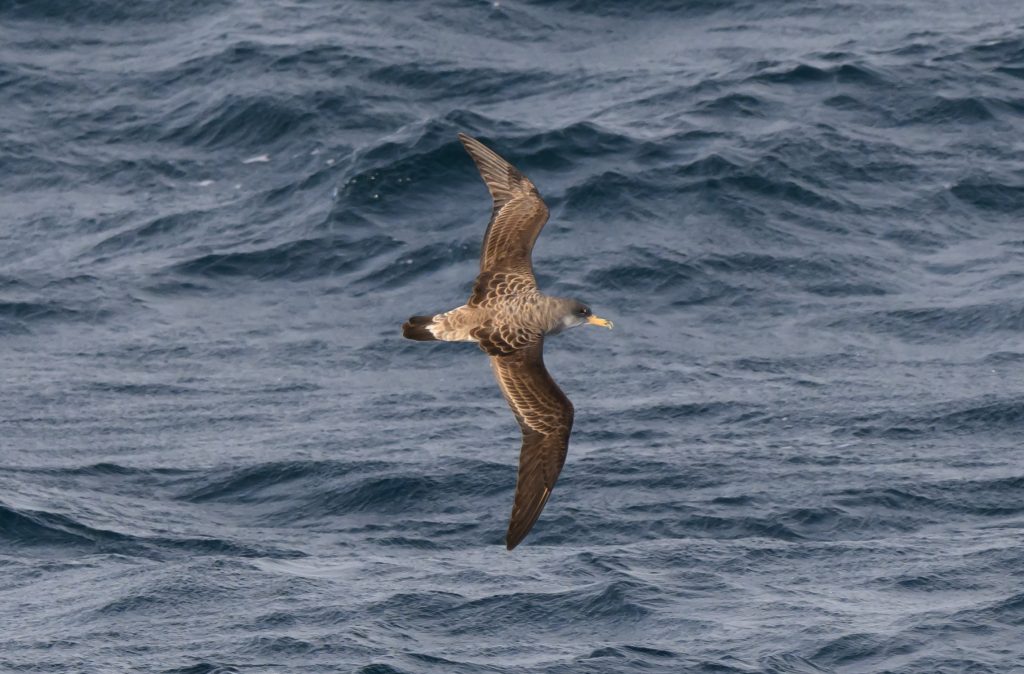
The lack of birds was very evident; it was almost 30 minutes before we recorded our first bird and there were regularly gaps of 40-50 minutes between sightings. We did at least see another three Cory’s Shearwater to add to the total but in just over four hours of surveying we recorded only 19 birds!
The highlight of the evening, although very brief and distant, was seeing a whale breach twice, making a very obvious splash. The shape and colouration glimpsed during its second breach suggest it was probably a Minke Whale. We also had two encounters with Common Dolphin including 11 which appeared at the bow, a shame they hadn’t done that the previous day with the sea flat calm, they looked amazing as they rode the bow pressure wave.
We’ll have the luxury of another lie-in tomorrow as we’re due to arrive at the Celtic Sea buoy location overnight.
31 May Day 7
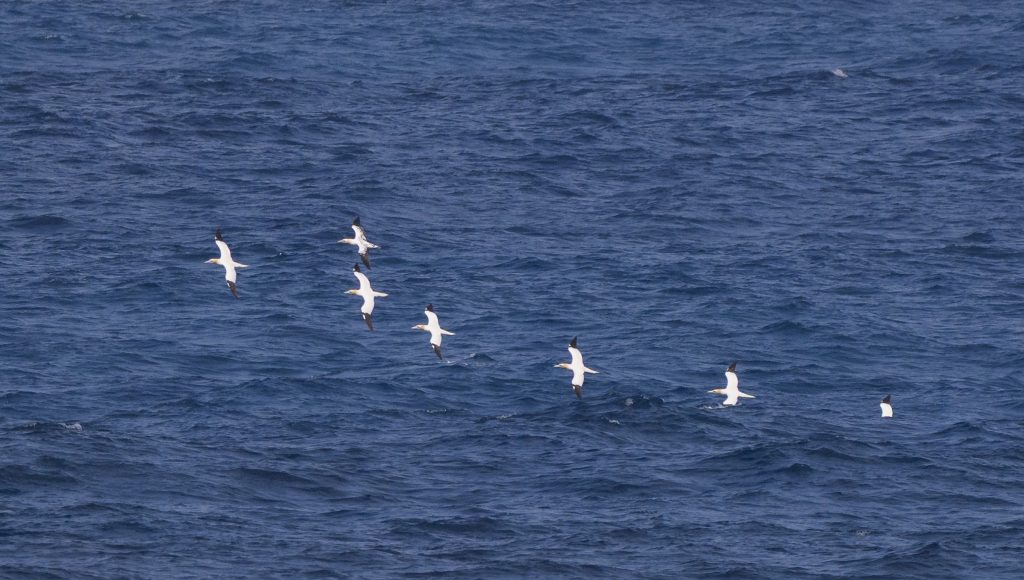
Even if we’re hove-to the first item on the agenda is a visit to the bridge to have a look at the conditions and watch the sea for a while to see if there’s anything around. It was another lovely morning with blue skies and blue seas, a bit of a swell but nothing uncomfortable. Sadly, there were still no birds or dolphins to be seen, although we did see the odd Gannet swing past during the day and a Fulmar camped out off the stern for what seemed like ages in the expectation of some food coming its way – it was going to be very disappointed.
The deployment of the Celtic Sea buoy was very swift, the Channel is 150m deep here and it makes a big difference when you only have to pay out a couple of hundred metres of rope rather than a couple of thousand.
For a while it looked like we might get back to Southampton on the evening of the 1st June but the Met Office wanted to try and pick up the mooring from the previous buoy, this had detached last year (a rare event) leaving the mid-water float and 150m of rope in the water. Several hours were spent trying to retrieve the mooring but by 18:00 it was clear the mooring was going to have to stay put.
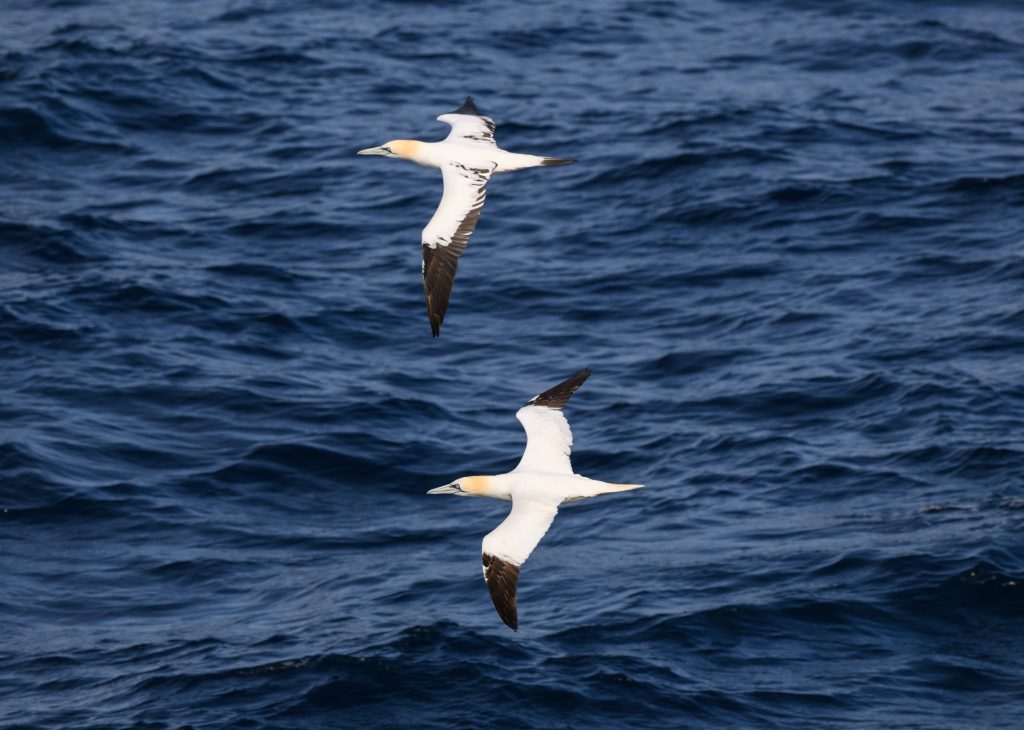
We started surveying as soon as we got underway and managed just shy of three hours before the light went. It was a long three hours too, the lack of wildlife continued, and we had logged just 17 Gannet by the time we finished at 21:00.
An early night was called for, it’s likely we’ll spend 14 or 15 hours surveying the next day.
1 June Day 8
We were up on the bridge just after 05:30 but it was overcast and murky with visibility less than 300m, so we postponed starting the survey until 06:00 when the weather improved a little. Visibility was in and out all day and we had another enforced break for 15 minutes later in the morning.
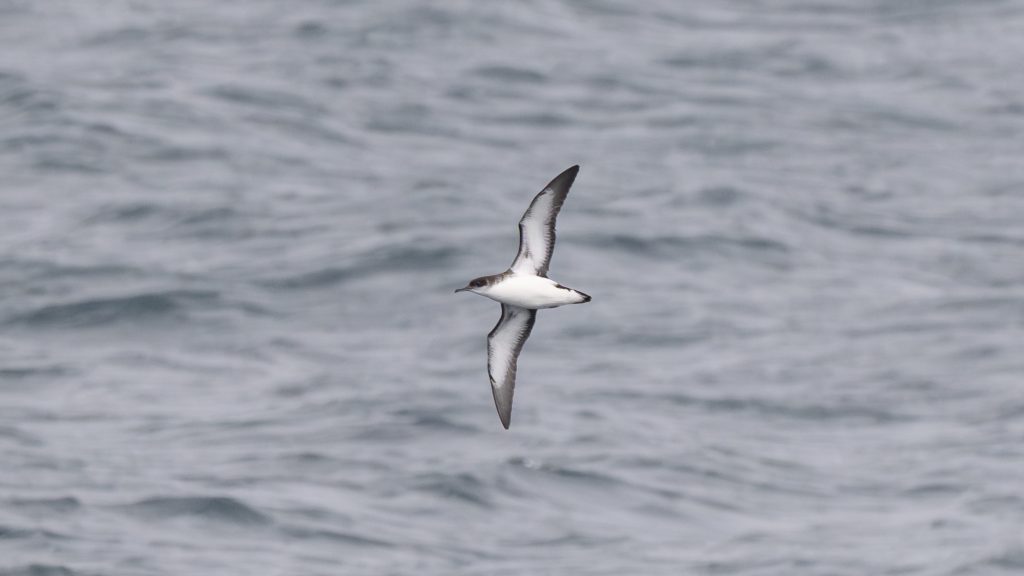
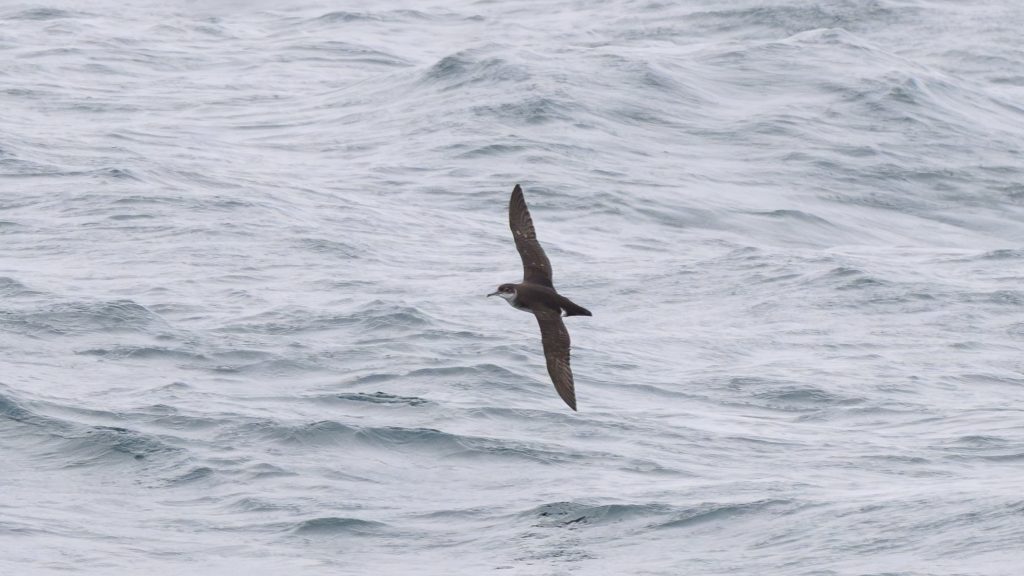
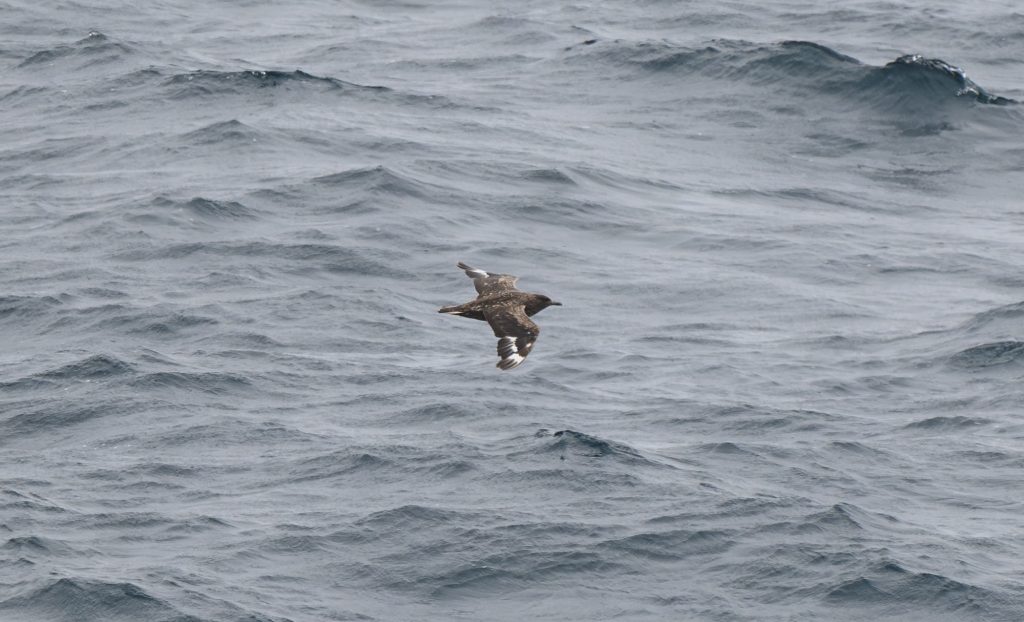
We were 15 nautical miles SW of the Lizard in Cornwall at dawn and there were finally a few birds to be seen. Manx Shearwater was, by some margin, the commonest bird seen during the day, we logged 322 by close of play, Gannet was next with a measly 92. A few Fulmar and a scattering of gulls added to the diversity, and despite the gloom, we also managed to see a few Storm Petrel, and a solitary Balearic Shearwater and Great Skua. That was only the second Great Skua we’d seen, prior to Bird Flu we might have expected to see many more non-breeding birds in the Channel but the disease reduced their population by 75%.
We also had four encounters with cetaceans during the day. First was a small pod of 15 Common Dolphin, their presence drawn to by the flock of 30 or so Gannet circling above them – they were obviously feeding.
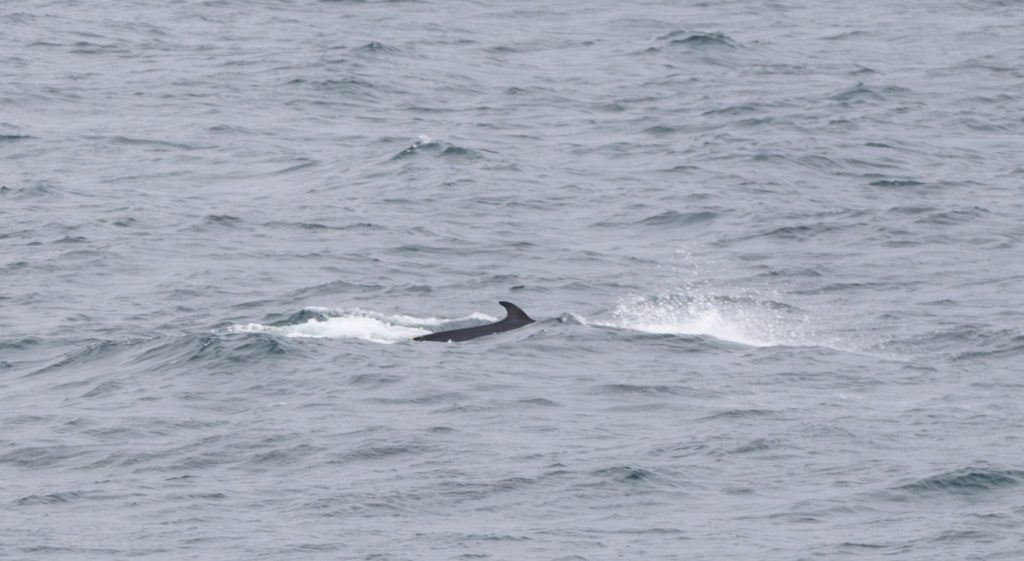
Then, later in the afternoon, while I was out on the foredeck on my 30 minute break from surveying, something surged through the top of a wave just 80m or so out to starboard, but I didn’t catch sight of what might have caused it. Poised for a reappearance, whatever it was did the same 100m off to port. Then, finally, on its third surfacing a Minke Whale rolled and showed itself properly – well, as much as they mostly do.
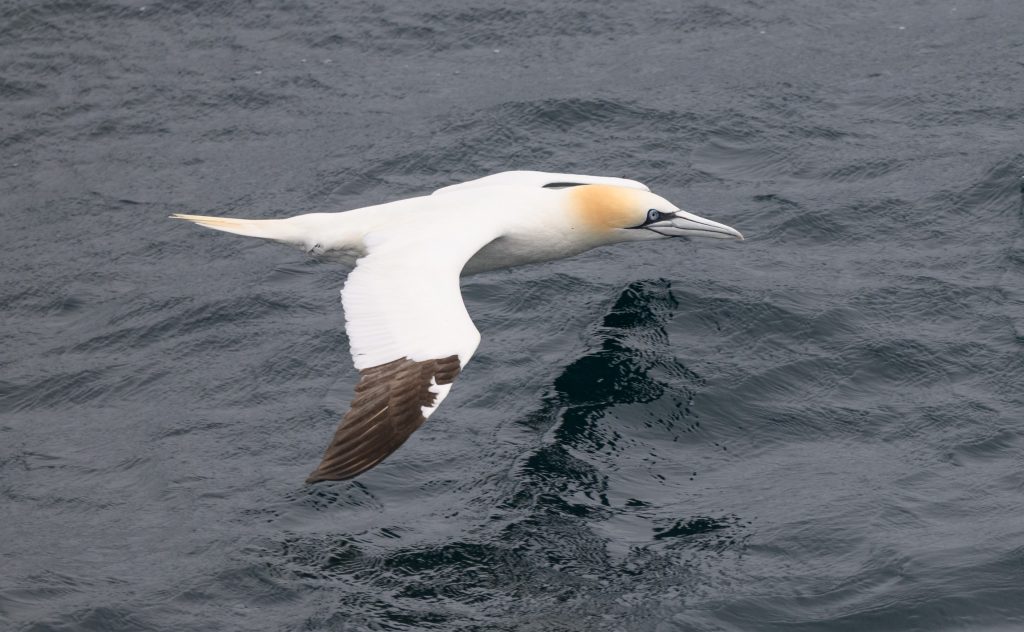
We were going to reach the Isle of Wight during the night then head up the Solent to pick up the pilot at 08:30. That would mean no chance to survey in the morning, so this was our last day surveying.
Overall, this has been a very quiet trip, with very low numbers of birds and, apart from the 29th, low numbers of cetaceans. The standout sighting is really the 60 Cory’s Shearwater recorded (plus another 50 counted whilst on station at K1). These birds are all likely to be females from Portuguese colonies on a pre-egg laying exodus. This behaviour has only come to light in recent years due to the use of GPS trackers on breeding birds and it shines a light on how important the waters around the UK and Ireland are for birds other than those breeding here.
Sightings for the full survey:
Marine Mammals
Minke Whale 1 + 1 probable
Risso’s Dolphin 2
Common Dolphin 636
Seabirds
Arctic Skua 1
Auk sp. 5
Cory’s Shearwater 60
Fulmar 121
Gannet 421
Great Black-backed Gull 16
Great Skua 2
Guillemot 14
Herring Gull 45
Kittiwake 23
Larus sp. 71
Lesser Black-backed Gull 54
Manx Shearwater 913
Mediterranean Gull 5
Pomarine Skua 1
Puffin 2
Razorbill 1
Sooty Shearwater 15
Storm Petrel 63
Balearic Shearwater 1
Terrestrial Birds
Chiffchaff 1
Collared Dove 1
Dunlin 1
Oystercatcher 1
Swallow 1
Summary of sightings
Seabirds
Cory’s Shearwater 3
Fulmar 7
Gannet 119
Great Black-backed Gull 2
Great Skua 1
Herring Gull 4
Kittiwake 1
Lesser Black-backed Gull 7
Manx Shearwater 328
Puffin 1
Storm Petrel 10
Balearic Shearwater 1
Marine Mammals
Minke Whale 1 + 1 probable
Common Dolphin 47
