
 Met Office 2026 – part one 25-27 May
25 May 2026
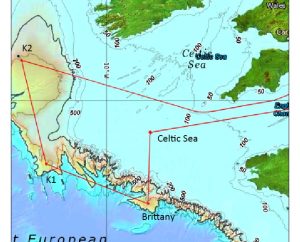
MARINElife are very grateful to the Met Office for allowing two surveyors to join this cruise to service four of their meteorological buoys in the Western Approaches (see photo below). Peter Howlett and Robin Langdon volunteered for the job and joined the RRS Discovery in Southampton on Sunday 24 May. Peter takes over the story.
It was one of those rare occasions – a sweltering Bank Holiday weekend in the UK – and it made for a warm walk from Southampton Central station to the National Oceanography Centre (NOC) where the RRS Discovery was moored. We were welcomed on board and after the usual induction meetings and safety briefings it was straight into shipboard life of early mealtimes with dinner at 17:30.
25 May – day 1
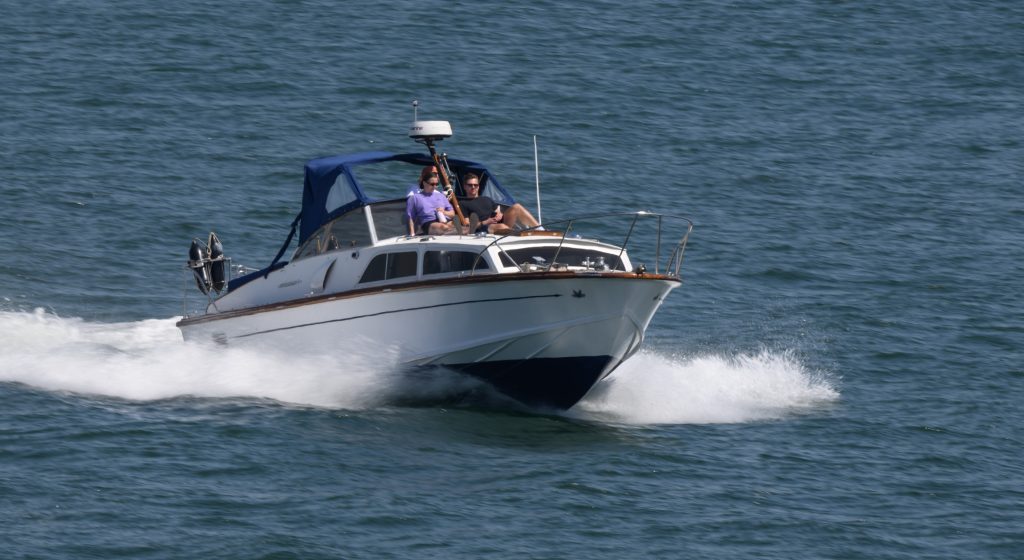
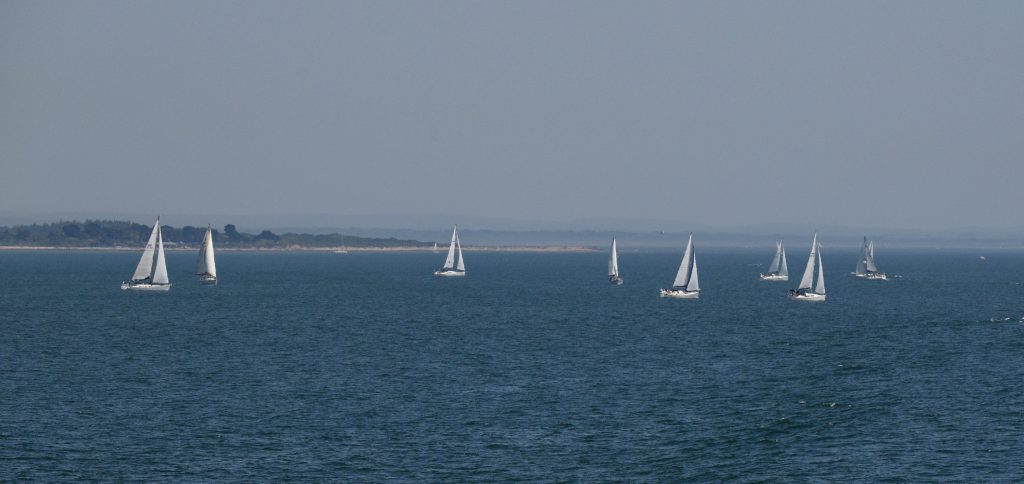
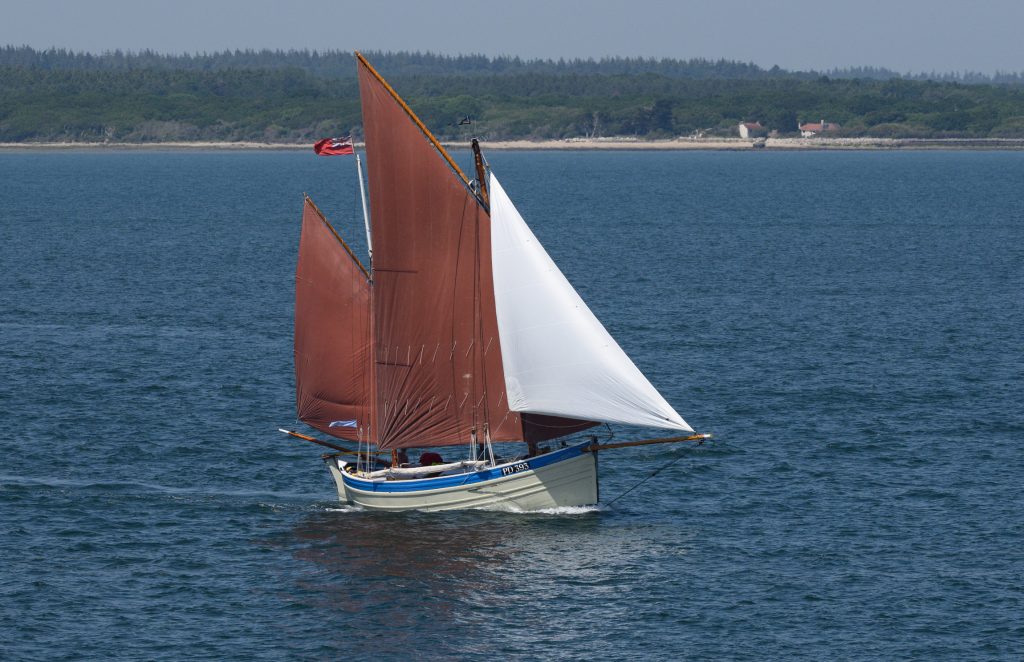
The pilot was booked for 11:00 on the 25th so it was just a case of relaxing and familiarising yourself with the ship. We departed sharp on 11:00 and headed down the Hamble and into the Solent – which was heaving with boats of all descriptions, from powerboats to old gaff-rigged luggers.
As well as the boats there were quite a few birds to be seen including Black-headed Gull and Mediterranean Gull, both resplendent in full breeding plumage.
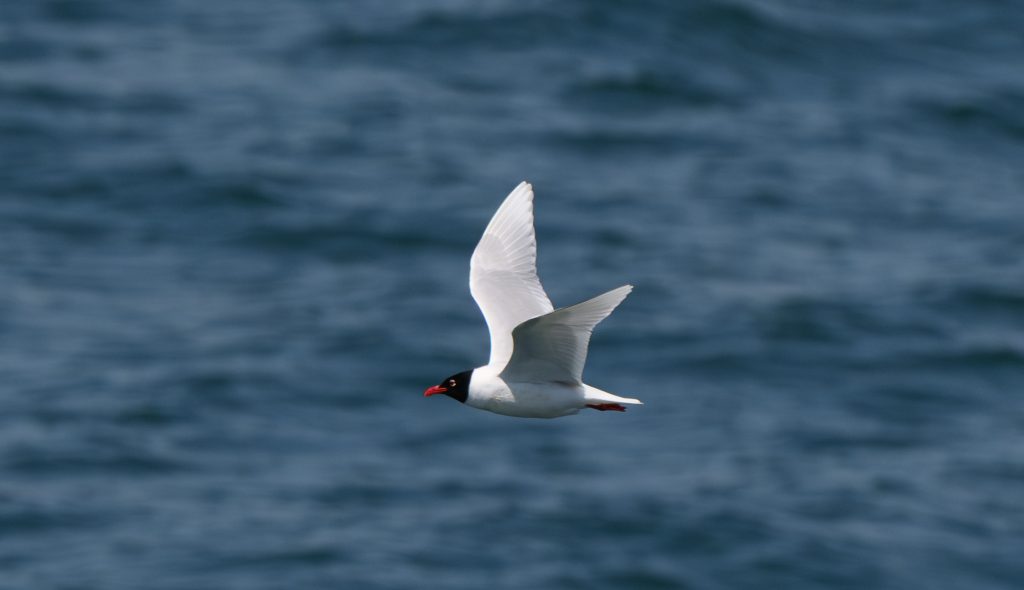
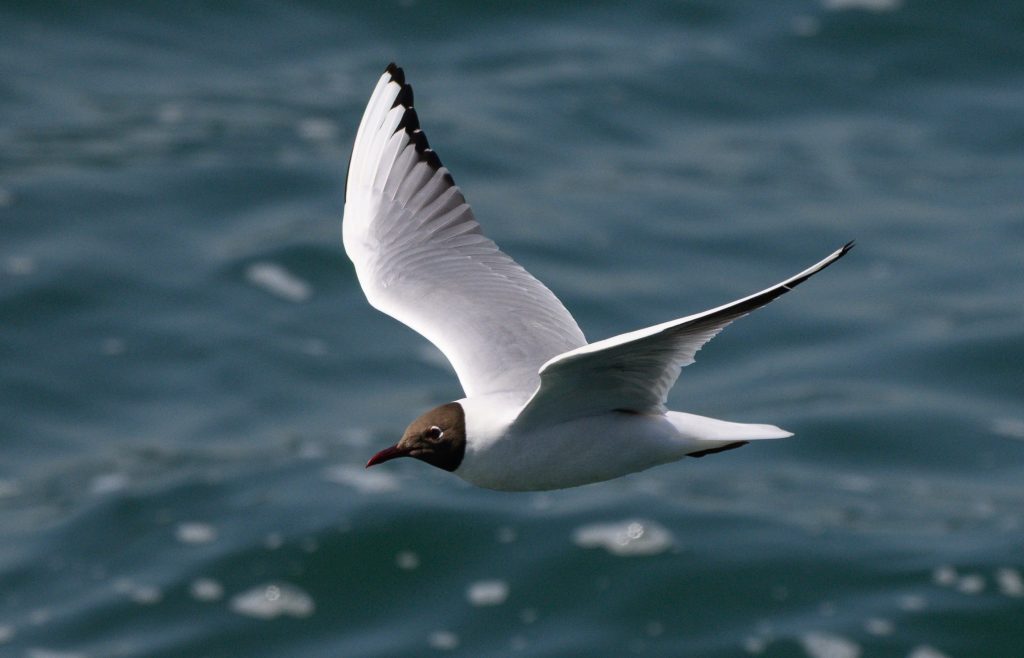
Because there was so much traffic we weren’t allowed up on the bridge until we’d cleared the Needles, by which time traffic had thinned out, and navigation was slightly easier for the bridge crew.
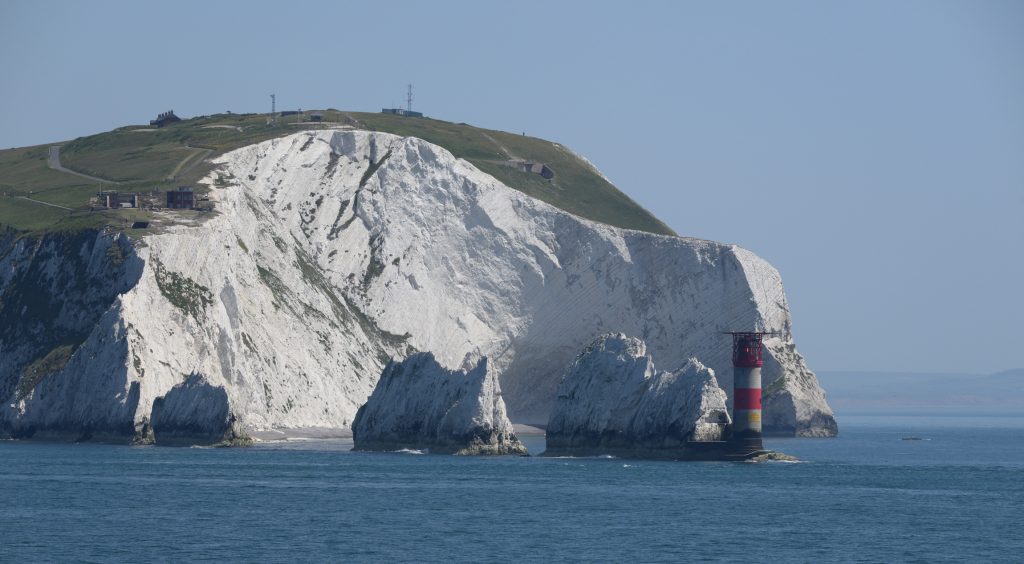
Our surveying got underway at 13:40, conditions were fair with a gentle easterly breeze, but the visibility wasn’t great as it was so hazy. Birds were few and far between too with a scattering of gulls, Gannet and the occasional Guillemot. It wasn’t until the evening, when we were almost level with Start Point that things picked up a bit with a decent number of Manx Shearwater passing by.
However, there was a big omission – we didn’t see any cetaceans.
26 May – day 2
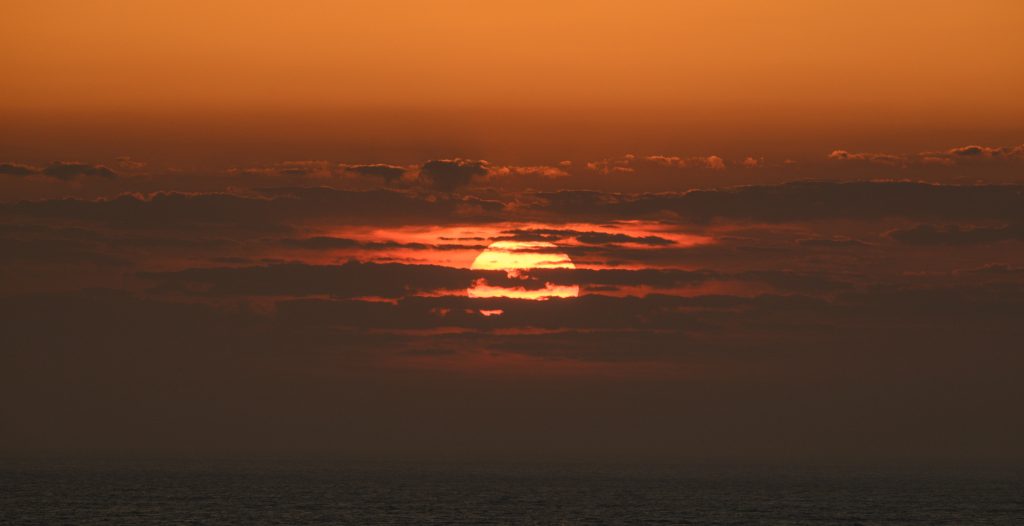
We were up on the bridge at 05:30, it was going to be a long day as sunset wasn’t until gone 21:00. At dawn we were south of Land’s End and heading towards the Isles of Scilly. There was a decent rush of birds for the first couple of hours with a good number of Manx Shearwater heading past.
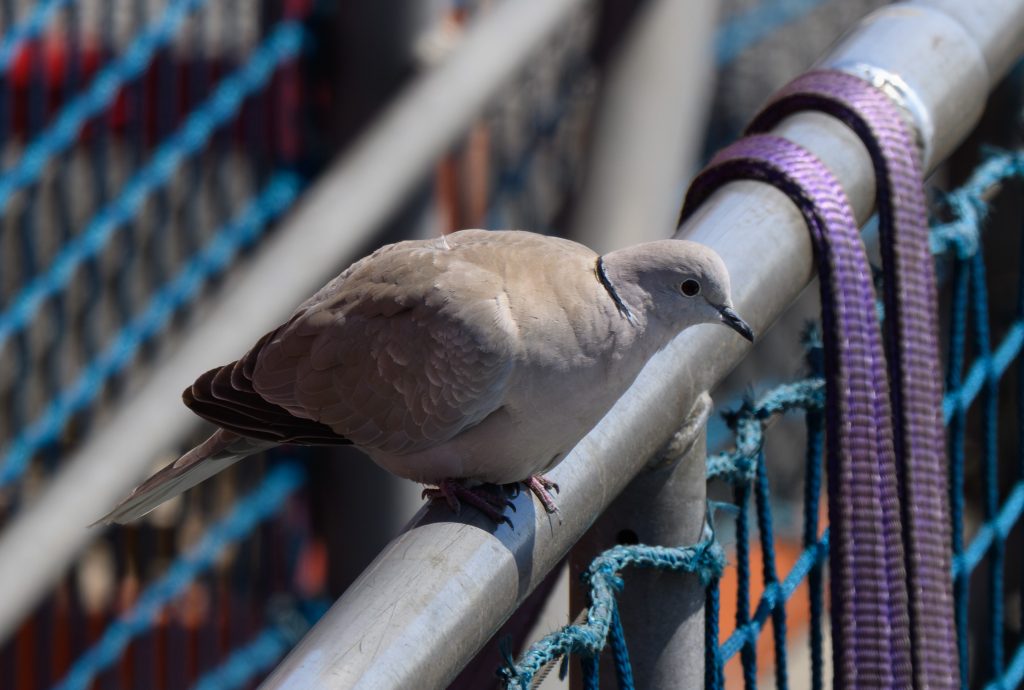
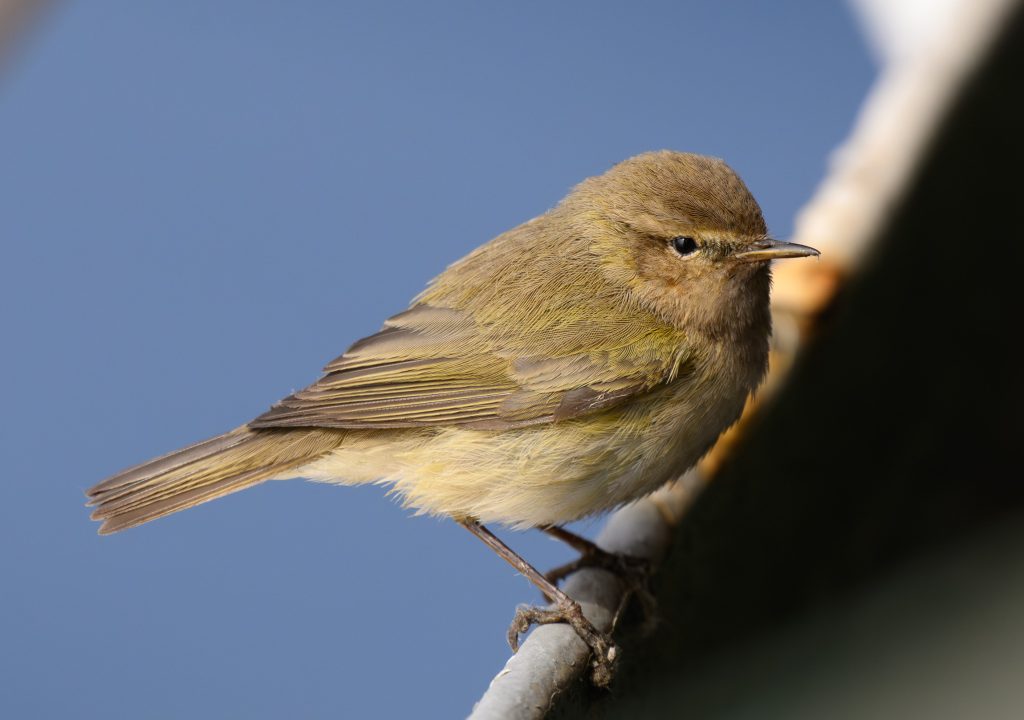
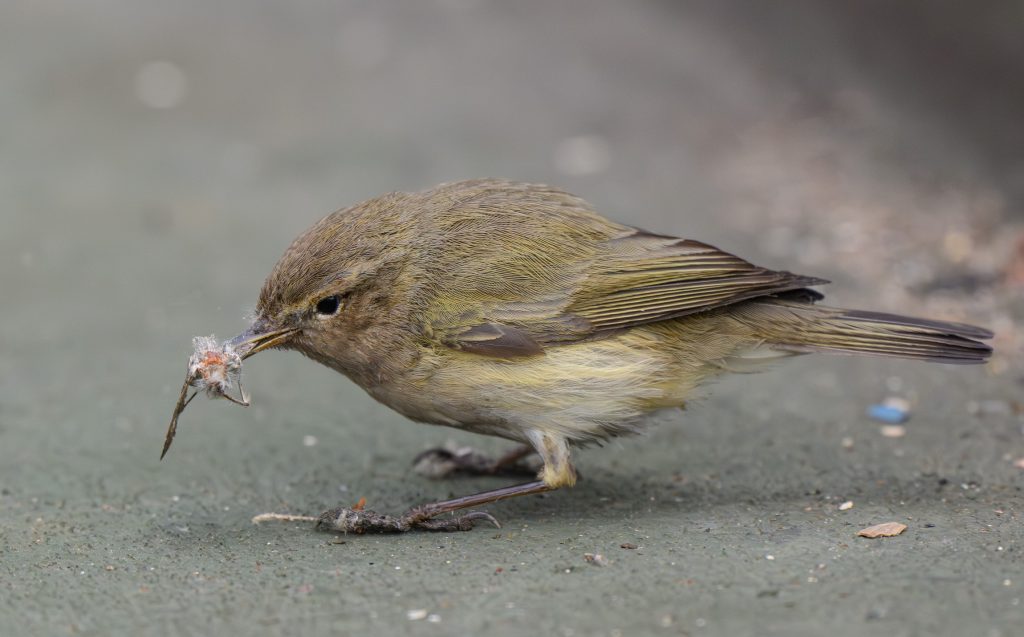
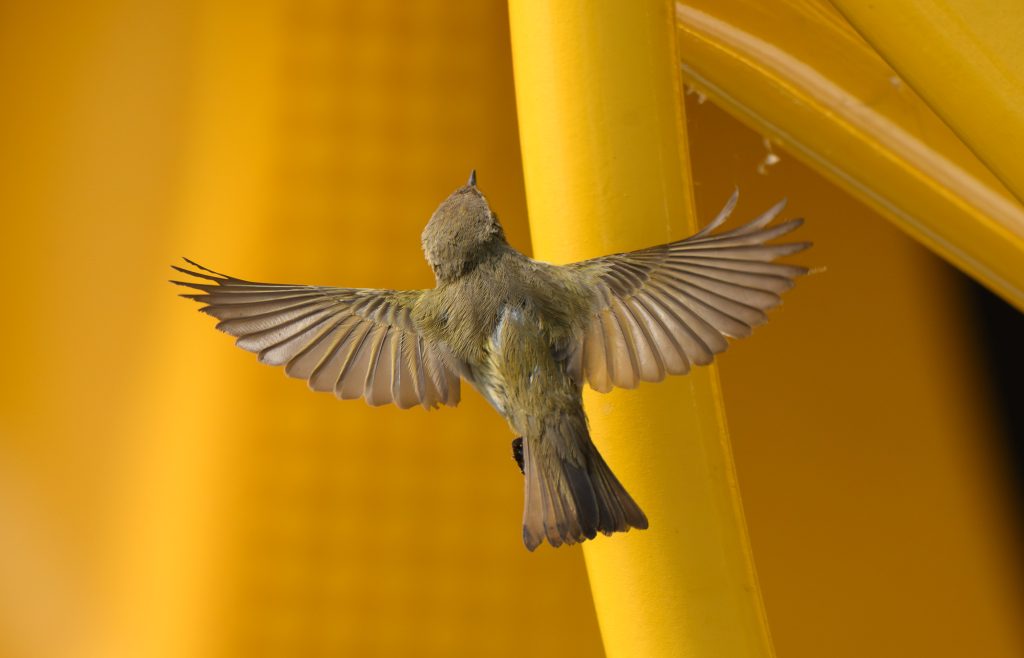
We also had a number of terrestrial birds on board during the day. A Collared Dove was first to put in an appearance but by the end of the day there were four of them roosting on one of the cranes. Two Chiffchaff made an appearance, one stayed all day the other just put in a brief appearance on the foremast. It’s a shame it was brief too, as looking at a photo I could see it was ringed, it would have been fascinating to find out where it had been ringed. It seems very late for Chiffchaff to be on the move, they’re normally very early migrants.
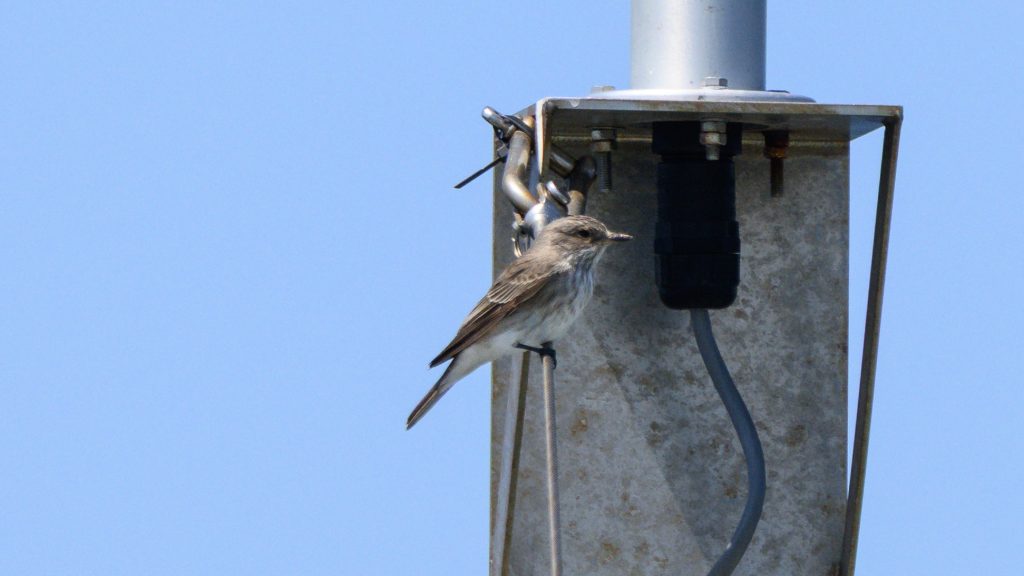
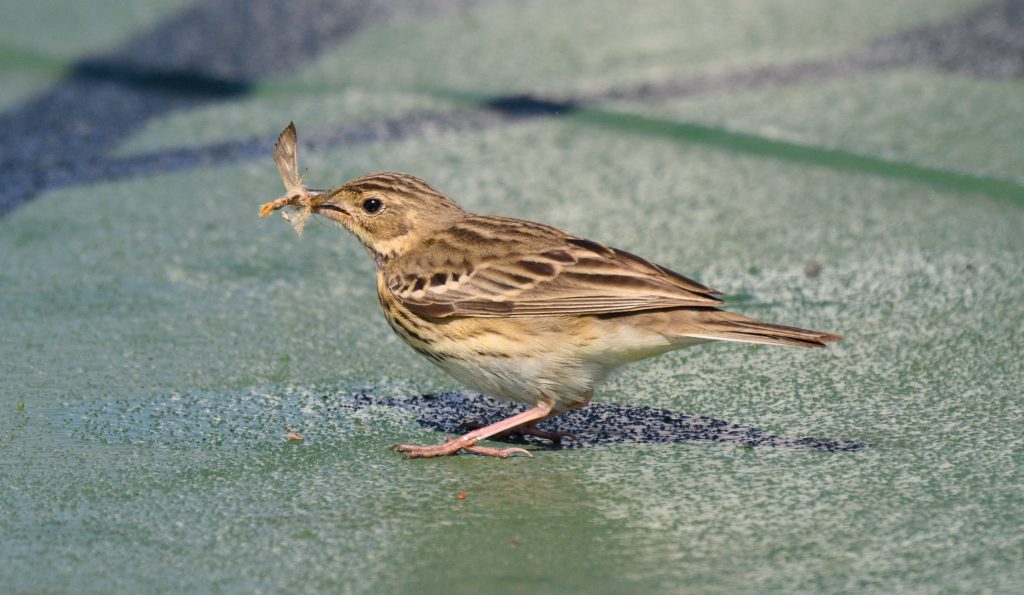
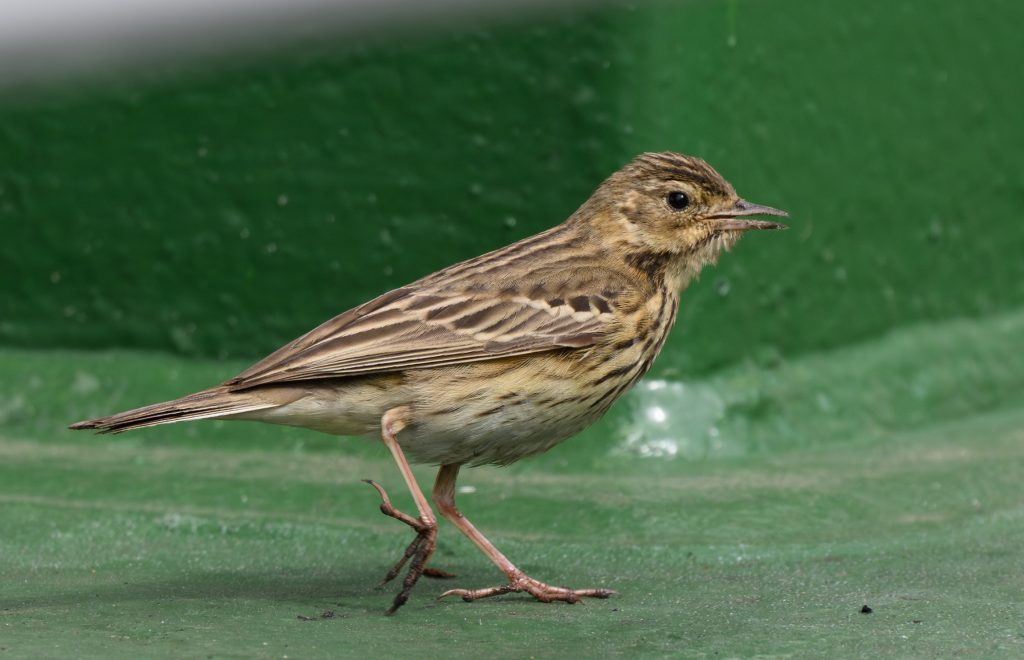
Rather more expected to still be migrating in late May was a Spotted Flycatcher, also making a brief stop on the foremast. Rather more reluctant to move on was a Tree Pipit, although it was finding plenty of food on board as there were a large number of butterflies, moths and hoverflies on board.
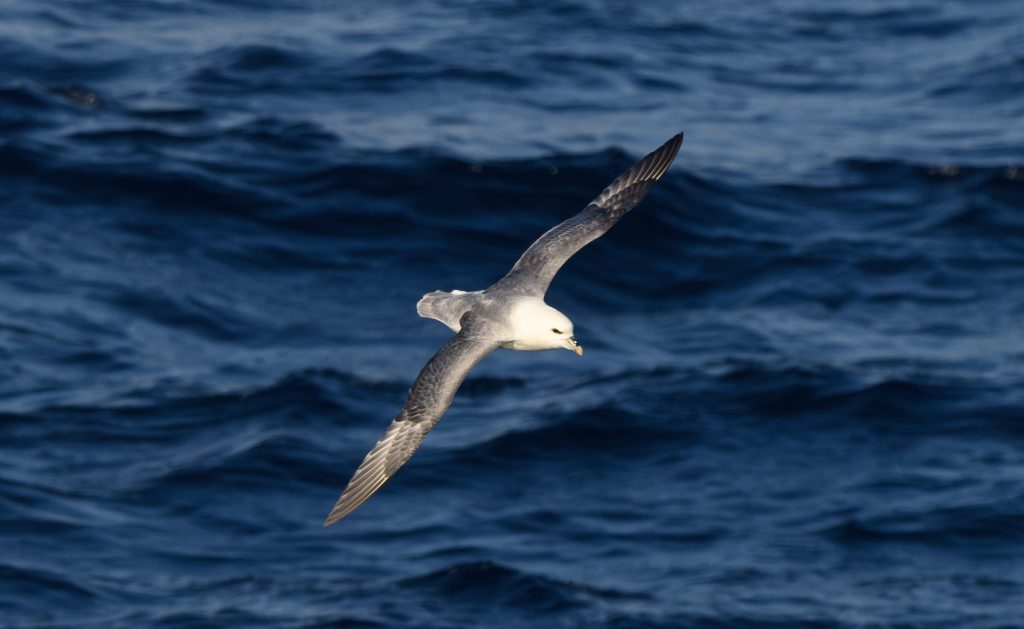
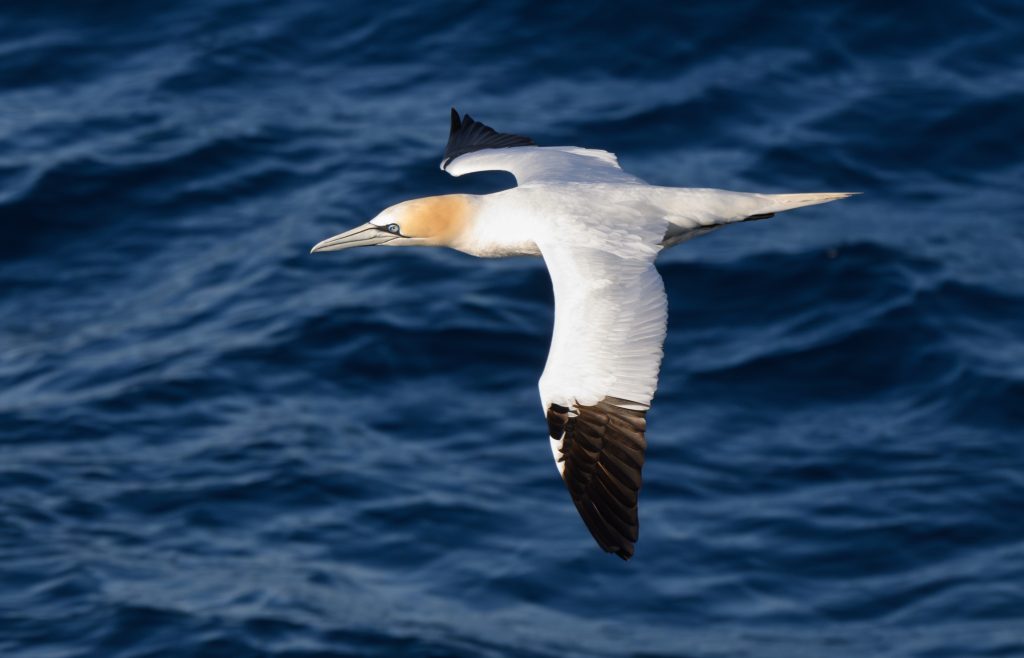
As we headed west past the Isles of Scilly we started to pick up more Fulmar. It’s always a delight to see these graceful birds as we don’t see that many on most MARINElife surveys and they were a regular feature of the second half of the day. Gannet were also a feature of the later part of the day, with most birds being sub-adults. Gannets take at least five years to reach their adult plumage and go from being totally grey-brown as a juvenile through a variety of intermediate plumages which are catchily called I2, I3 and I4 to their smart adult plumage. Picking the various plumages out while surveying keeps you on your toes.
Adult Gannet were severely impacted by Avian Influenza, which is still a thing but, fortunately, does not seem to be impacting our seabirds to the extent it did in 2023. All the non-breeding birds will have avoided bird flu so far, let’s hope they continue to do so when they take their place in the breeding colonies.
We passed several trawlers during the late afternoon and evening, one in particular had a good following of birds and, on closer inspection it was possible to pick out six European Storm Petrel in the wake. A nice addition to the species list, even if a little distant.
The longer the day went on, it looked more and more likely that we were going to draw a blank on cetaceans – again, and indeed, as we came off the bridge just after 21:00 we still hadn’t managed to see a cetacean.
27 May – day 3
The benign conditions of the past two days had been replaced by a 20-knot breeze from the east, a sea state five is not conducive to spotting cetaceans and even more annoying as we were now over the Porcupine Seabight with the seabed over 2000m below and the area well known as a cetacean hotspot.
Did you know?
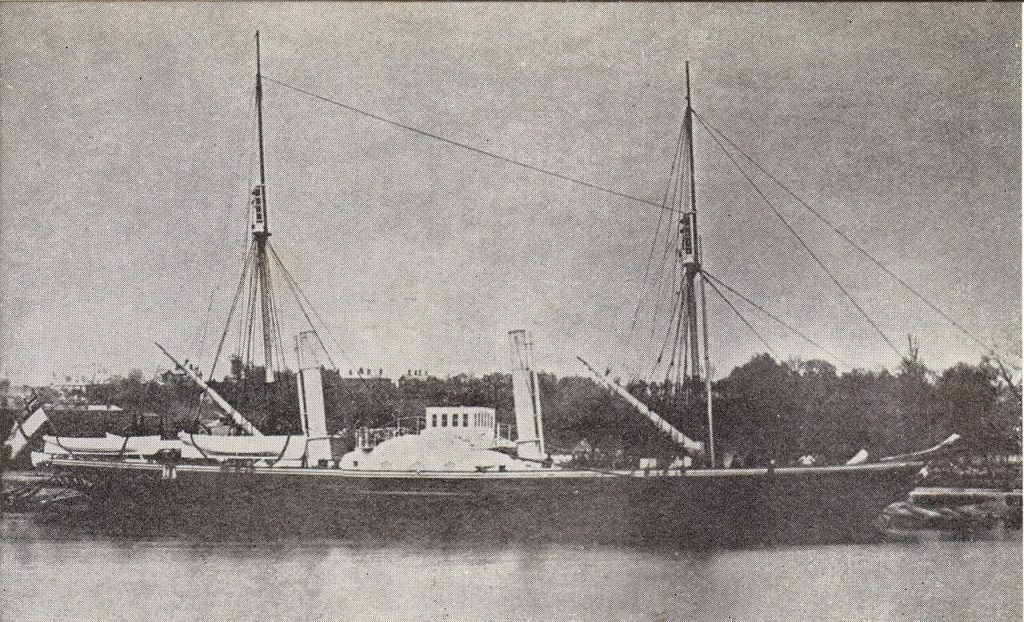
The Porcupine bank and seabight were named after the Royal Navy vessel HMS Porcupine which discovered the bank in 1862. Despite the odd name it was in fact the 5th vessel to bear the name when launched.
Birds weren’t particularly numerous, with Manx Shearwater once again the commonest species in the four hours we surveyed, followed by Gannet and Fulmar. Bird of the morning, and quite possibly the trip, were two Cory’s Shearwater. These birds breed on the Canary Islands, Azores and Berlenga island off the coast of Portugal and, if you had asked me a few years ago, I would have said we were unlikely to see them here in the spring.
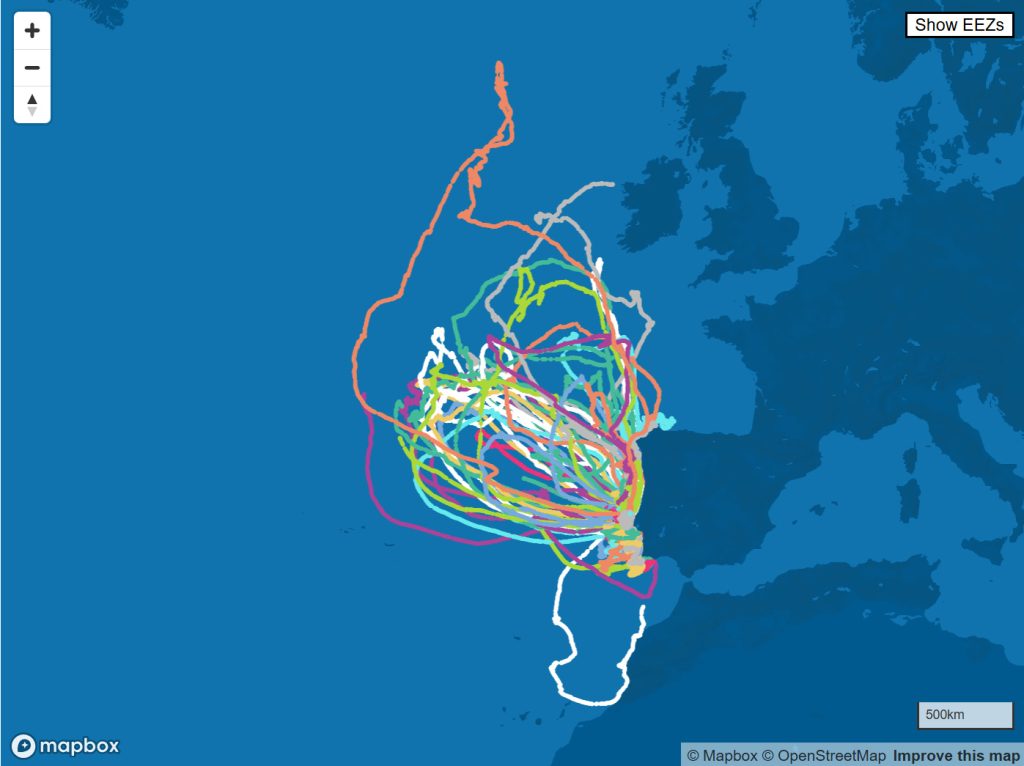
In the autumn they can be seen in the Southwest Approaches in large numbers, particularly in the last few years. However, thanks to some GPS-tracked birds ringed on Berlenga island we now know that female Cory’s will come up as far as Ireland on a pre-laying exodus, so spring sightings are also to be expected.
Unfortunately, by the time we stopped surveying when we arrived out our first buoy, we still hadn’t seen a cetacean – this is getting serious.
Arriving at the buoy brings me on to why the Discovery is out here. The UK Met Office operates a network of 17 meteorological buoys around the coast of the UK and Ireland – some run in conjunction with Met Éireann and Météo-France. They need regular maintenance and the Met Office try to get to each one at least every two years. This trip is servicing K2, K1, Brittany and Celtic Sea.
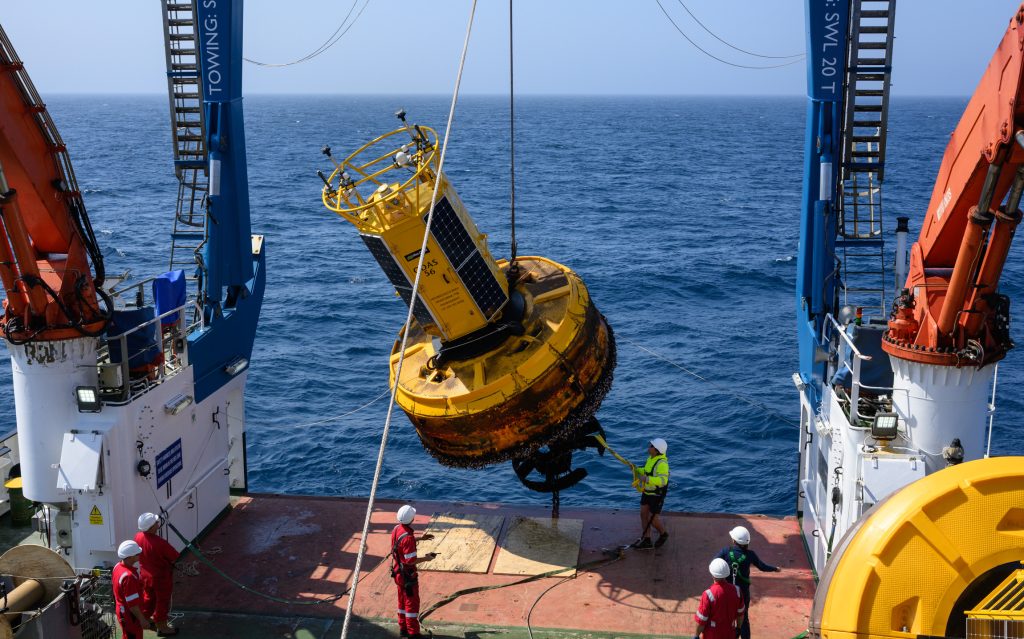
These buoys aren’t small, they weigh several tonnes and, as the photo shows, are quite large! It’s no small matter getting them on board a ship moving around in the swell. The launch of the new K2 buoy went smoothly and by early afternoon we had the old K2 buoy on board and were hauling in the anchor, which is at the end of 2300m of rope and chain.
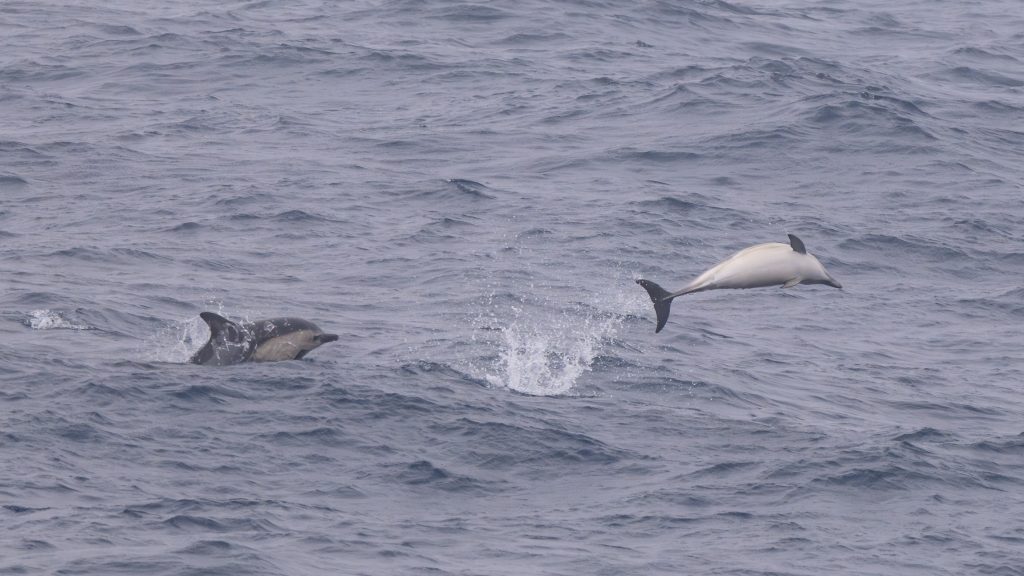
As the rope was being winched in I happened to glance up and – dolphins! A small group of about six Common Dolphin were leaping and splashing about 600m away, on the edge of some rapidly encroaching fog, one juvenile was being particularly energetic. Being on the aft deck to watch the crew bringing the buoy on board also took me close to two of yesterday’s stowaways – one of the Chiffchaff and the Tree Pipit were still on board – the Chiffchaff in particular was fearless and was flying around the aft deck while operations were underway.
Unfortunately, as the afternoon wore on it had clouded over and by late afternoon fog had closed in and put paid to any further wildlife watching on board. We’re just hoping that it’s cleared in the morning as we should have a few hours surveying before we get to our next buoy, K1.
