
With Storm Benjamin bearing down on us we ran north to seek shelter in the lee of Lundy. We need to move north in any case as it’s more efficient to run the remaining transects from north to south so that we end up near Land’s End to head off home at the end of next week. Winds were 30-45 knots for most of the day, although first thing the sea hadn’t built up too much, it was a good bit rougher by the time we reached Lundy.
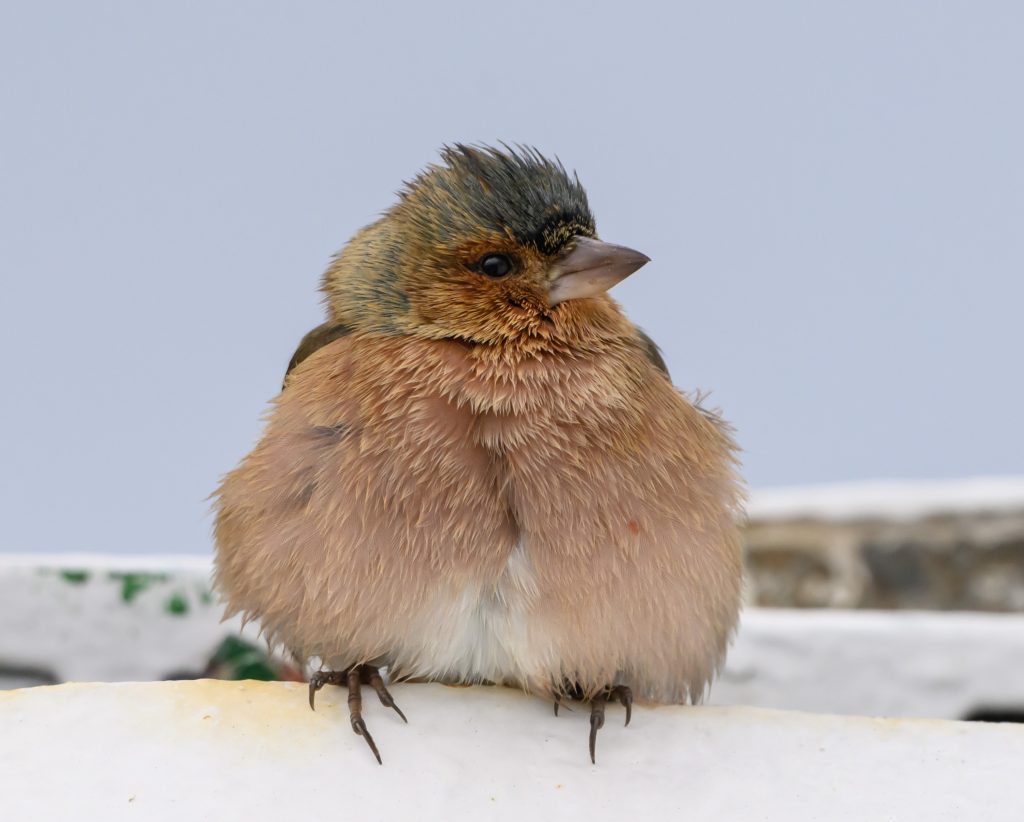
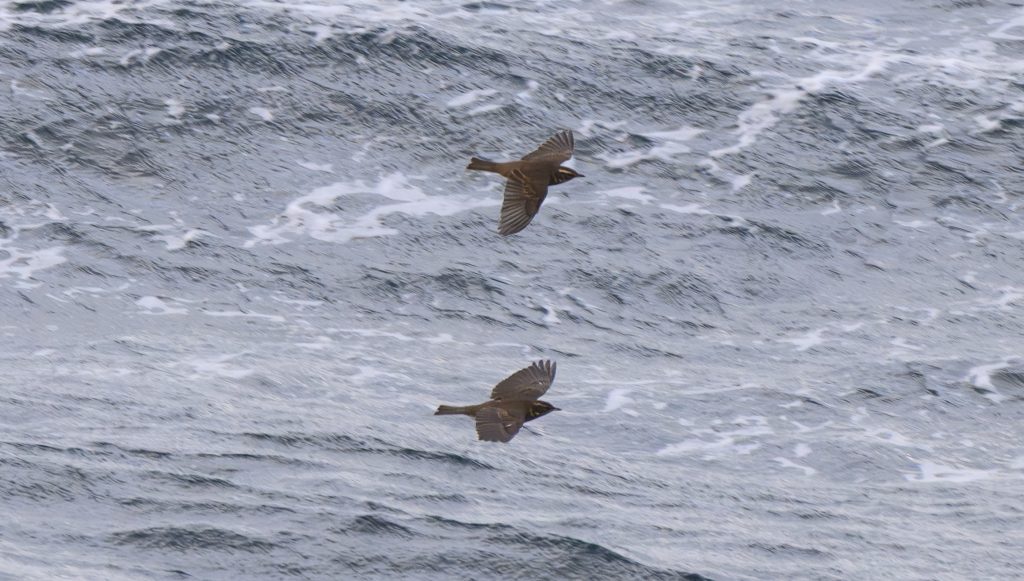
With no surveying to be done it was a case of looking for wildlife. The aft deck appeared to be the HELP today as a flock of six Chaffinch had taken up residence at some point in the last 10 hours. They were soon joined by a Redwing, although that was much flightier, and a Snipe thought about trying to land but was soon on its way.
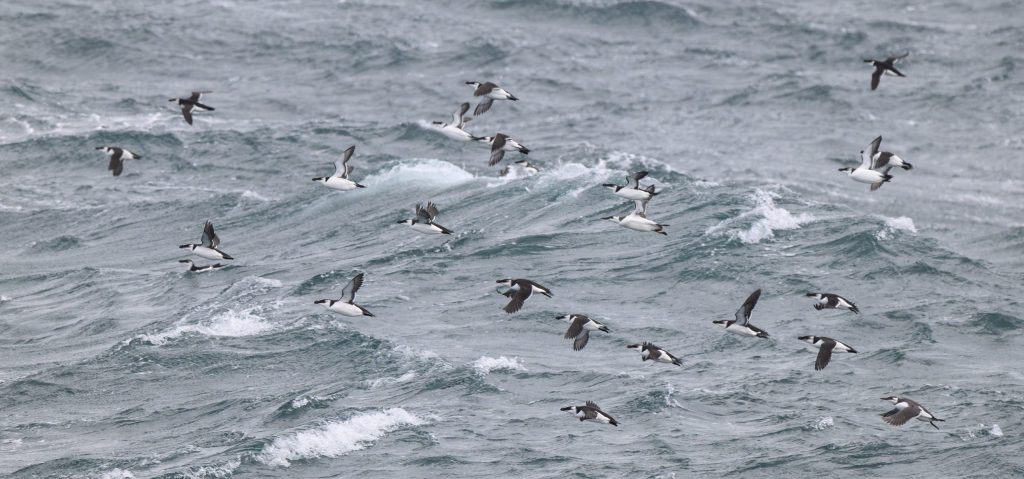
After that it was a case of standing on the lee bridge wing looking at the increasingly rough sea. Gannet and Kittiwake were going past in reasonable numbers along with a few Razorbill, Guillemot and the odd Manx Shearwater.
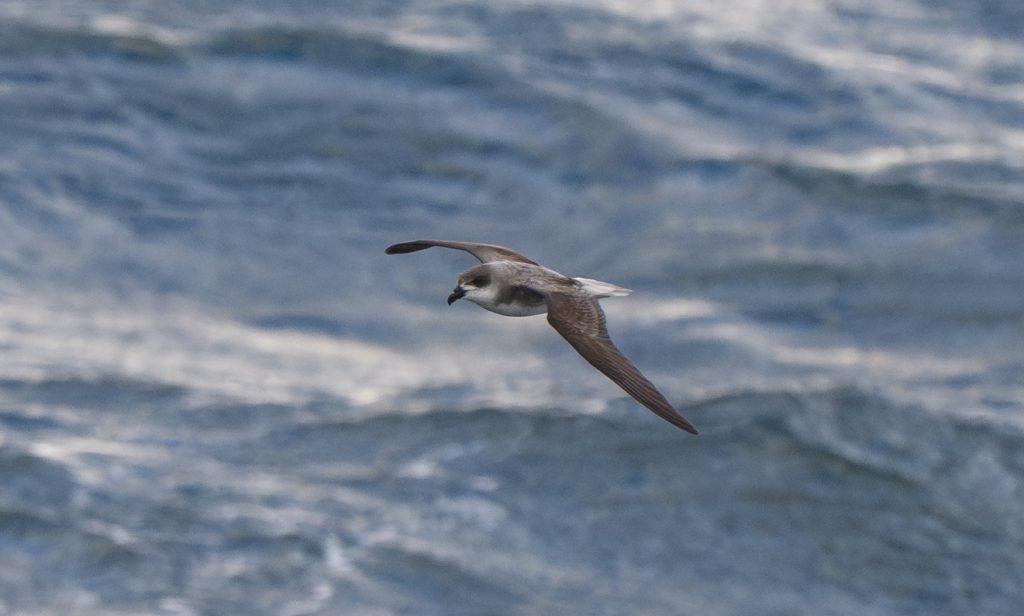
The JNCC ESAS counters for this half are Anouska and Debbie, this being Anouska’s first Peltic and Debbie’s third. Robin and Anouska were busy with things on their laptops leaving me and Debbie to do the watching. Mid-morning Debbie picked up a bird shearing towards us, commenting that it looked like an odd shearwater. As soon as I saw it I realised it was a Fea’s-type Petrel, a real rarity in UK waters, and normally a resident of either the Desertas Islands in the case of Desertas Petrel, or Cape Verde if a Fea’s Petrel. A real thrill to see and the Chief Scientist got to see it too – he’s quite partial to looking at birds as well as fish. For me, I’d rather it was a Fea’s as I saw Desertas Petrel when I was down in Madeira a few weeks ago. Sadly, separating them at sea is all but impossible and I suspect we’ll not be able to say which species it is.
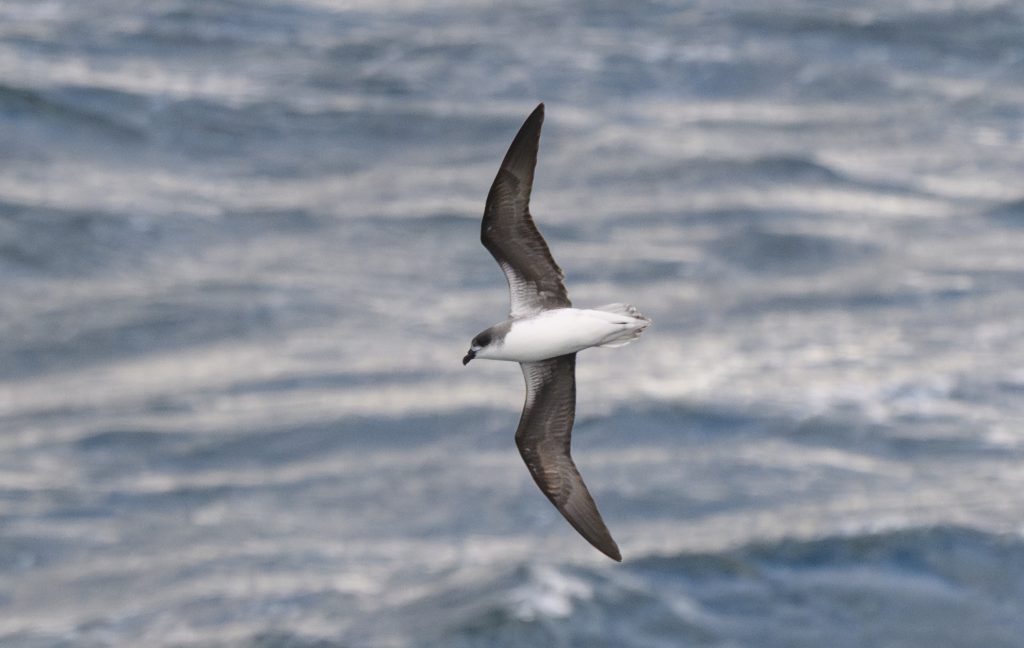
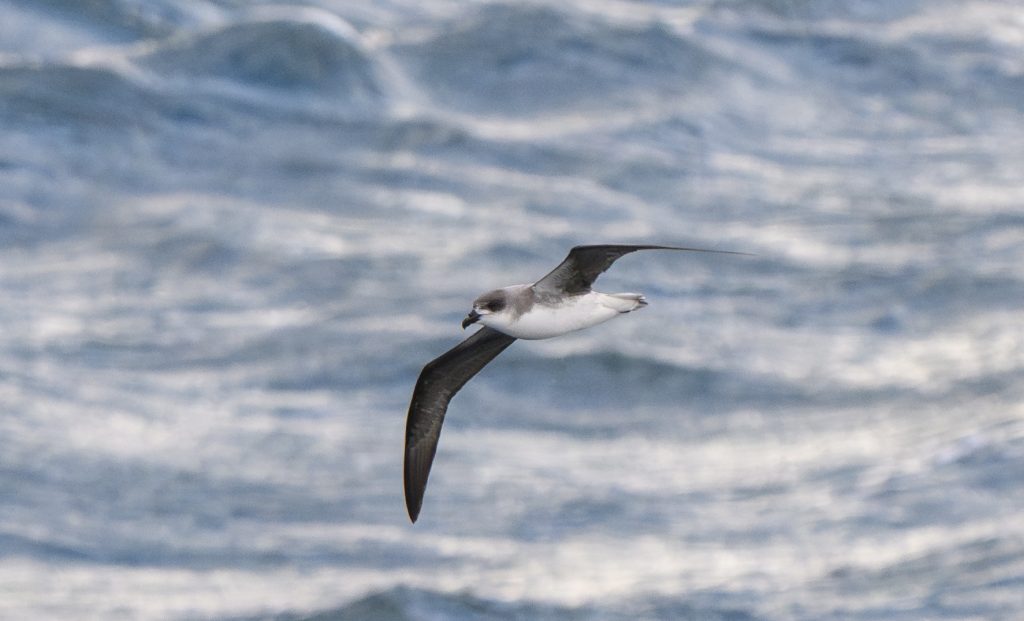
A short while later we must have passed through a good feeding area as we flushed a flock of a couple of hundred Razorbill off the surface and there were a good number of Kittiwake searching for food too.

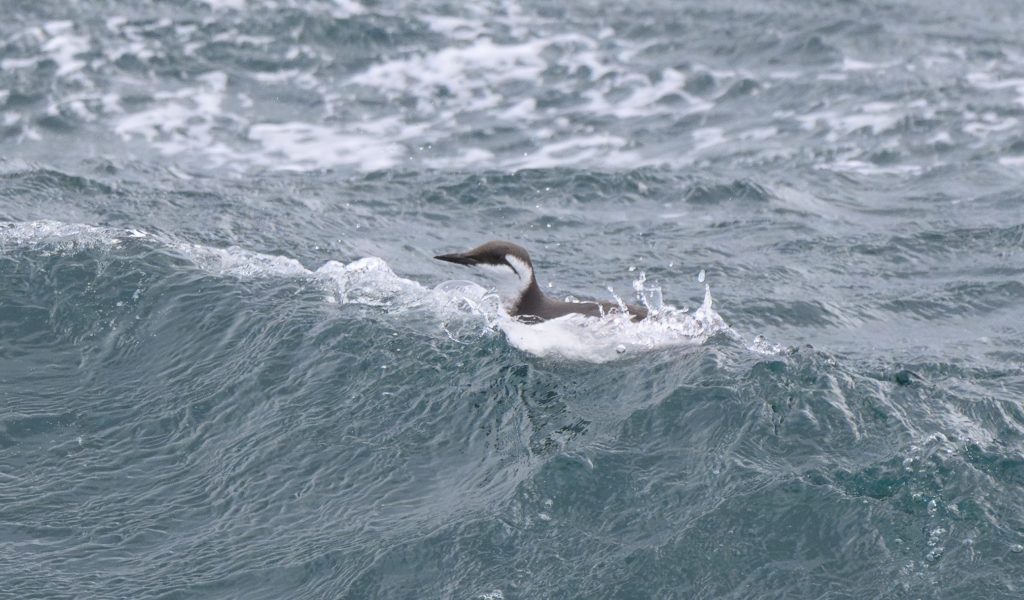

It’s always impressive watching seabirds in rough weather, most like Gannet and shearwaters use the wind to their advantage while auks just seem to battle their way through waves managing to look serene while doing so.
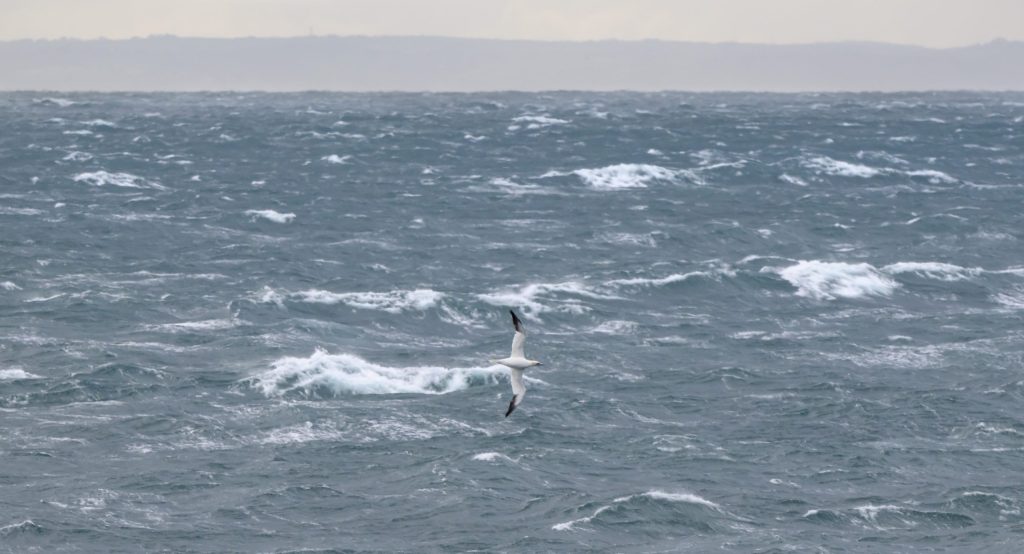

We anchored off the east side of Lundy just after lunch and with the current forecast likely to be our home until Saturday. Having already lost a couple of days at the start of the survey due to Storm Amy, losing more now is going to make it very difficult to fully finish the survey.