Taking up our position on the starboard side of the bridge it was good to hear from the captain that he was hoping for a smooth journey across the channel. Not always a given in October! True to his word it was an easy journey. Whilst cloud cover meant it was a little overcast, visibility remained good with minimal glare as a bonus. Always helpful when we’re trying to work out which gulls are passing, as they are not thrown into silhouette.
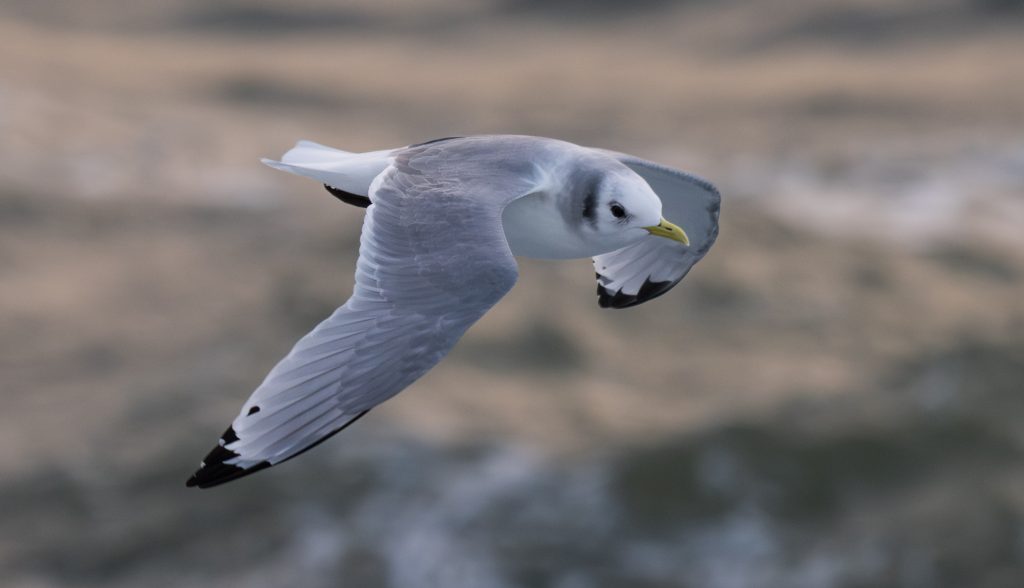
We had the usual array of Herring Gull, Lesser and Great Black-backed Gull and some Kittiwake, which are always lovely to see as they are a very elegant bird. It was good to see a reasonable number of Gannet and particularly heartening that these were a good mix of age ranges. It had been a worry that bird flu, which has been prevalent over the last few years would mean that chicks would fail to survive, due to catching the virus or if their parents died whilst they were still in the nest would not fledge.
Both worries do seem to have been unfounded as we saw juveniles in dark plumage colours from first year through to their final emergence as fully fledged adults with clean white body feathers, distinctive black tipped wings and peach coloured heads. They are always a delight to see as they swoop across the top of the waves or hitch a lift on the updraft from the bridge and float above us accompanying the ship for miles.

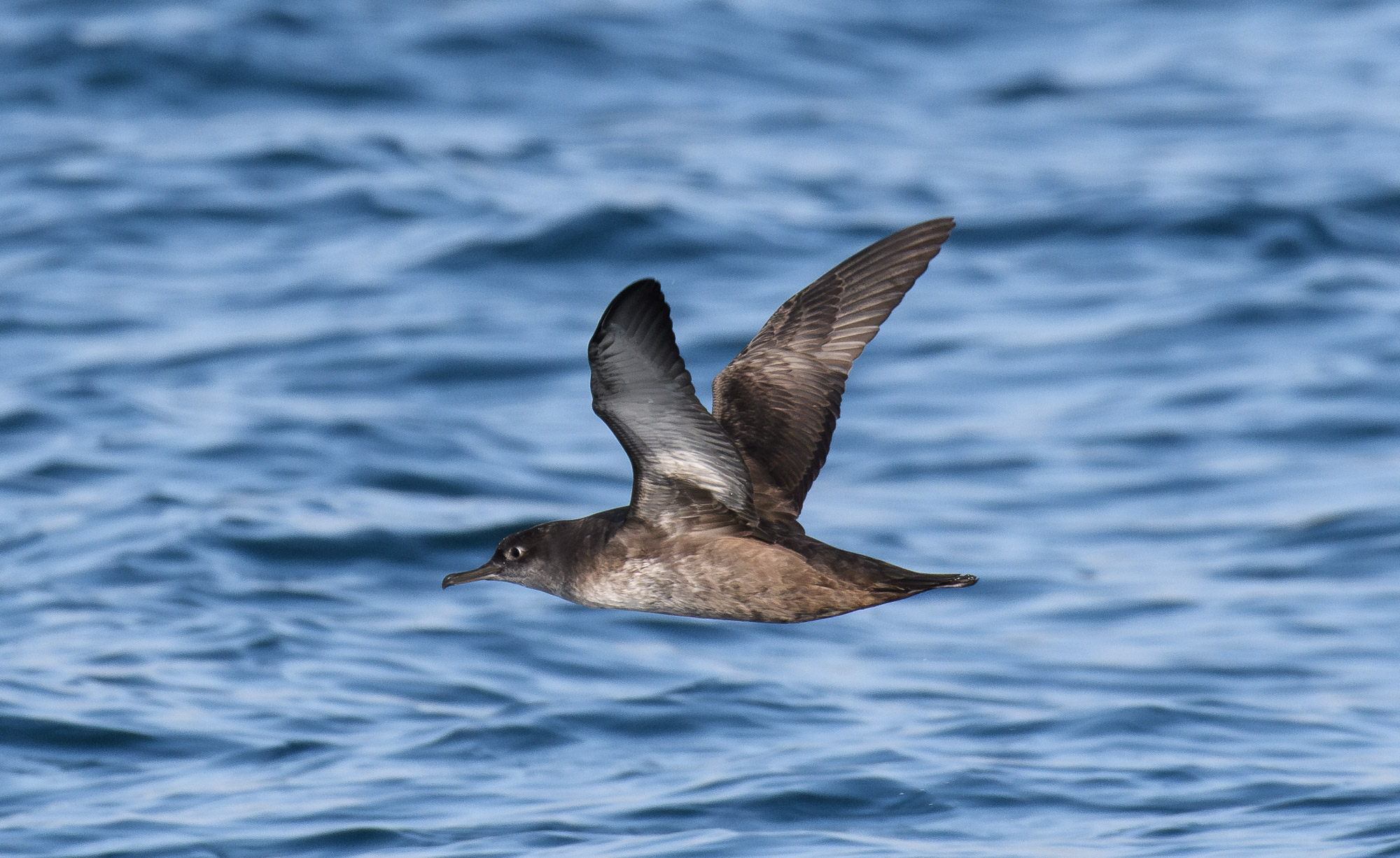
Auk species were not particularly prevalent, with only a brief sighting of Razorbill and several auk sightings where it was impossible to confirm which species was present due to distance. We were however very excited to see two individual Balearic Shearwater. This triggered additional paperwork, as they are a red listed species, and we collect additional information when sighted.
Unsurprisingly, considering its name, this species breeds in the Balearic Islands. After the breeding season they leave the Mediterranean to feed and moult off the Atlantic coasts of Spain, France and the UK before heading back south during November. Several thousand make it as far as the western English Channel, however, they are rarely recorded in the North Sea or the Dover Strait, so they were therefore quite a treat to see.

The journey back from Calais prompted a change in captain, as this was an early winter crossing and needed to be completed before twilight arrived. Our second captain of the day was a great supporter of MARINElife and very keen to catch up on what we had seen and share his own sightings with us.
We look forward to our next survey with DFDS on both the Dover-Calais and Dover-Dunkerque routes. Thank you to the company for supporting MARINElife and allowing us essential access to the bridge to collect this important data which will influence scientific research in the future.
Julie Ackroyd and Carol Farmer-Wright, Research Surveyors for MARINElife (Registered Charity No. 1110884; Registered Company No. 5057367)
Weather
Outward – overcast, moderate visibility, wind SSE, sea state 5-2
Return – brighter, improved visibility, wind SSW, sea state 2-4
Species recorded
Seabirds
- Balearic Shearwater Puffinus mauretanicus 2
- Black-headed Gull Chroicocephalus ridibundus 1
- Cormorant Phalacrocorax carbo 1
- Gannet Morus bassanus 27
- Great Black-backed Gull Larus marinus 23
- Guillemot Uria aalge 2
- Herring Gull Larus argentatus 5
- Kittiwake Rissa tridactyla 3
- Lesser Black-backed Gull Larus fuscus 5
- Mediterranean Gull Ichthyaetus melanocephalus 1
- Razorbill Alca torda 2
- Auk sp. 3
- Gull sp. 2
- Larus sp. 3