
The transects we cover along the coast of north Devon and Cornwall all run NW-SE, if it’s a little rough, like now, then starting offshore and running SE is the best option. Unless it’s sunny, then you’re between a rock and a hard place, either plough into the waves or stare into the sun for the morning.

Today, it was the latter for us – well, not really an option, we didn’t get any say in which end we’d start. Transect 14 has historically been good for Fin Whale sightings, not so reliable over the last two years, but great news we had a whale blow – spotted by the Chief Scientist – the bad news was it was behind us and so couldn’t be counted in the survey. No part of the animal was seen despite four blows being seen, so the best that we can say is that it was a large baleen whale.
The excuse I’ll give as to why the observers didn’t spot it is that there was a feeding frenzy going on involving several hundred shearwaters and a decent sized pod of dolphin and while Robin recorded the data for the dolphin sighting I was trying to make estimates of the number of birds flying around us, so we were busy. All this happened within 10 minutes of starting the transect.
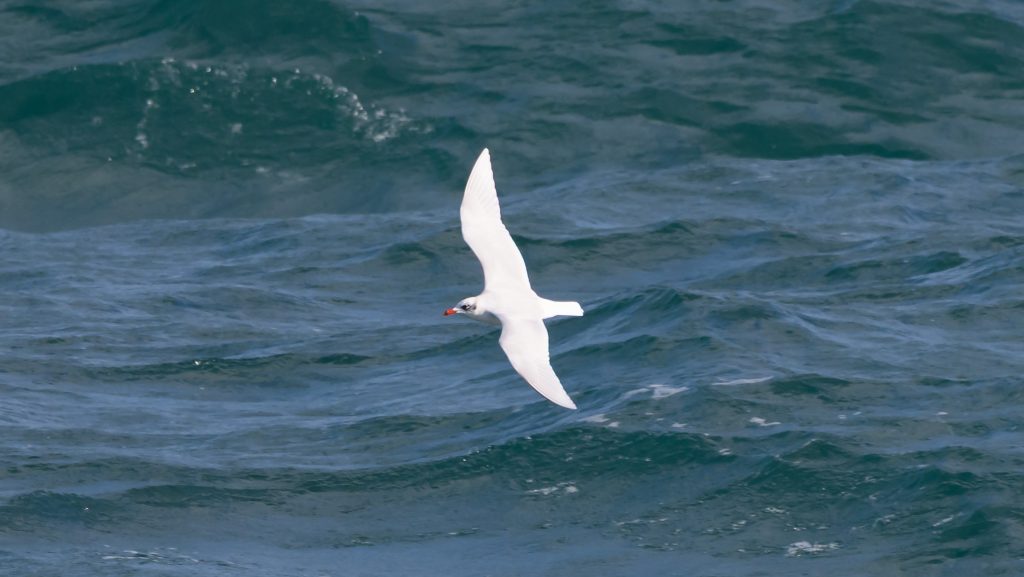
After such a hectic start the rest of the transect seemed slow, although there was a steady trickle of Kittiwake, Guillemot and Gannet sightings to keep us going. Half a dozen Fulmar helped bump their total closer towards the average for the survey and a single adult Mediterranean Gull was a welcome sight closer inshore – it’s been a very poor year for them with numbers well down on the last few years.
We had a further seven encounters with Common Dolphin, after the first encounter with 30 in the feeding frenzy, involving a further 46 individuals.
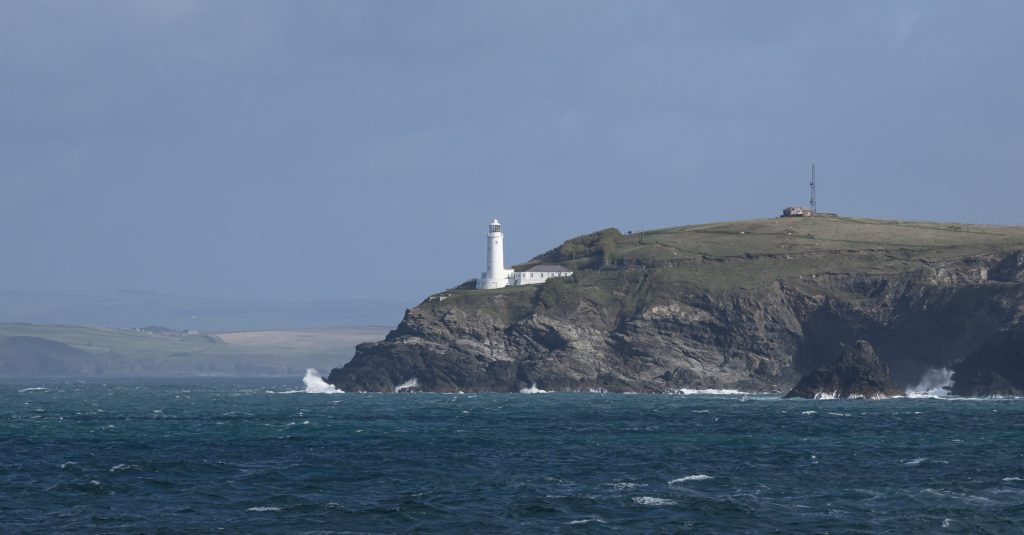
The transit between transects took us along the beautiful stretch of Cornish coast between Tintagel and Trevose Head. I try and keep an eye on the sea during these transits, although we’re not surveying you never know what might go past, plus it’s a good time for photographs. Standing on the starboard bridge wing in the wind (and shade) getting cold paid off this morning.
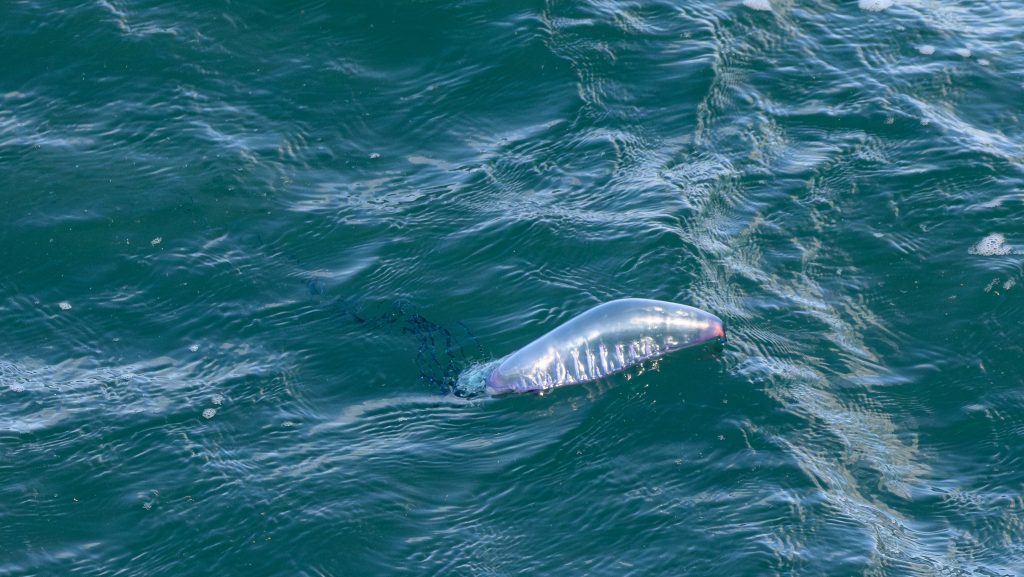
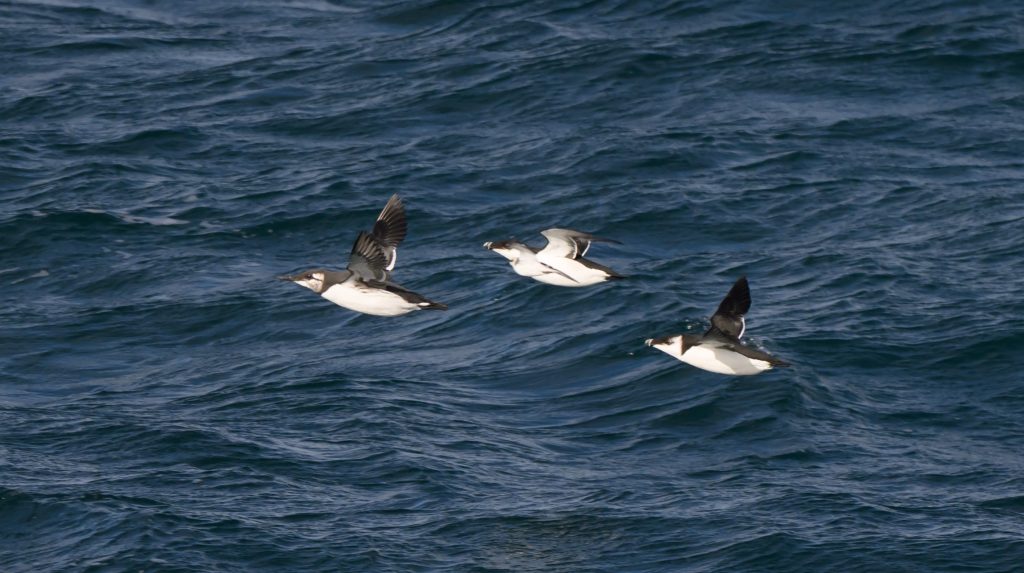
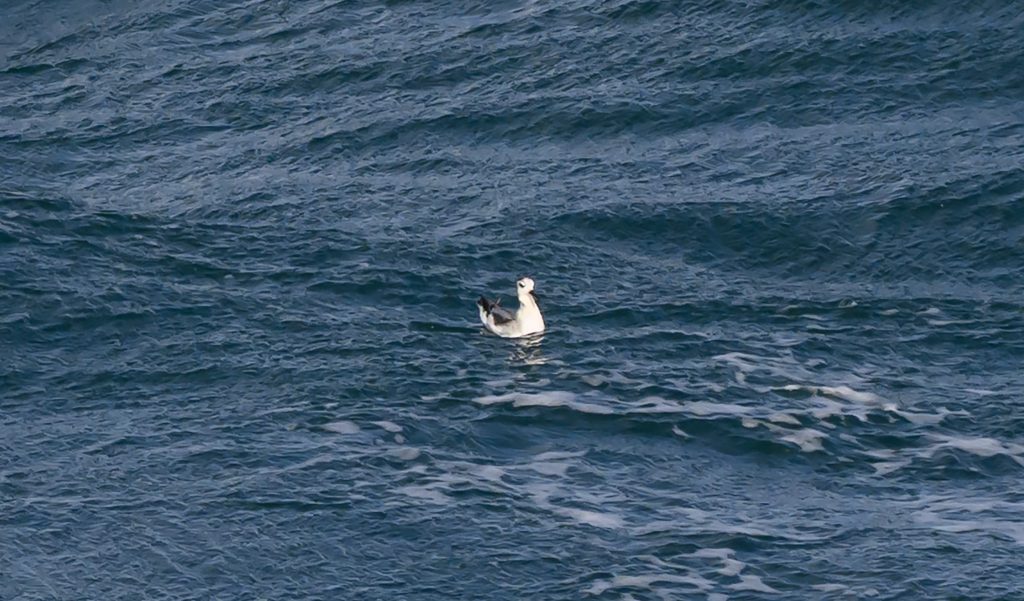
Ahead of us I could see a Herring Gull investigating something on the surface, that something turned out to be a large Portuguese Man O’ War. I hadn’t seen one of these on the Peltic for a few years. A short time after I was photographing a passing flock of auks when I realised there was a small wader flying with them, which dropped out of the flock and landed on the water – a Grey Phalarope – a shame not to see it on transect but still great to see.
Conditions were not great as we turned on to transect 15, we still had 20 knots of wind, and we were now heading into the sea with the wind on the port bow – spray was almost immediately an issue. Highlight of the afternoon was finally adding Bottlenose Dolphin to the cetacean list for this year, we never see many on the Peltic, but we were very close to running out of transects.

As well as the Bottlenose Dolphin we had four encounters with Common Dolphin, all of them running in stealth mode, being seen just as they disappeared out of view at the bow. There weren’t very many of them either, just nine individuals.
Birds were pretty thin on the ground for the four or so hours we were surveying, Kittiwake topped the leader board with 38, with Guillemot close behind on 31. The most notable sightings were 21 Puffin, until this transect only six had been recorded.

It now looks likely we’ll end the survey on Thursday 30th October as there’s bad weather coming in and the Captain wants to get us back into the Channel before it hits, so tomorrow will be our last full day on survey.