
After meeting along the shore from the entrance to the port so that we could arrive together, which is easier for checking in at the port, we were quickly checked in and parked near the exit. From here we were collected and transferred to the ship by the ever-efficient CLdN port staff, and once on board the Performance we had the usual hearty breakfast before being escorted to the bridge to begin our survey.
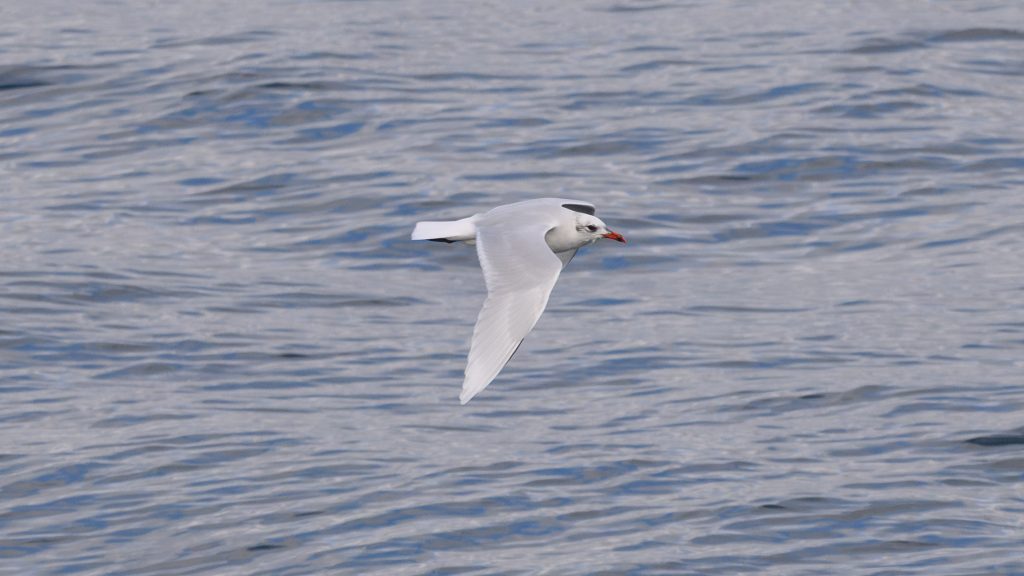
Once on the bridge we were able to see a regular passage of gulls with Common Gull, Herring Gull, and Black-headed Gull all seen in small numbers. Within an hour of starting, we had seen a couple of flocks of Common Scoter speeding past low over the water and also a Mediterranean Gull, which glided past with its large bill and pale wings help us to distinguish it from the other species of gull.
The first small pod of Common Dolphin appeared as we left the wind turbines area. After that there were frequent Kittiwake and Guillemot sightings, which dominated for the rest of the crossing with a smattering of Gannet which were almost all adults. Another small pod of Common Dolphin when the Irish coast was in sight brightened up what was overall a fairly quiet crossing. However, every day is different so we had hopes for more sightings on the return leg when better weather and sea conditions were forecast.
After a good meal on board, we just had time to finish packing before the ship docked and we were transferred to the CLdN office to check our departure time the following morning, followed by a brisk walk round the coast to the Whistledown Hotel. After our early start in the morning, the evening gave a good opportunity for us to rest without the distraction of a coastal walk that is possible during the light summer evenings.
The usual generous Whistledown Hotel breakfast was followed by the walk round the coast to the port, where we were transferred onto the Progress to wait for departure and the passage down the spectacular Carlingford Lough. While waiting in the passenger lounge for permission to go to the bridge, we were able to spot several Black Guillemot in their winter plumage, a couple of divers, and a Great Crested Grebe. There were large numbers of Shag and Cormorant on the small islands by the lighthouse with a group of Grey Seal hauled up above the water.
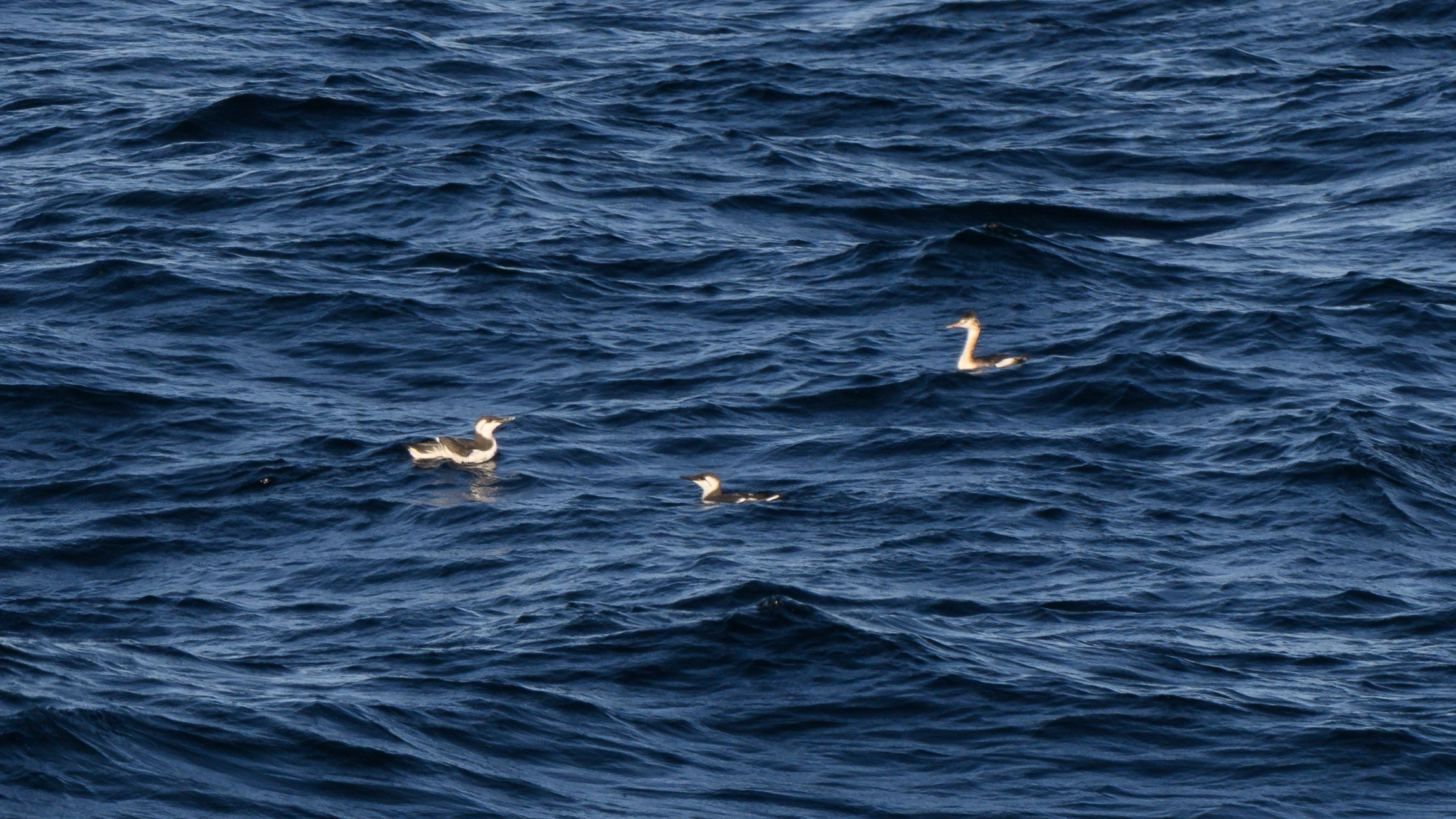
Great Crested Grebe with Guillemots (Library photo)
Once the Progress had made its way out of the lough entrance, we were escorted to the bridge to start our return survey, which started well with the first bird seen being a Great Northern Diver in winter plumage. After that the bird sightings settled down with regular Kittiwake, Guillemot, and Gannet, with a few larger gulls for the rest of the crossing. Most of these sightings were of single birds until we were well into Morecambe Bay and the wind turbine area, when numbers increased slightly.
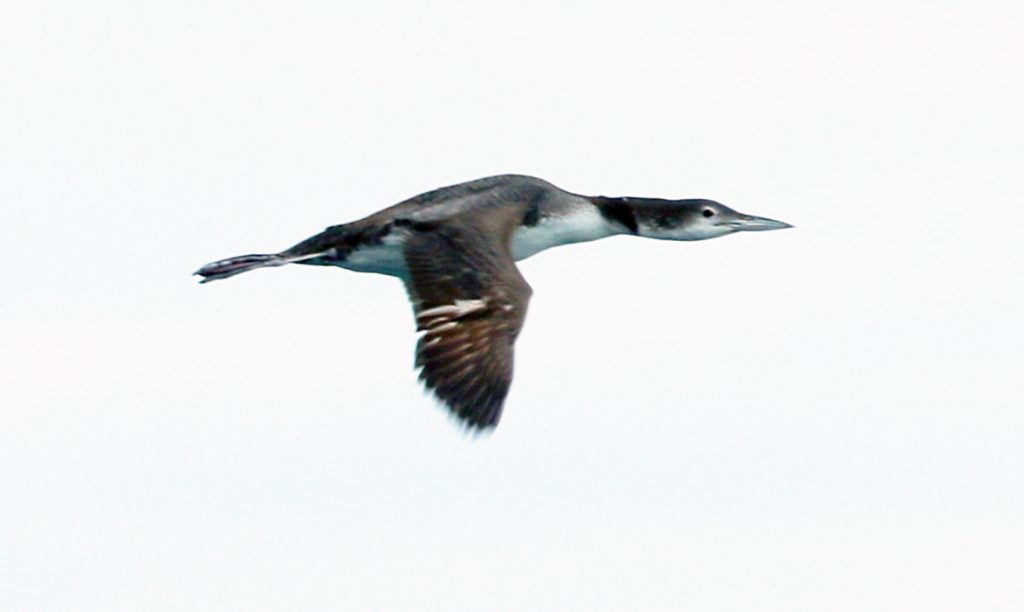
Great Northern Diver (Library photo: Rob Petley-Jones)
Compared with recent trips there were few cetaceans sightings, but a few seconds of what was probably a Bottlenose Dolphin near the Isle of Man was the highlight of the trip, followed by several small pods of Common Dolphin. With the slightly calmer sea conditions as we approached the wind turbines a solitary Harbour Porpoise was seen.
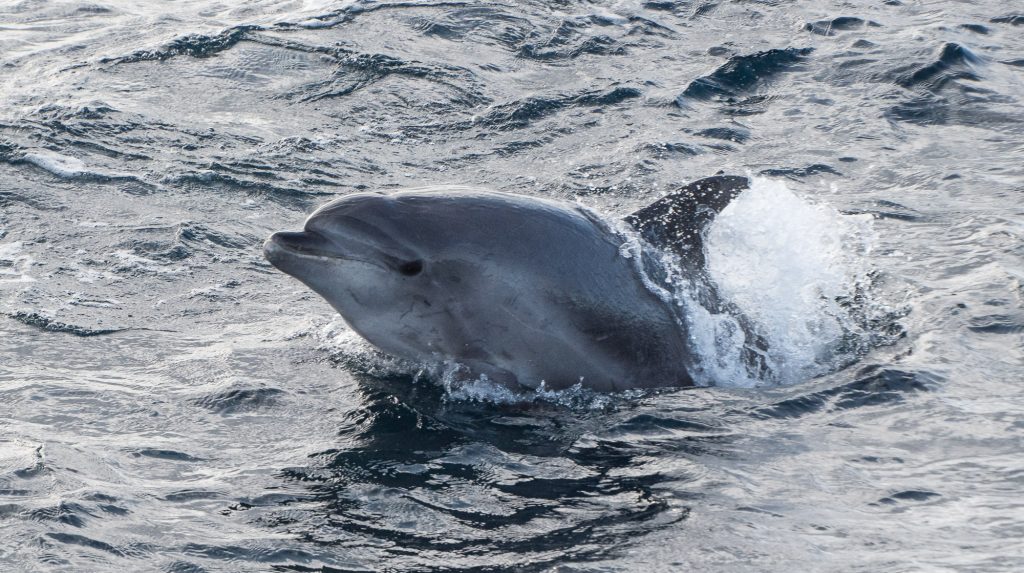
Due to the overcast weather and poor light, the survey was ended a little earlier than expected due to bad light. As Manx Shearwater are now on their way to their wintering grounds in the southern Atlantic, we were not surprised that we saw none. However, not seeing a Fulmar was a disappointment.
After another excellent meal we were soon docked at Heysham and quickly transferred to our vehicles for our drives home.
We thank the ship’s Captains and crews of the Performance and Progress for making us so welcome and looking after us so well. It hadn’t been the most exciting of surveys, but we did see a good number of birds and some nice views of dolphins. All data, even that of low bird and cetacean numbers, is important to increase our understanding of how birds and mammals use the Irish Sea.
Tony Marshall and Allison Gleadhill, Research Surveyors for MARINElife (Registered Charity No. 1110884; Registered Company No. 5057367)
Summary of Weather and Species Recorded
Weather
Outward – Wind eastly variable 17-23 knots, sea state 3-5, swell 1, good visibility in overcast skies.
Return – Wind easterly dropping from 25 knots to 16 knots, sea state 3 improving to 2, swell 0, good visibility under overcast skies.
Species recorded
Marine mammals
- Bottlenose Dolphin Tursiops truncatus 1
- Common Dolphin (Short-beaked) Delphinus delphis 14
- Harbour Porpoise Phocoena phocoena 1
Seabirds
- Auk sp. Alcidae 29
- Black-headed Gull Chroicocephalus ridibundus 7
- Common Gull Larus canus 22
- Common Scoter Melanitta nigra 23
- Gannet Morus bassanus 45
- Great Black-backed Gull Larus marinus 4
- Great Northern Diver Gavia immer 1
- Guillemot Uria aalge 161
- Herring Gull Larus argentatus 55
- Kittiwake Rissa tridactyla 198
- Larus sp. 12
- Lesser Black-backed Gull Larus fuscus 5
- Mediterranean Gull Larus melanocephalus 1
- Razorbill Alca torda 19
- Auk sp. Alcidae 29
Birds in and around Carlingford Lough
Black Guillemot Cepphus grylle
Black-headed Gull Chroicocephalus ridibundus
Cormorant Phalacrocorax carbo
Great Black-backed Gull Larus marinus
Great Crested Grebe Podiceps cristatus
Herring Gull Larus argentatus
Hooded Crow Corvus cornix
Mallard Anas platyrhynchos
Red-throated Diver Gavia stellata
Shag Gulosus aristotelis