
Pat joined me in Dover, and we headed off to the port. Having obtained our passes, we went and awaited our queue to board to Cote des Flandres.
We completed the formalities at the information desk and were taken to the bridge to set up for the survey. Master Larrieu and the bridge officers welcomed us, and it wasn’t long before we left the berth on our way to Calais. The officers commented on there being an influx of fish on the French side of the Channel and that many birds and seals had been seen recently on the approach to Calais harbour.
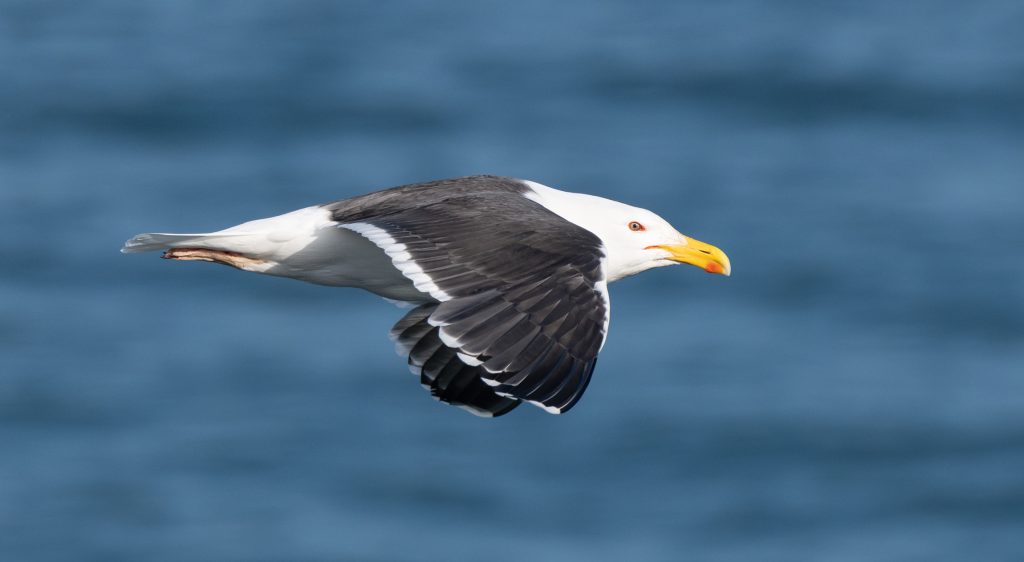
We left Dover on calm seas with the low autumn sun shining through the bridge windows. Birds were few, with only Gannet, Herring Gull, Great Black-backed Gull and Kittiwake in evidence. As we approached France, bird activity increased, confirming what the bridge officers had mentioned previously. Gannet, Great Black-backed Gull and Herring Gull were seen in good numbers, many of them resting on the surface, hinting at recent feeding activity. During this time a Grey Seal was seen, swimming slowly ahead of the ship a better sighting than the brief splash of a seal Pat had seen earlier.
As we neared Calais harbour the cloud increased and a fog bank approached the ship from the north, just as our outbound survey concluded at the outer breakwater in Calais. In the harbour many hundreds of gulls were resting on the beaches and the breakwater, far more than usual, indicating that food was indeed plentiful in the area at the moment. In addition, we were able to watch seven Harbour Seal that were hauled out on the beach to the south of the mooring.
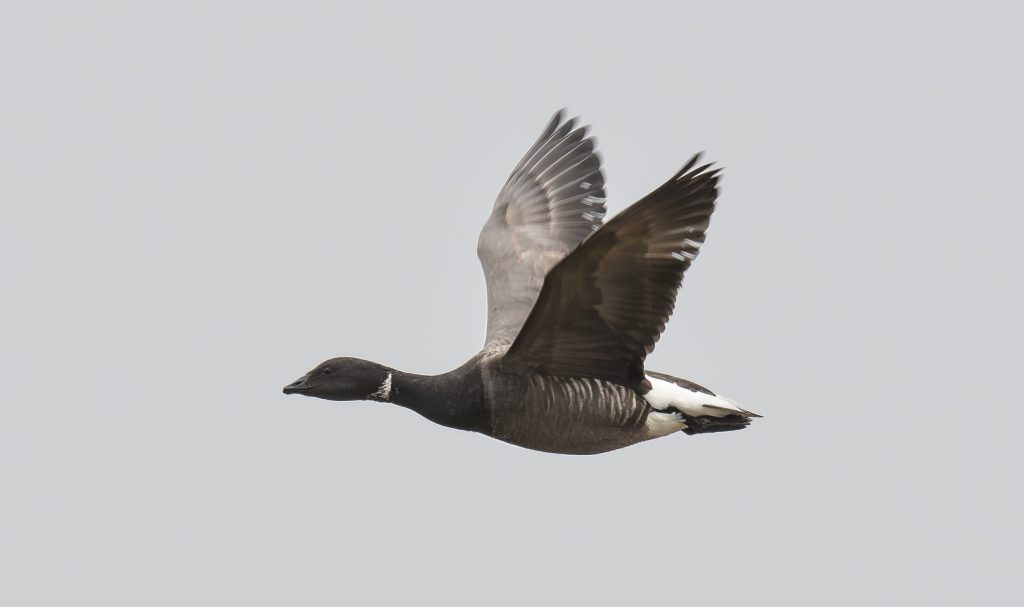
Within ten minutes of docking in Calais, we were enveloped in heavy fog making us wonder if the visibility would be good enough to survey on the return transect. As we left the harbour, the fog began to lift, and visibility was better than we had expected. The wind speed had increased and had veered towards a northerly direction. The birds that we recorded were the same species as on the outbound transect, the two additional species seen were a group of fifty Common Scoter flying low along the coast and a group of nine Dark-bellied Brent Geese heading across the Dover Strait towards England.
We left the bridge as we neared the harbour arm. Our thanks go to DFDS, Cote des Flandres Master Larrieu, his officers and crew for being so welcoming and enabling our survey to be completed.
Carol Farmer-Wright and Pat Hatch, Research Surveyors for MARINElife (Registered Charity No. 1110884; Registered Company No. 5057367)
Weather
Outbound: good visibility, with moderate cloud and glare, winds SE to W, sea state 2-3
Return: moderate visibility, variable fog, wind WNW to NNW, sea state 2-3.
Species recorded
Marine mammals
- Grey Seal Halichoerus grypus 1
- Unidentified Seal sp. 1
Seabirds
- Brent Goose Branta bernicla 9
- Common Scoter Melanitta nigra 50
- Common Gull Larus canus 5
- Cormorant Phalacrocorax carbo 1
- Gannet Morus bassanus 135
- Great Black-backed Gull Larus marinus 58
- Guillemot Uria aalge 1
- Herring Gull Larus argentatus 147
- Kittiwake Rissa tridactyla 22
- Lesser Black-backed Gull Larus fuscus 6
- Mediterranean Gull Ichthyaetus melanocephalus 1
- Auk sp. 1
- Gull sp. 1
- Larus sp. 22