
Once onboard the vessel, we were escorted to the bridge and prepared for the survey ahead. There was light cloud cover in the Channel, but not enough to impact the survey. The survey transect is undertaken from the exit of the Dover outer breakwater to the entrance of the Calais breakwater. This is done to discount the birds frequenting the port area as it is not strictly a pelagic environment. There were several hundred Herring Gull within this protected area in Dover, many of whom took advantage of feeding opportunities created by the wash of the vessels docking and leaving the harbour.
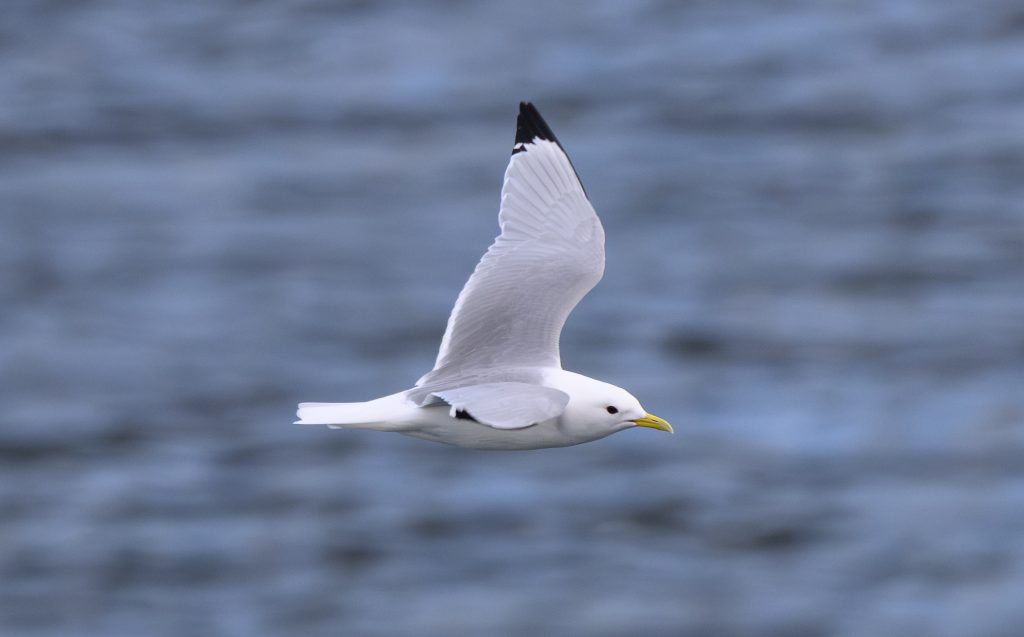
Bird sightings in the Channel were sporadic comprising of Herring Gull, Great and Lesser Black-backed Gull, Mediterranean Gull, Black-headed Gull, Kittiwake, Gannet and a single Sandwich Tern. Despite calm seas, no marine mammals were seen on the transect.
On entering Calais harbour, again off transect, we were rewarded by seeing four Harbour Seal that had hauled out in the protected harbour environment. Again, birds were taking advantage of the port area, many Cormorant, Herring Gull and Black-headed Gull were resting awaiting the ships to dredge up food scraps in their wake.
Whilst in port, the clouds started to burn away, visibility improved and the wind increased slightly.
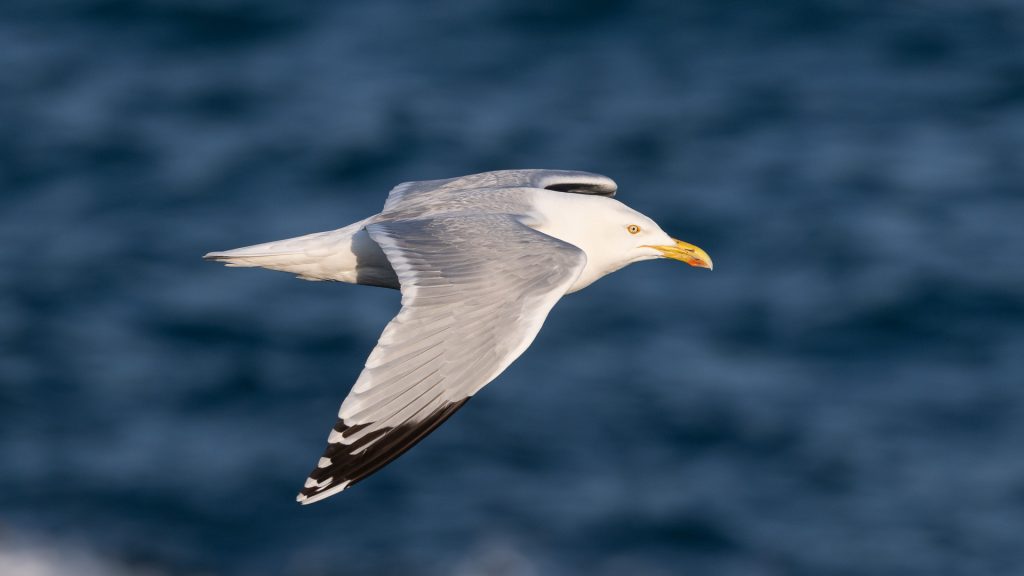
Bird sightings were sporadic once again with sightings of Kittiwake, Herring Gull, Great and Lesser Black-backed Gull, Black-headed Gull and the occasional Gannet. As we neared Dover, a thin black line of birds was seen, which, as we neared them, were confirmed as eighteen Common Scoter
As the vessel entered Dover outer breakwater, we collected our belongings and returned to the passenger area to disembark. Despite not recording any sea mammals on transect, we were delighted to see the Harbour Seal hauled out in Calais harbour.
We wish to thank the DFDS Captains Thily and Traccan, and the officers and crew of the Cote des Dunes for enabling us to survey on this route.
Carol Farmer-Wright and Andy Farmer-Wright, Research Surveyors for MARINElife (Registered Charity No. 1110884; Registered Company No. 5057367)
Weather
Outbound – wind N force 3, visibility moderate with low cloud
Return – wind N force 5-6, visibility good
Species recorded
Seabirds
- Black-headed Gull Chroicocephalus ridibundus 6
- Common Scoter Melanitta nigra 18
- Cormorant Phalacrocorax carbo 1
- Gannet Morus bassanus 7
- Great Black-backed Gull Larus marinus 10
- Herring Gull Larus argentatus 12
- Kittiwake Rissa tridactyla 7
- Lesser Black-backed Gull Larus fuscus 3
- Mediterranean Gull Ichthyaetus melanocephalus 8
- Sandwich Tern Thalasseus sandvicensis 2
- Larus sp. 1