Clear skies and a sea state three greeted us this morning and we had the sun behind us so great surveying conditions. We got off to a good start with a Balearic Shearwater as one of the first birds and ended up recording six on the transect.
Balearics have always been a target species for the Peltic survey as it’s Europe’s most endangered seabird with a global population thought to be about 25,000 birds, with breeding restricted to the Balearic Islands in the western Mediterranean. After the breeding season (February-early July) a significant proportion of the population migrates up towards the English Channel and northern Biscay to moult.
Although most will have started moving south again by October, we have recorded them every year on the Peltic, and it is useful to see which areas of the Channel are being favoured to assess any potential threats to the population. In recent years the waters off the north coast of Brittany and around the Channel Islands has been favoured and last year we recorded 215 on the transects off the French coast. So far this year, on the same transects, we have seen only 16.

Other bird numbers are well down too so the immediate assumption would be that there is no food in the area this year. Certainly, the CEFAS scientists have been seeing far fewer Anchovy this year than last, which would be a possible explanation.
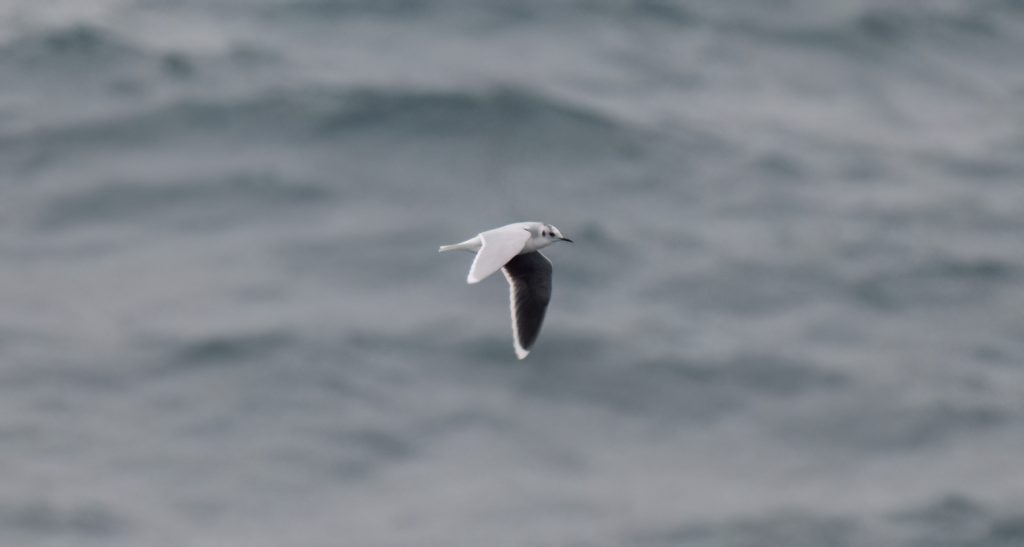
The rest of the transect was quiet with few birds and only one encounter with Common Dolphins. There were, however, a couple of highlights; best of which were 13 Little Gulls followed by a Great Northern Diver (photos 1 & 2 – both from previous Peltics). We had good number so of Little Gulls on this and the remaining two French transects last year – let’s hope for the same this year.
We moved on to run north on the next transect which would end offshore east of Plymouth. It followed the now familiar pattern of very little offshore with sightings increasing a little as we came closer to shore. Although numbers remained low until we hit the aftermath of a feeding frenzy with 3-400 birds sat on the water. The majority were Gannets and Herring Gulls but there were also three Balearics.
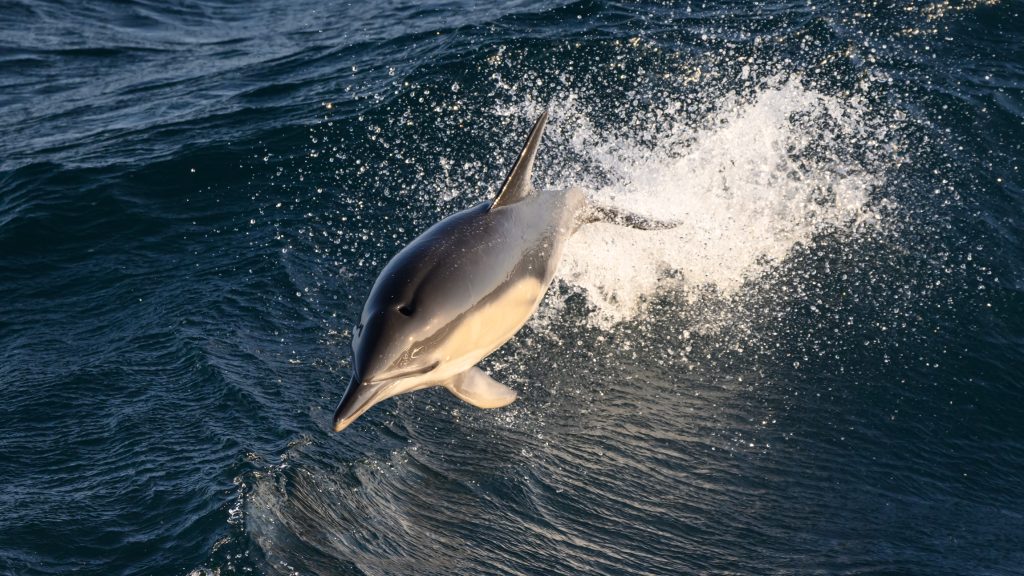
We had five encounters with Common Dolphin (photo 3 – from earlier this survey) involving 32 animals, with a pod of 13 the largest.
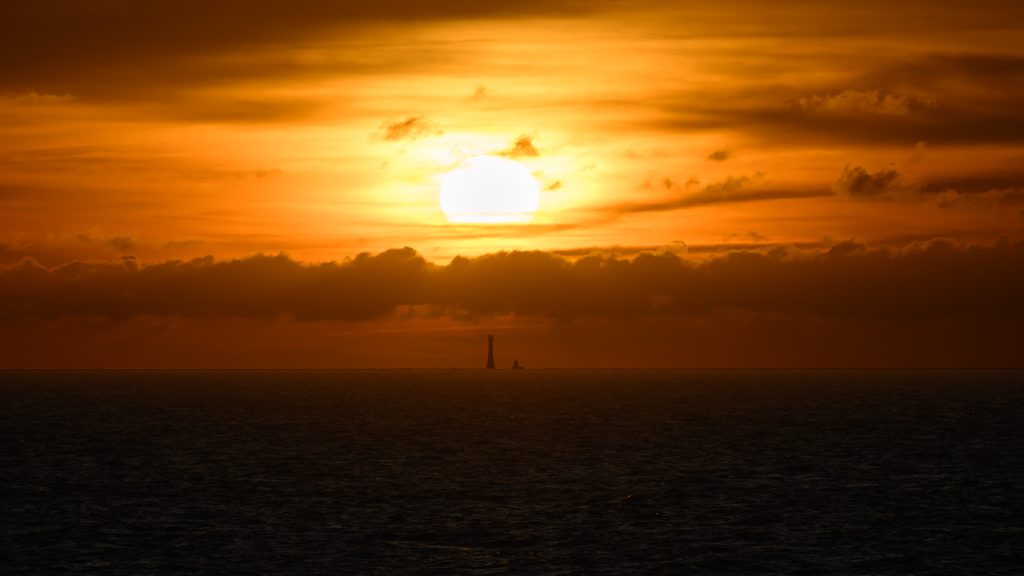
A lovely sunset was a good way to finish the day (photo 4). The plan for tomorrow is to start the next transect offshore and head north as it’s a better connection to the next one.
24th
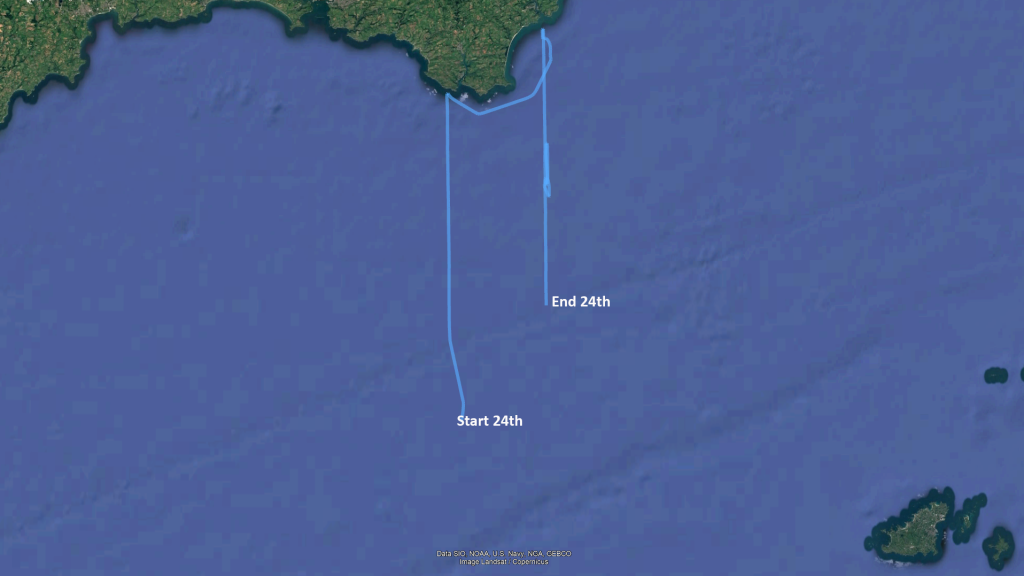
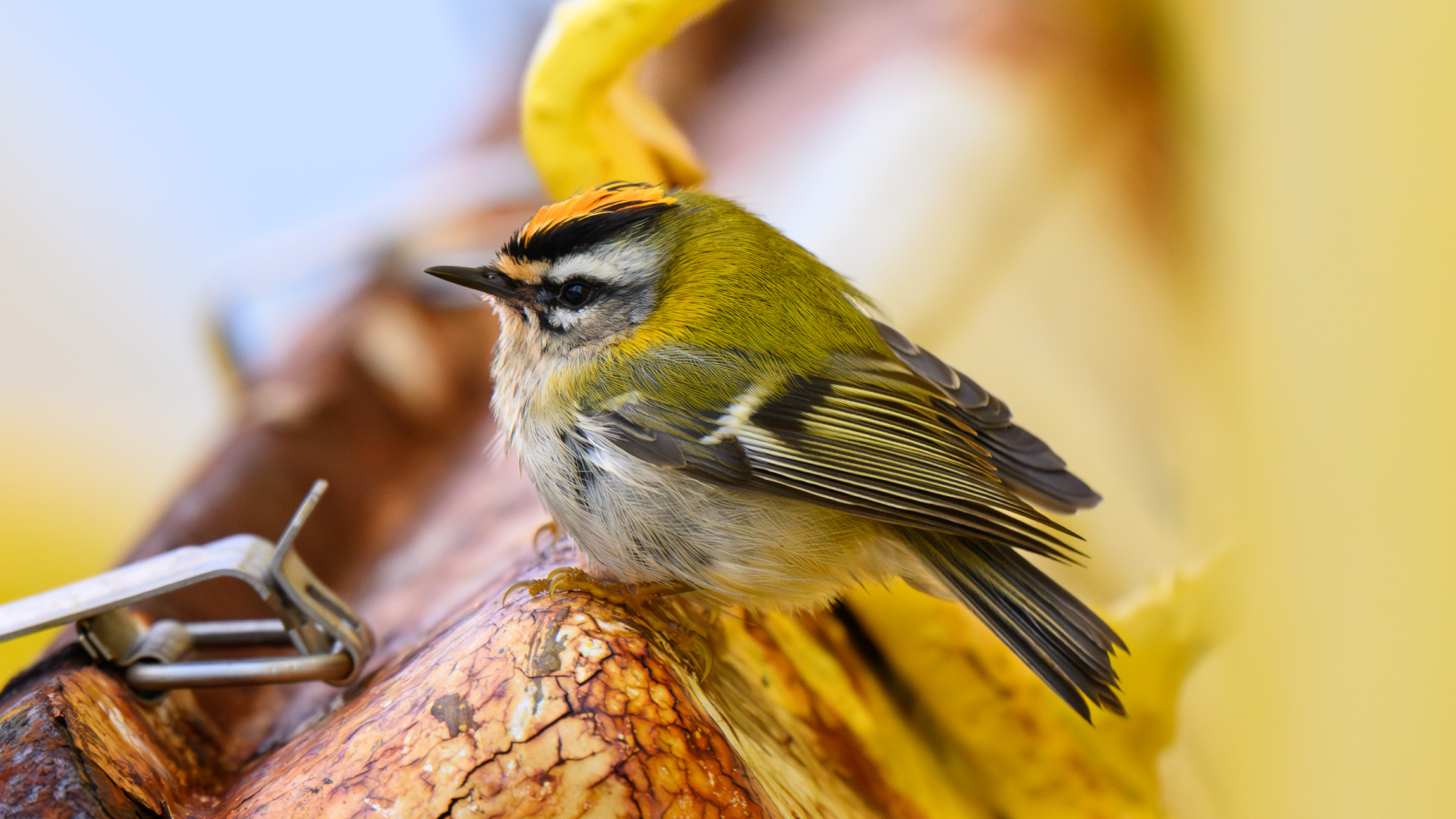
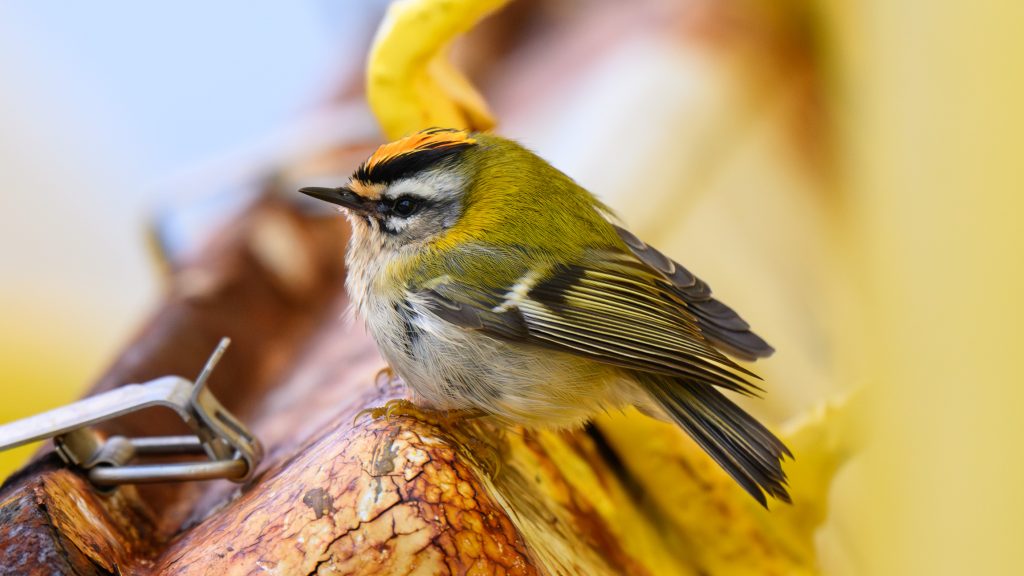
We started the day 62km offshore and began heading north towards Salcombe, Devon (photo 5). There were very few seabirds but there a few passerines flying around the Endeavour, the first of which turned out to be a Firecrest (photo 5). These tiny birds only weigh around 4g and it’s always amazing to encounter them (or their sibling species Goldcrest) offshore. This one didn’t look too happy but was last seen flying north away from the Endeavour and back towards land.
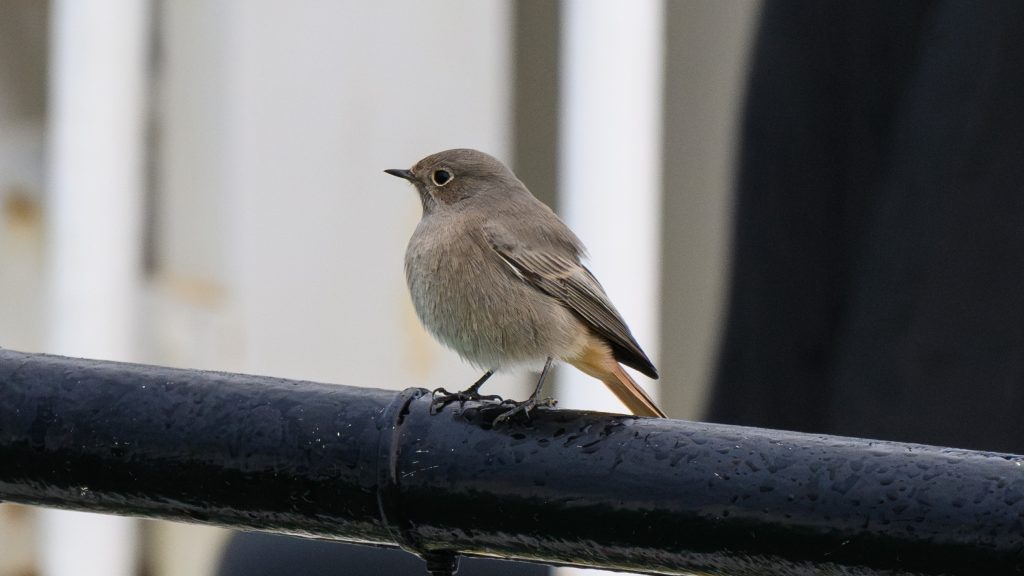
Next up, our second Black Redstart appeared on the foredeck in front of the bridge (photo 6) along with a Robin. The Black Redstart soon disappeared off towards land, but the Robin stayed with us and was still flying about at the end of the day (despite us being within a couple of kilometres of land between transects).
We also had a Goldcrest join us briefly along with a couple of warblers; one was a Chiffchaff the other looked different but, annoyingly, it never showed itself for long enough to identify it.
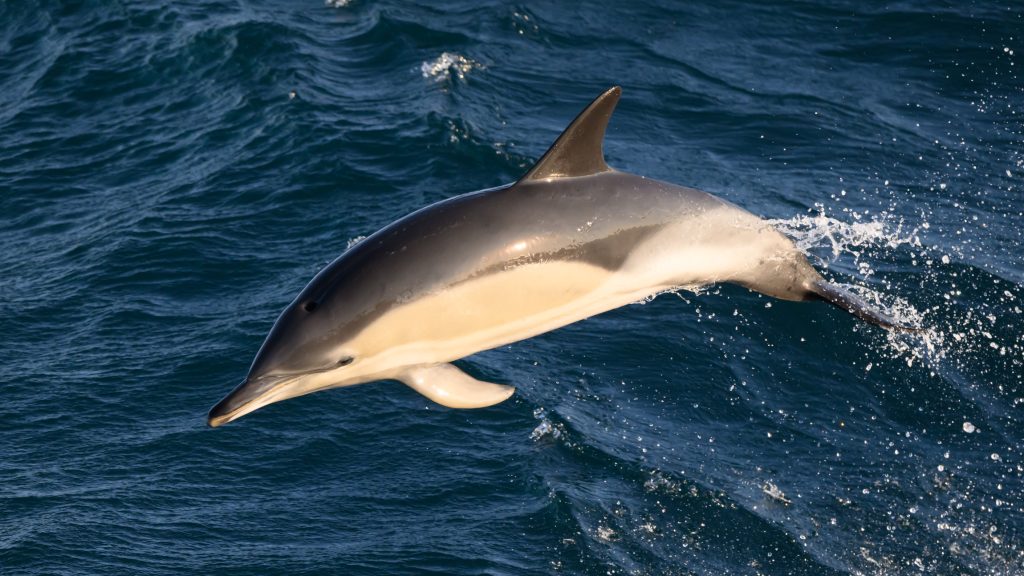
The seabirds may not have been around, but dolphins certainly were, with 139 Common Dolphin counted over 12 encounters (photo 7).
As we made our way along the Devon coast between Salcombe and Dartmouth it became apparent where all the birds were (well, some of them anyway). There were hundreds of gulls, Gannets and Kittiwakes either feeding around tuna boils (photos 8 & 9) or just sat on the sea having fed.

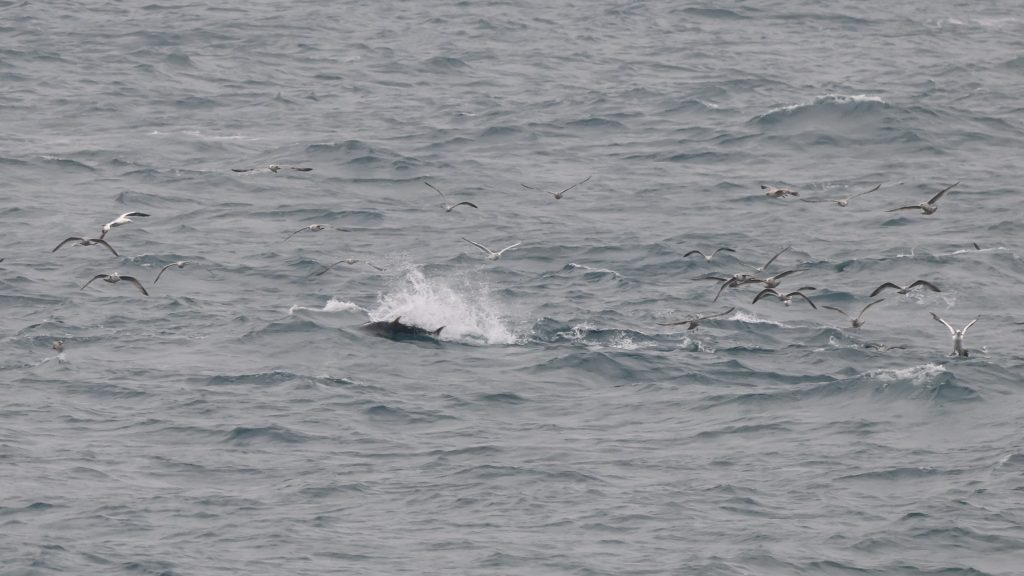
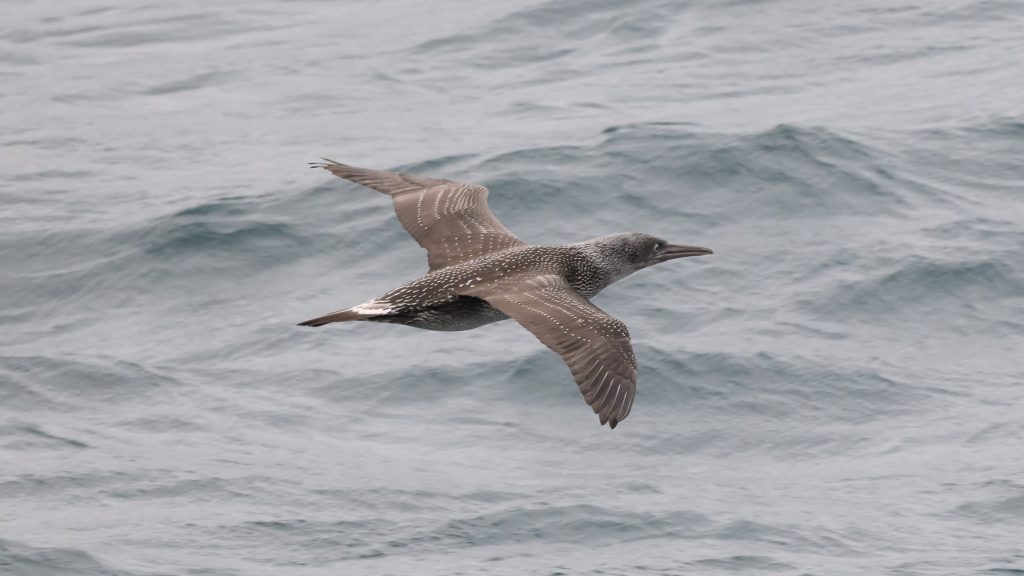
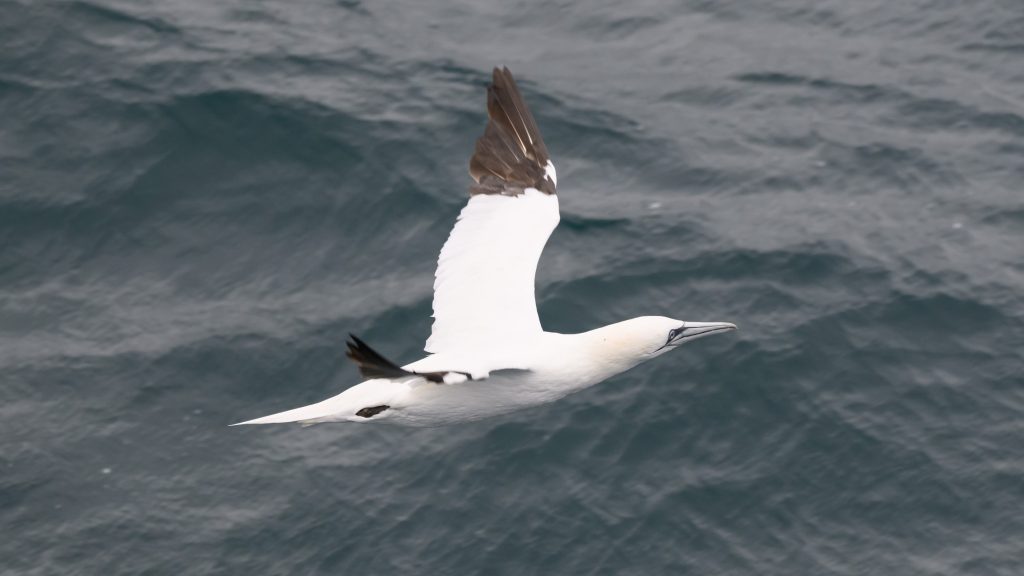
It was good to see a few juveniles in amongst all the birds, particularly Kittiwake and Gannet (photos 10 & 11), along with the usual adults (photo 12). There were also a few Balearic Shearwaters around (photo 13) – will any be around on transect though?


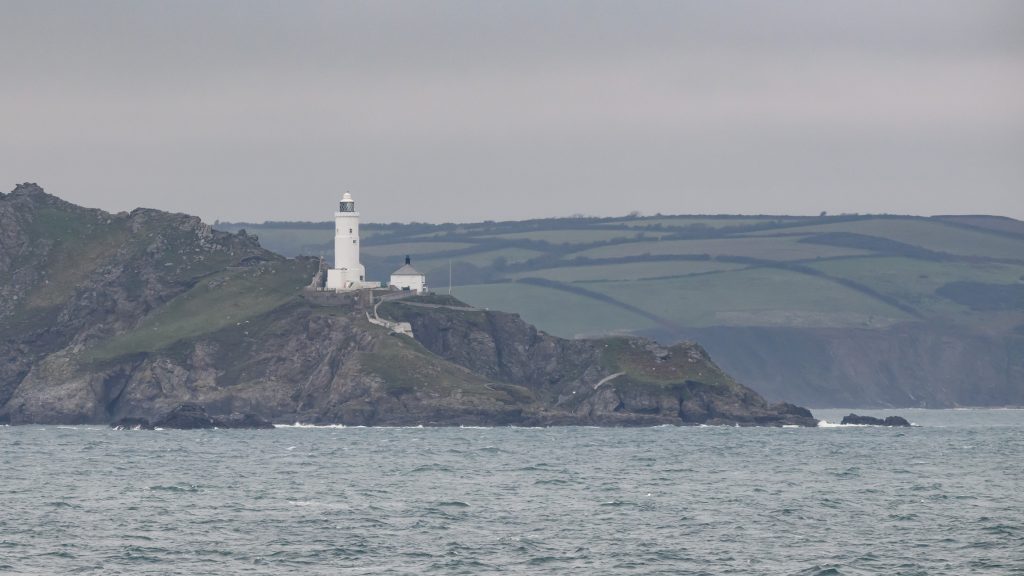
Passing Start Point (photo 14) we made our way towards Dartmouth for the start of the next transect. Unfortunately, the wind was now a force five-six from the SSE which meant we were heading into the waves and taking them on the side of the bow which creates lots of spray. To make matters worse the cloud cover had broken, and we also had glare to contend with!
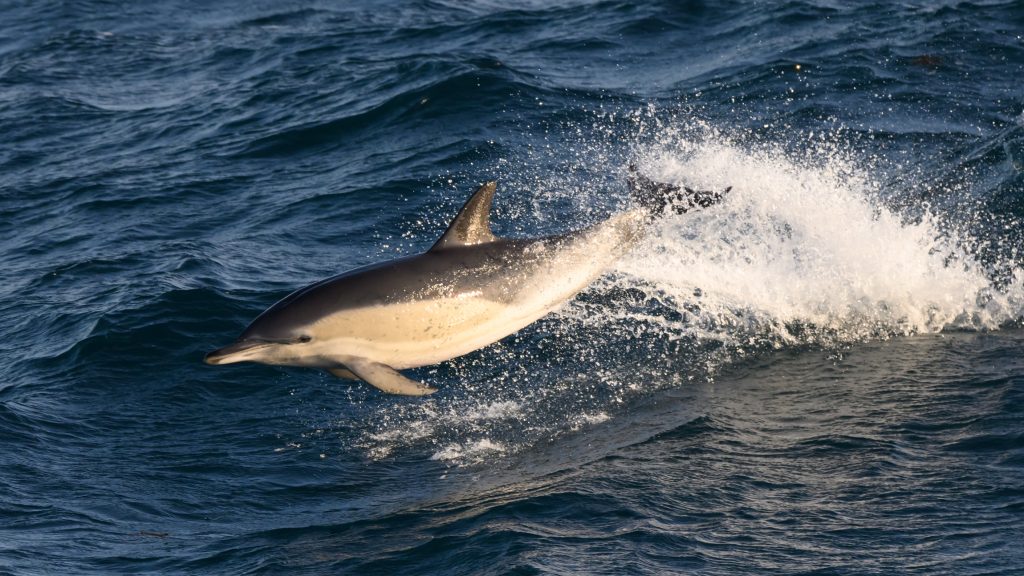
Birds remained hard to come by – and hard to see – but at least there were plenty of Common Dolphins (photo 15) with a steady trickle of pods coming into the bow. As the sun set (with dolphins still coming in) we had recorded 41 animals in nine encounters.
We’ll be back to pick up this transect tomorrow morning and run over to the French side for the last two transects over there.
Species recorded
Marine mammals
- Common Dolphin 232
- Tuna 6
Seabirds
- Arctic Skua 1
- Auk sp. 21
- Balearic Shearwater 9
- Common Gull 3
- Gannet 314
- Great Black-backed Gull 55
- Great Skua 2
- Guillemot 41
- Gull sp. 4
- Herring Gull 19
- Kittiwake 107
- Larus sp. 3
- Lesser Black-backed Gull 5
- Little Gull 13
- Manx Shearwater 78
- Puffin 5
- Razorbill 11
- Shag 1
- Sooty Shearwater 1
- Cormorant 1
- Mediterranean Gull 1
- Great Northern Diver 1
Inland birds
- Firecrest 1
- Black Redstart 1
- Robin 2
- Chiffchaff 2
- Goldcrest 1
- Startling 1
- Meadow Pipit 6