Monday 5 October
It was still a little dark as we made our way to the bridge but there was enough light to see that there were quite a few small land birds fluttering around outside the. For a birder it’s always a little exciting to see this as there’s a chance there’ll be something out of the ordinary to be seen. Unfortunately, that wasn’t the case this morning, all the small birds were Chiffchaff, although it was interesting to see a Stonechat hopping around under the rescue craft, the first one seen onboard during this survey since 2017.
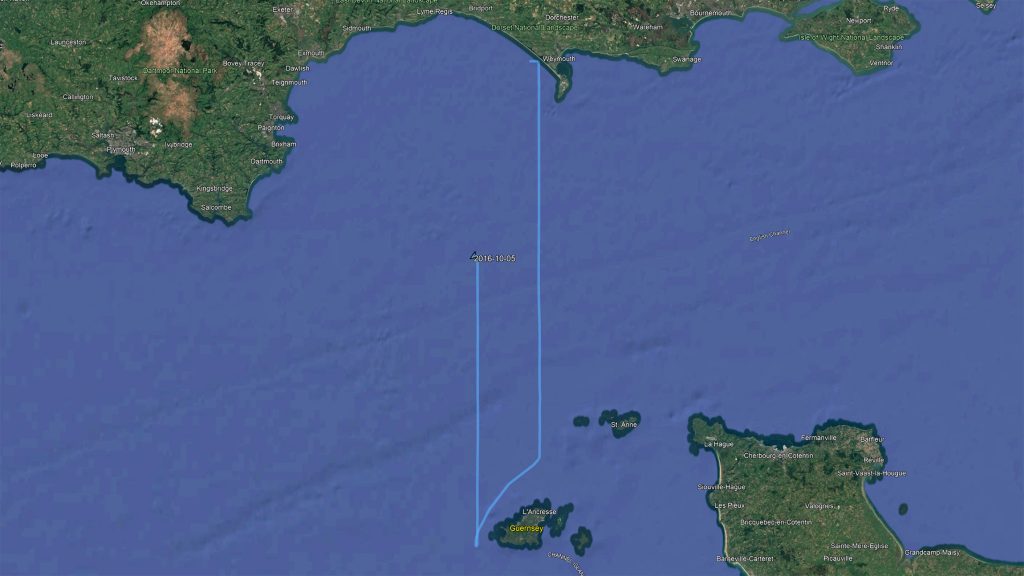
Surveying started under grey skies just off Chesil Beach in the east of Lyme Bay. Conditions were very good though; we were heading south so the grey skies kept the sun at bay and avoided any issues with glare. Birds were numerous in the first couple of hours with good numbers of auks back and forth across our path. A few Mediterranean Gulls added to the mix; it’s always a pleasure seeing these smart gulls.
Our first cetacean sighting came early too, just 25 minutes or so into the survey. A small pod of Common Dolphin were seen feeding a long way ahead of us, they continued to do so as we went past and made no effort to come and investigate the ship.

After we cleared Portland Bill and headed out into the Channel bird sightings dropped off and we settled into the familiar pattern of occasional sightings and hoping for something different. Landbirds kept popping up on the deck in front of us or flying past. Small flocks of Meadow Pipits and the occasional Swallow flew past heading south and a Skylark took up residence for a couple of hours and spent its time picking small flies off the deck.
The appearance of a Common Redstart on the port side of the ship caused a moment of excitement – a new species to be seen on board for the Peltic – sadly it didn’t hang around long enough for a photo. However, the most surprising landbird visitor was a Wren, it flew past the bridge and was last seen creeping around amongst clumps of chains on the aft deck. Not the first time we’ve seen this species, but I hope it got off when we neared Guernsey as they’re really not built for long distance migration.
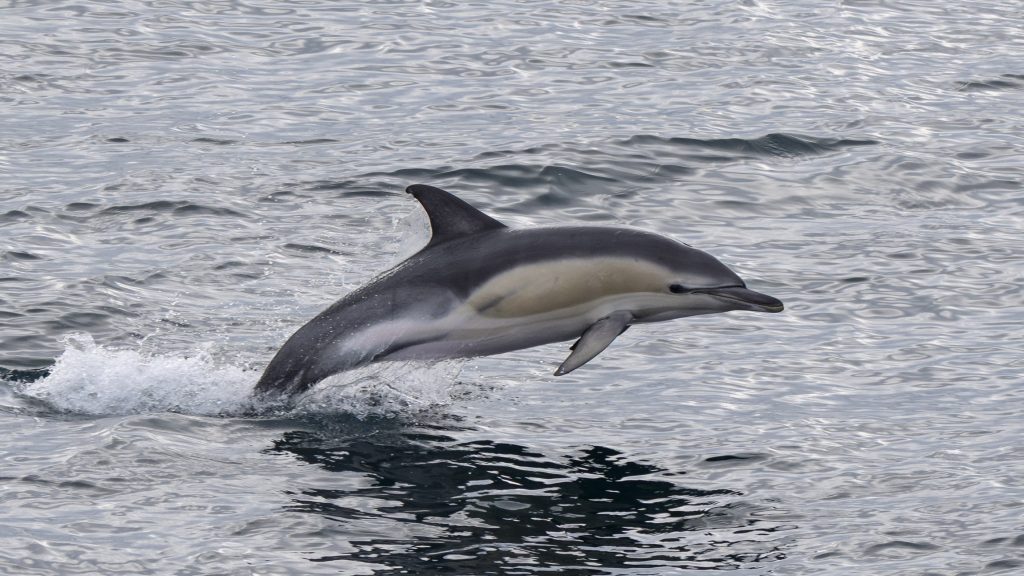
We had a couple more encounters with Common Dolphin, one pod came into the bow the other stayed well away, although we saw them well enough to see there was a juvenile and a very small calf in the pod.
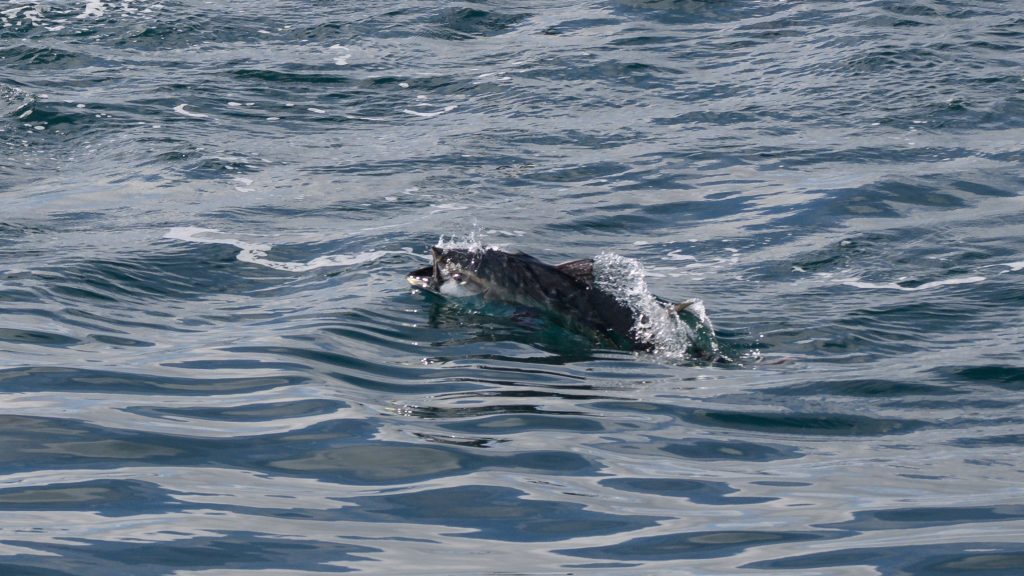
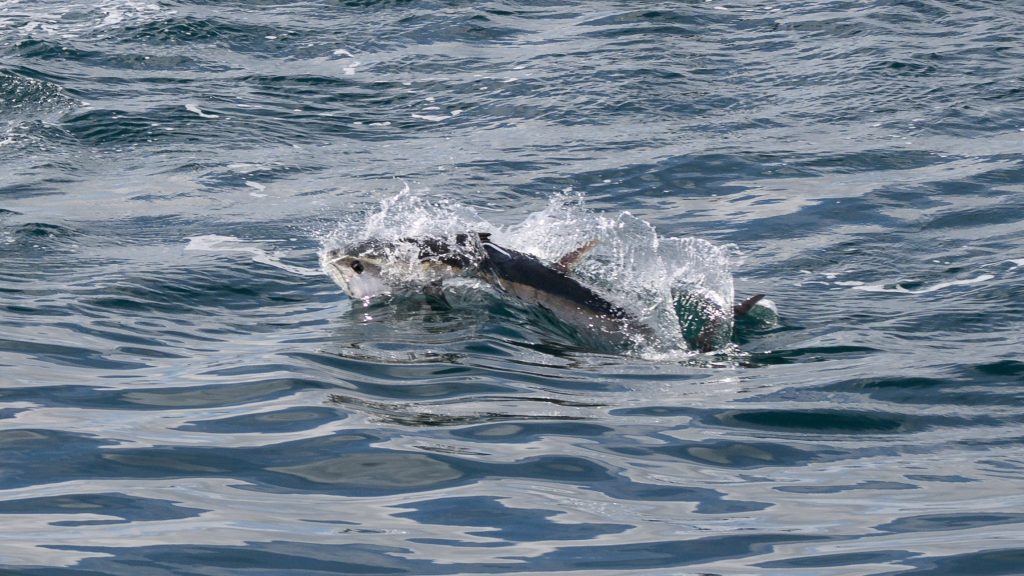
Sea conditions had been fantastic just about all morning, with sea state varying between zero and two. Despite the calm conditions we only manage to see one Harbour Porpoise, which seems to be par for the survey. We did, however, see hundreds of tuna, all those seen well appeared to be Blue-fin Tuna. As we neared the end of the transect just north of Guernsey things got particularly hectic with several large feeding frenzies involving hundreds of tuna and hundreds of gulls and Gannet. There were some spectacular sightings of tuna.

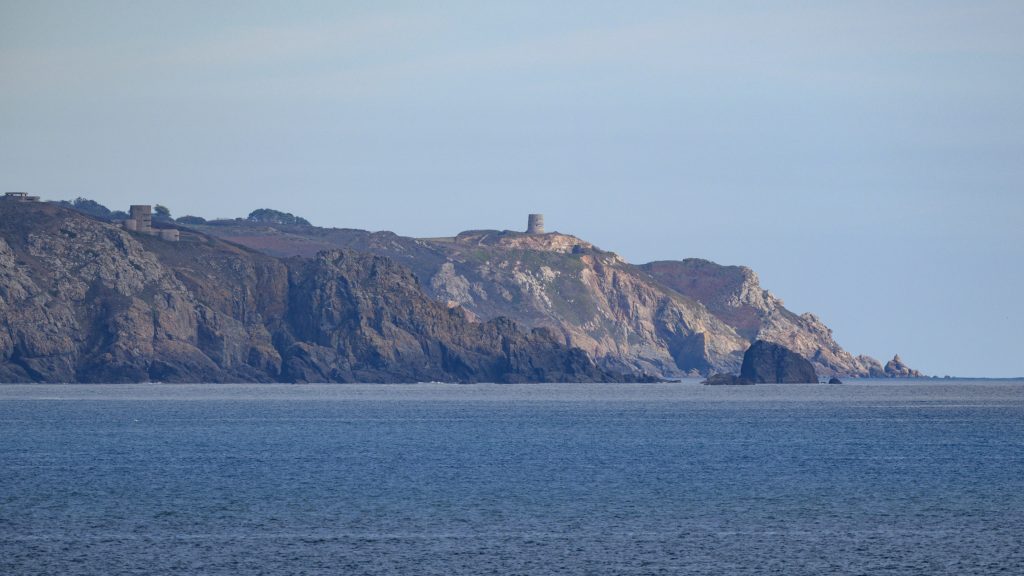
We passed down the west side of Guernsey towards the start of the next transect, as we got towards the southwest corner of the island it was easy to see some of the many second World War bunkers and watch towers left behind from the German occupation.

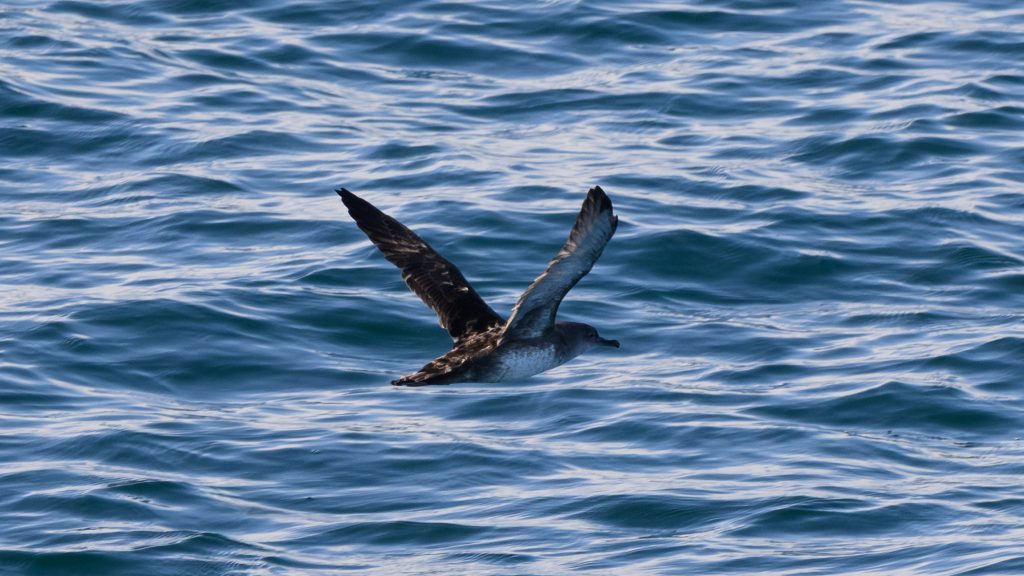
On the way we saw several Balearic Shearwater, as Europe’s rarest breeding seabird a target species of the survey, and cursed as we weren’t on effort. However, it’s quite likely those birds were amongst the 14 we saw feeding shortly after starting the next transect.

The afternoon was largely uneventful, with relatively few birds and no cetaceans, even the tuna sightings had dropped off. There was a moment of excitement when we picked up the characteristic flopping dorsal fin of an Ocean Sunfish – always great to see these odd animals – sadly it was too distant and brief for a photo.
Then, in the last hour of the survey before it got dark we started picking up Great Skua sat around on the sea and ended with a count of 25. In the past this wouldn’t have been that exceptional but post bird flu this is an excellent count – we only saw 35 in the whole survey last year.

We’ll pick up where we left off the next morning.
Tuesday 6 October

We were on the bridge just before dawn, there was broken cloud overhead with plenty of clear blue sky – no small birds flying around the ship this morning – visibility good enough for them to find their way without getting distracted by lights on ships. Conditions were still very good for surveying, sea state mainly three occasionally up to four, although the sea was very dark and contrasty which made dark birds difficult to pick up at any distance.
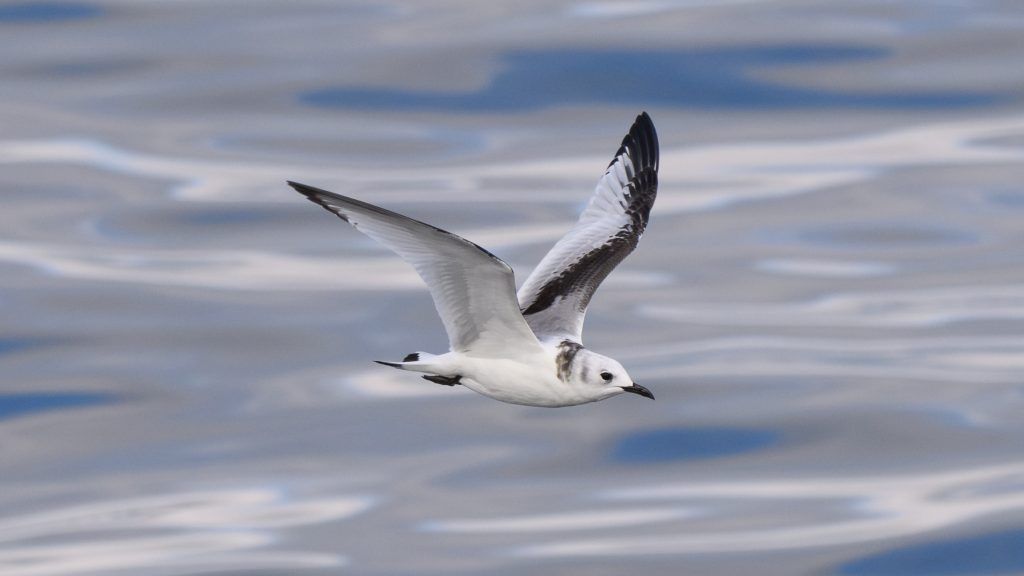
The rest of the transect was rather quiet, although Great Skua continued where they’d left off the previous evening. It’s certainly good to have them back to being an almost constant presence, something we’ve missed over the last four years. About ten miles offshore we saw three European Storm Petrel, which seemed quite close inshore for them – but still very nice to get them on the survey for the year. We also started seeing the odd Mediterranean Gull and came across a small group of four along with a couple of juvenile Kittiwake which were relatively unconcerned by the approach of the Endeavour.

Unfortunately, despite the conditions, we couldn’t find any cetaceans. Close inshore the sea state had dropped to two, yet there were still no Harbour Porpoise to be seen. We did manage a coupe of distant tuna sightings but even they were just a handful of animals.
The transect ended near West Bay, Dorset and we motored west to the start of the next transect near Lyme Regis. We were just about to start when a small bird fluttered along the port side – another Stonechat – this one didn’t land, just circled a couple of times then disappeared off to the east.

Sightings were a bit thin on the ground for the first hour but then we broke off for our first daytime trawl which gave us a chance for a break. Bringing in the trawl is always interesting because you never know how many birds will be drawn in. On this occasion there were about 50-60 Gannet and a few Herring Gull, the birds circle the ship as they look at the net and search for loose fish, and this provides a great opportunity for photos. In this case a juvenile Herring Gull, and three Gannet of different ages – a second-year bird, a third-year and an adult.

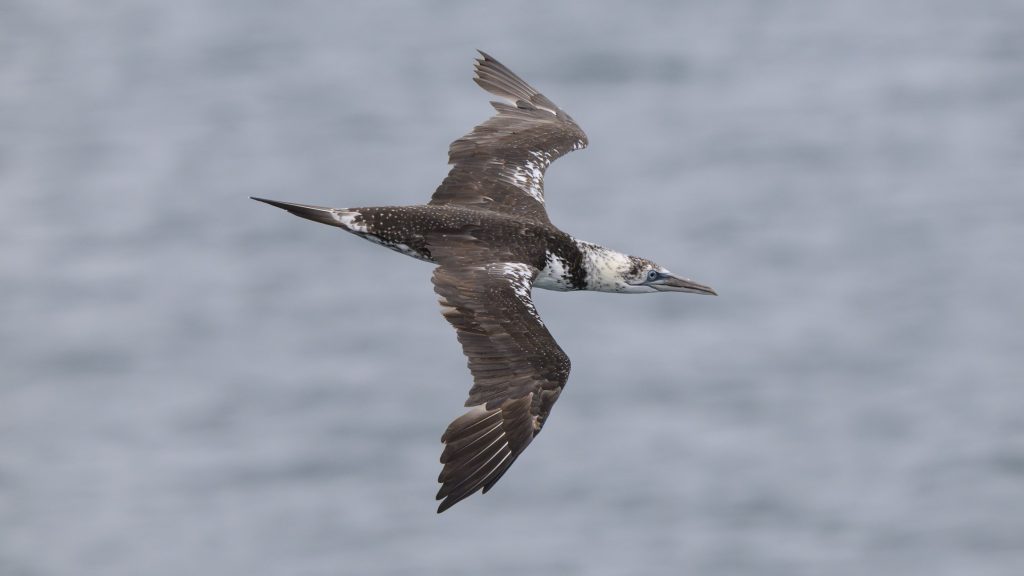
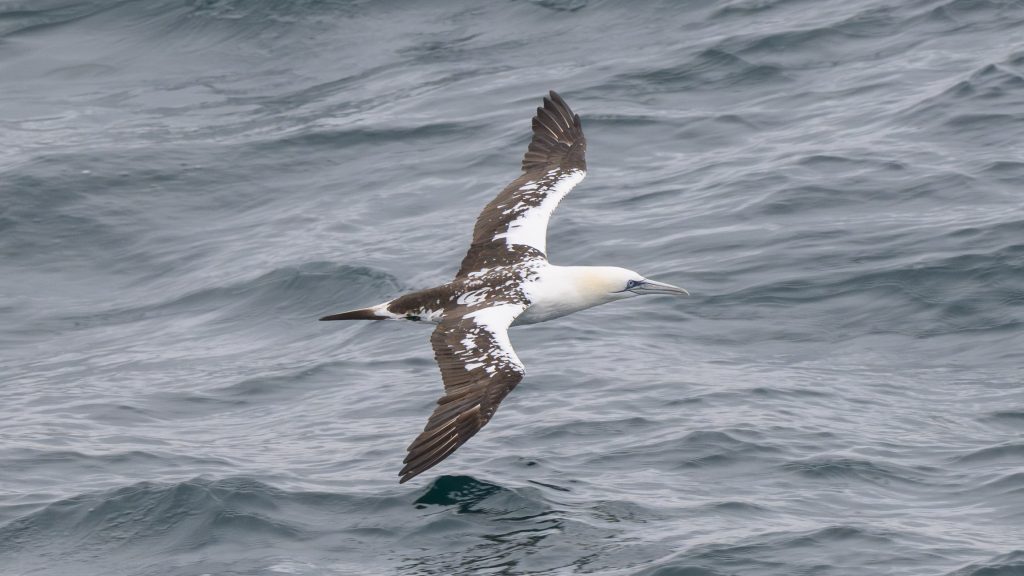

As we pulled away and began heading back towards the transect we picked out a large, black patch on the sea about a kilometre away, the black patch suddenly lifted off the sea and revealed itself to be a large raft of about 500 European Storm Petrel. Sadly, we were heading away from them, but it was still a spectacular sight. We were only about 20km off the coast at that point which seemed very close inshore for such a large flock.
We had barely restarted surveying when we realised the sea ahead of us was full of European Storm Petrels – 400 or so – it wasn’t the other flock as they had been left five or six kilometres to the northeast, so amazingly it was another large flock. We could only assume the feeding was especially good in this area. I managed a photo but the birds are so small they’re tricky to see.
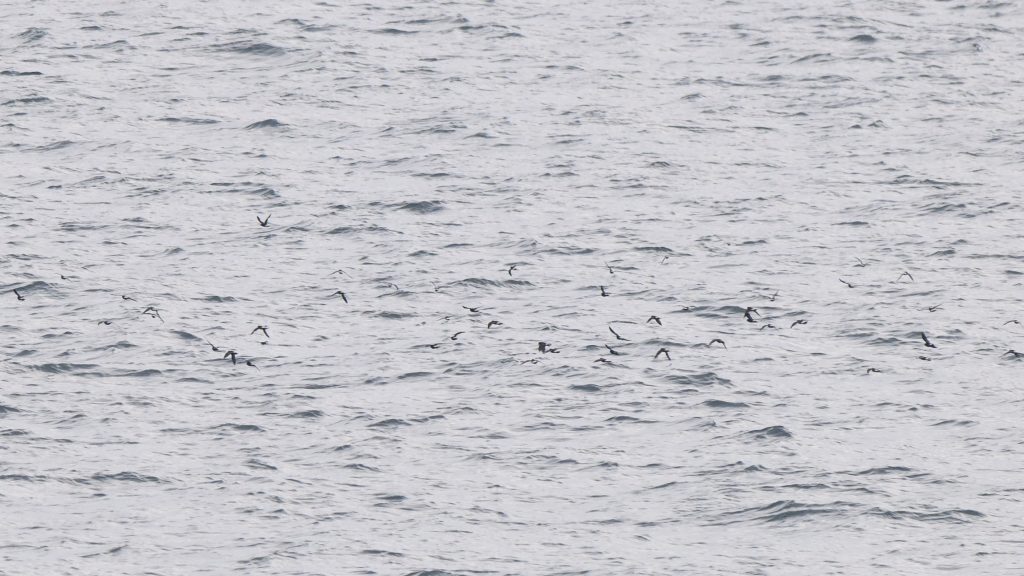
A trawler passing across our bow made for a few minutes of interest with a mix of gulls, Gannet and European Storm Petrel in its wake. It also gave us the only cetaceans for the transect too, with three seen following in the wake, cleaning up any scraps of fish.

A close juvenile Puffin mid-afternoon gave a good view of how different these birds look in winter plumage. As we continued south towards the middle of the Channel, Great Skua numbers increased as they had yesterday. A group of four sat on the water turned out to be two adults and two juveniles, the juveniles chased one of the adults and appeared to be food begging, suggesting they might possibly have been a family group. Another adult made a very close pass across the bow, making for a good photo.
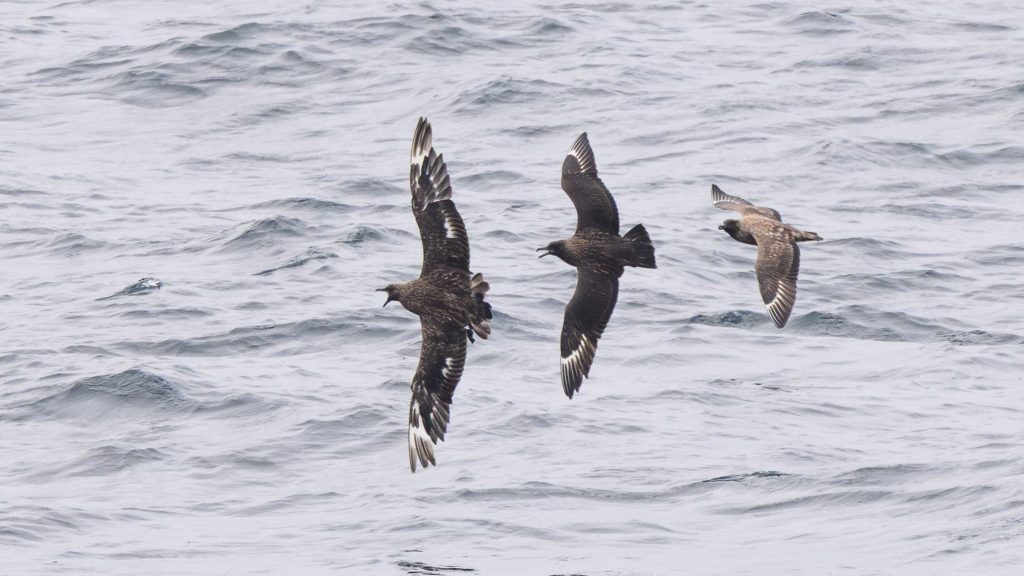


The cloud increased late afternoon with occasional rain and the light deteriorated very quickly to the point that we had to stop surveying 40 minutes before sunset. The scientist in charge decided to carry on running the transect until sunset anyway as we were in the middle of the shipping lanes and restarting there would have been tricky.
Species recorded
Marine animals
- Common Dolphin 31
- Harbour Porpoise 1
- Grey Seal 2
- Blue-fin Tuna 507
- Ocean Sunfish 1
Seabirds
- Arctic Skua 2
- Auk sp. 404
- Balearic Shearwater 14
- Brent Goose 1
- Common Scoter 1
- Common Tern 2
- Fulmar 16
- Gannet 593
- Great Black-backed Gull 65
- Great Skua 61
- Guillemot 79
- Gull sp. 200
- Herring Gull 18
- Kittiwake 28
- Larus sp. 337
- Lesser Black-backed Gull 7
- Long-tailed Skua 1
- Manx Shearwater 5
- Meadow Pipit 6
- Mediterranean Gull 22
- Pied Wagtail 1
- Puffin 3
- Razorbill 114
- Shearwater sp. 1
- Skylark 1
- Storm Petrel 484
- Swallow 4
Inland birds
- Chiffchaff 6
- Linnet 4
- Meadow Pipit 6
- Pied Wagtail 1
- Common Redstart 1
- Robin 1
- Skylark 1
- Stonechat 1
- Swallow 4
- Wren 1