Thursday 29 October
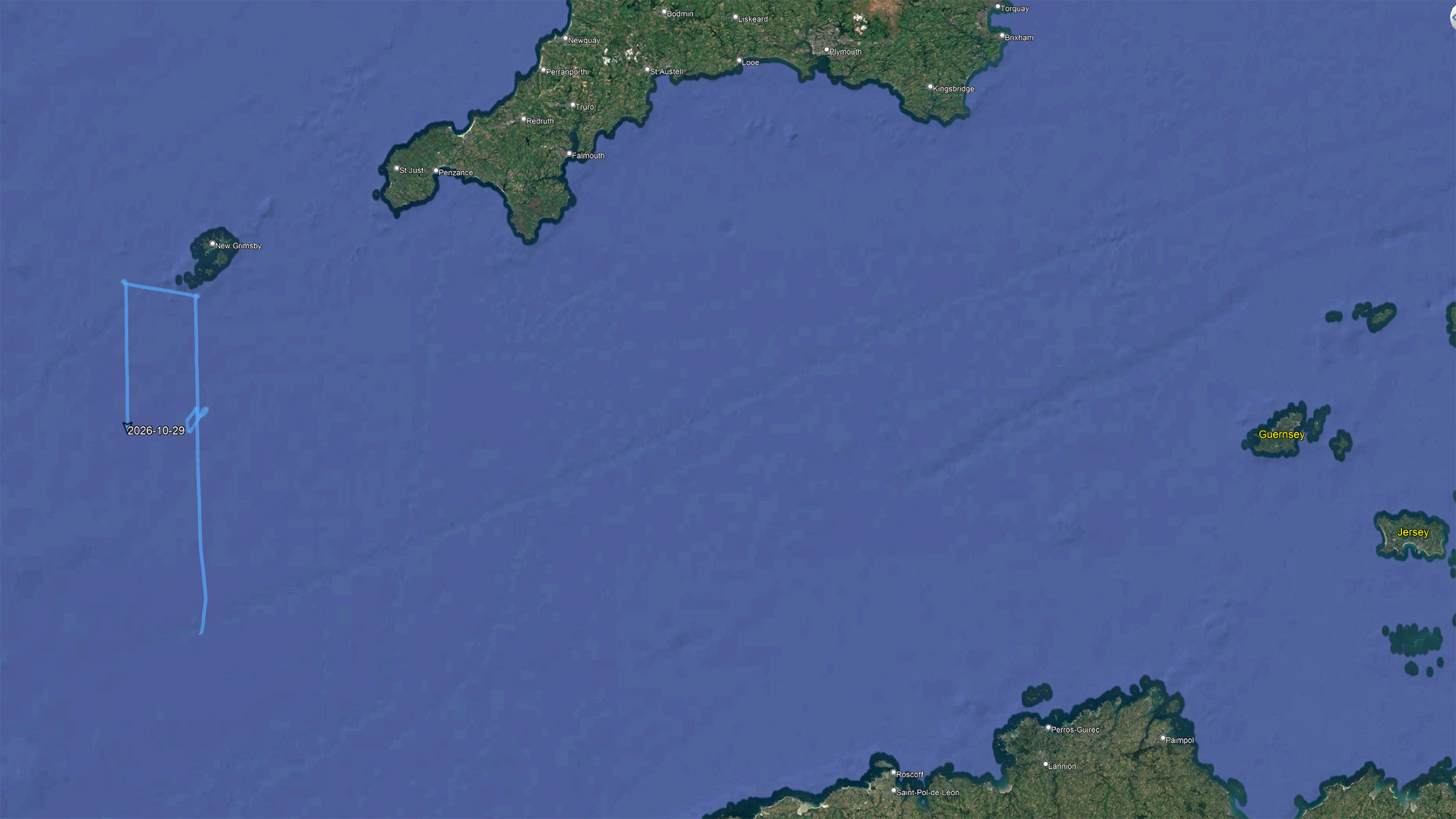
Today would be our last day south of the Isles of Scilly, with only four days left of the survey we needed to move on into the Celtic Sea. There was a bit more of a southeasterly breeze than we’d have liked, but at least we were going with it as we headed north towards the islands.
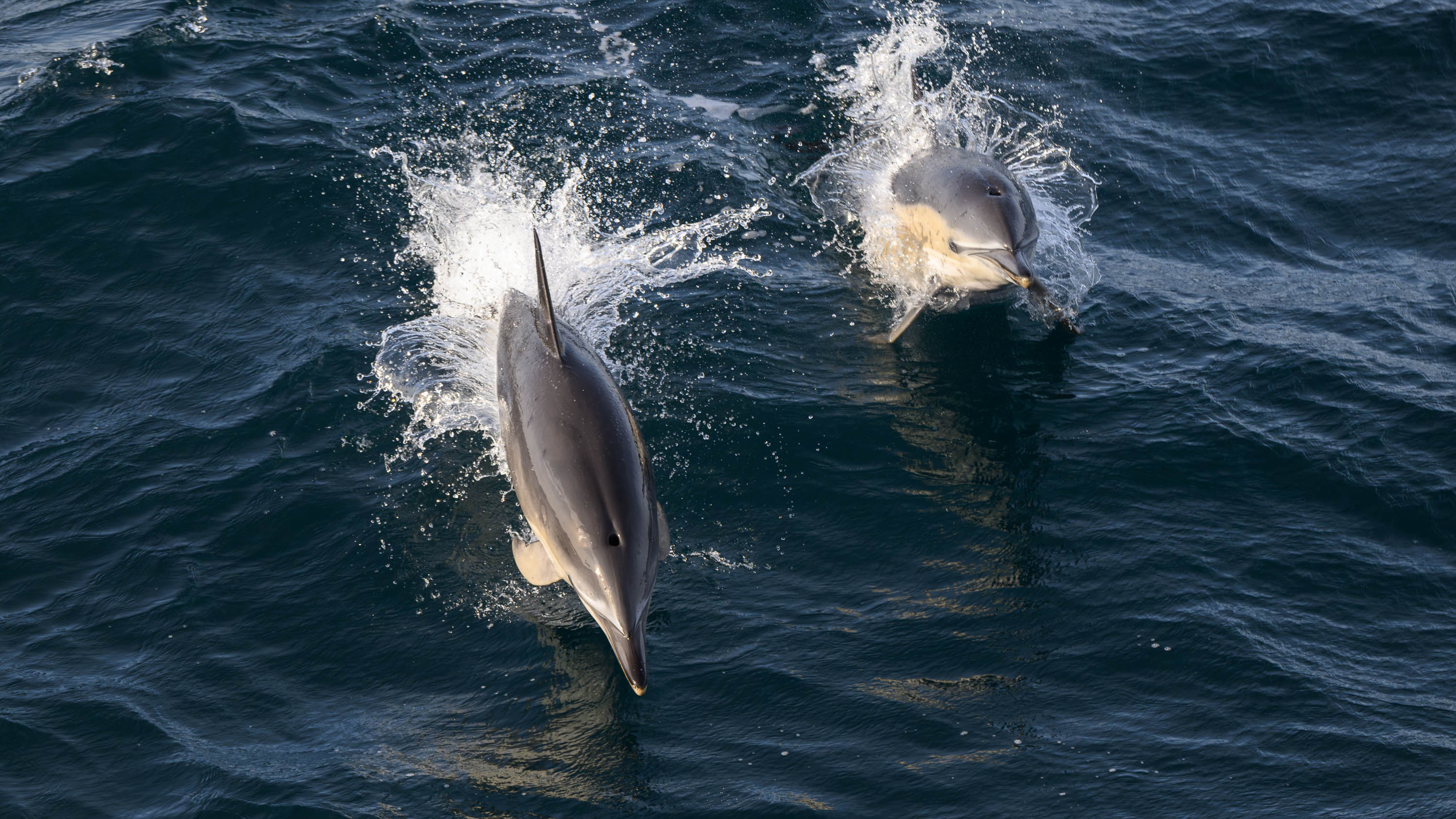
The first couple of hours were dominated by Gannet, Kittiwake and Common Dolphin. The dolphin encounters keeping me busy recording sighting data, while trying to keep track of the birds going by as well. We had 21 encounters with 117 Common Dolphin in just a little over two hours, and then they suddenly stopped, still with 20km or so to run on the transect.
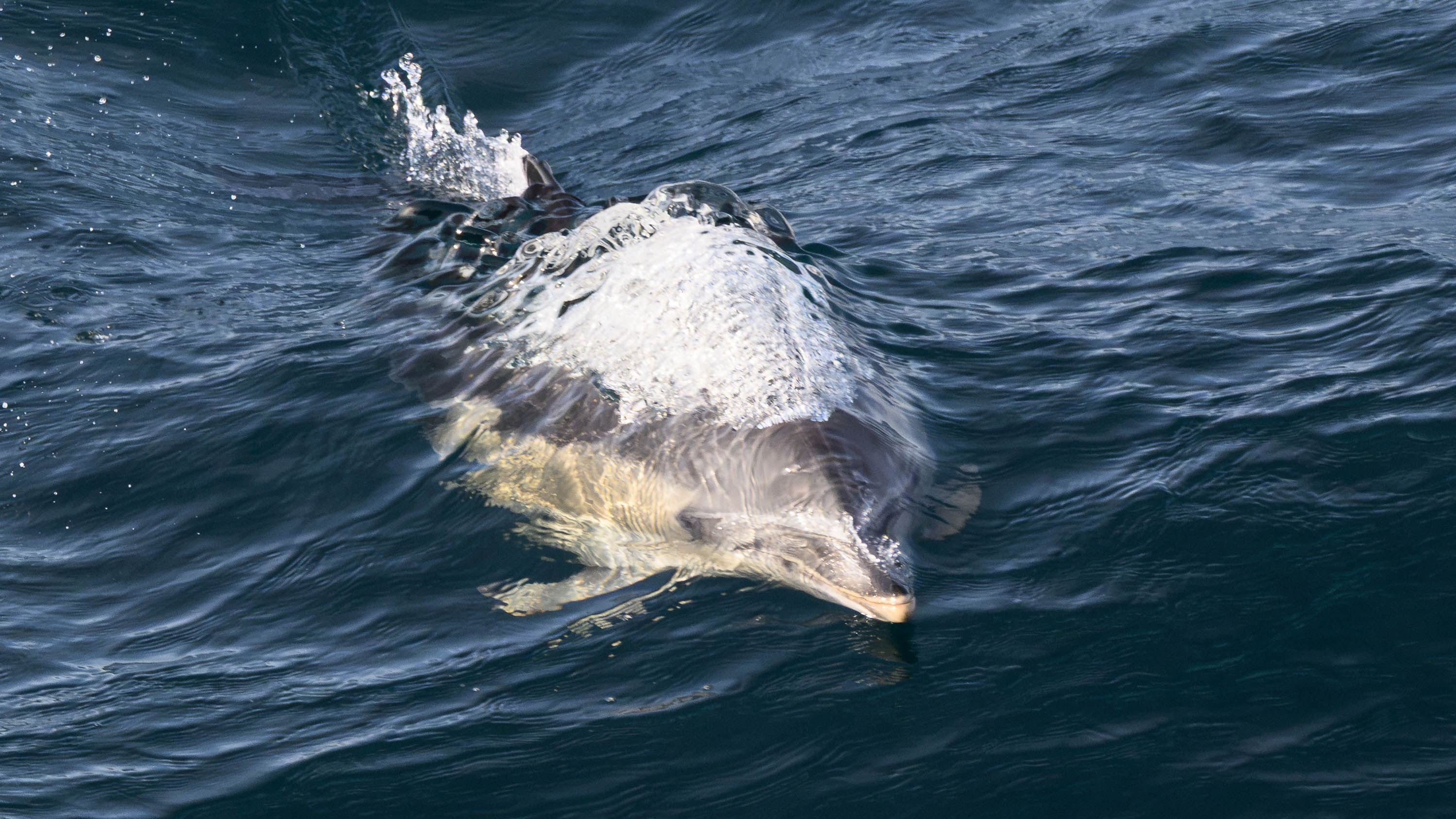
It was interesting getting a few shots of one group which came in, which clearly show them beginning their exhale well before they break the surface, so that they’re ready to inhale almost as soon as they’re above the surface.
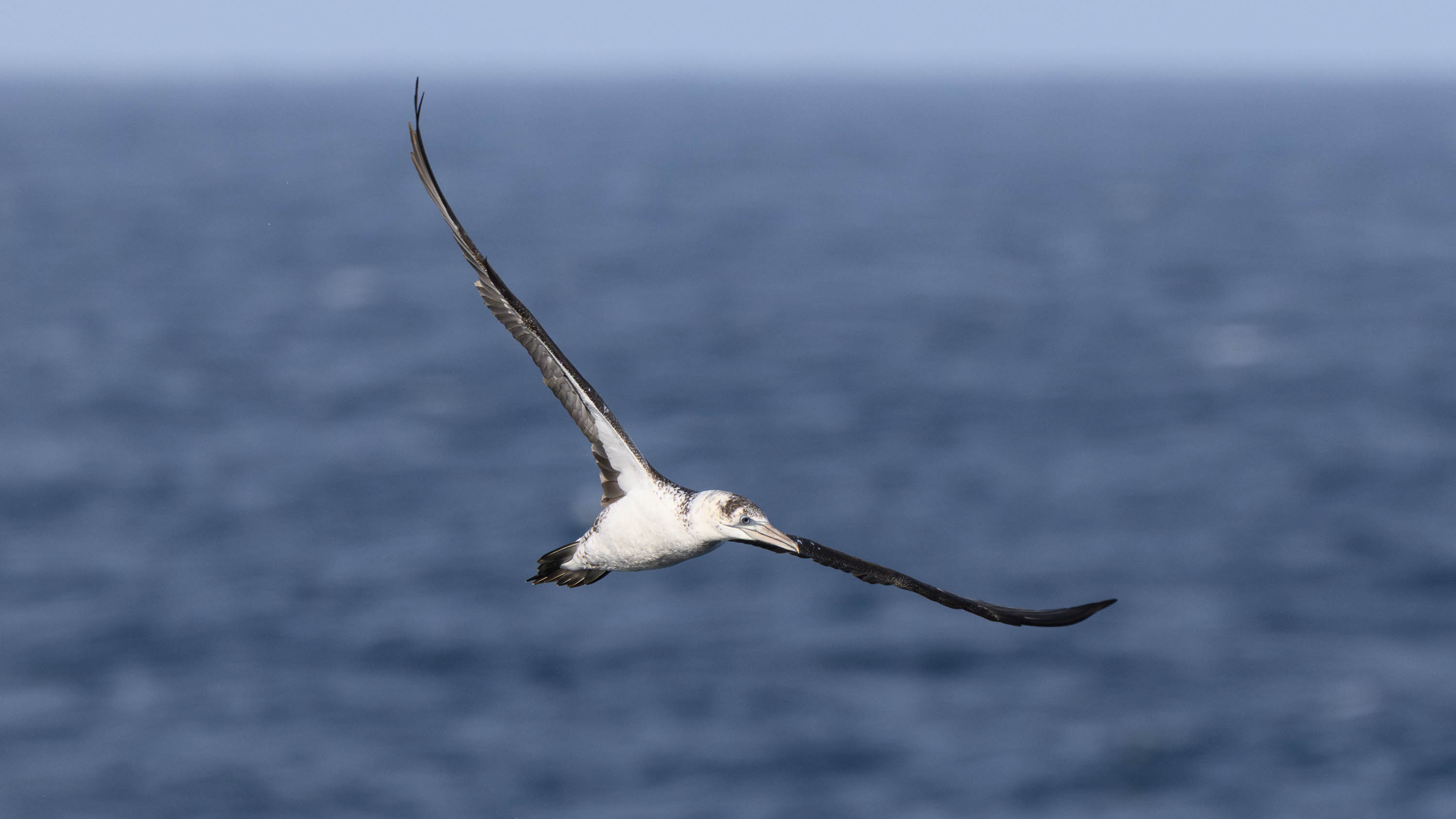
Although it felt as if Gannet had dominated the morning, totting up the totals at the end of the day showed that there had been slightly more Kittiwake and they topped the sightings table. Puffin remained the most numerous of the auks, although not quite in the same numbers as the previous day. It was also nice to see a few more Sooty Shearwater, several arcing across the bow with the sun highlighting their silvery underwing.

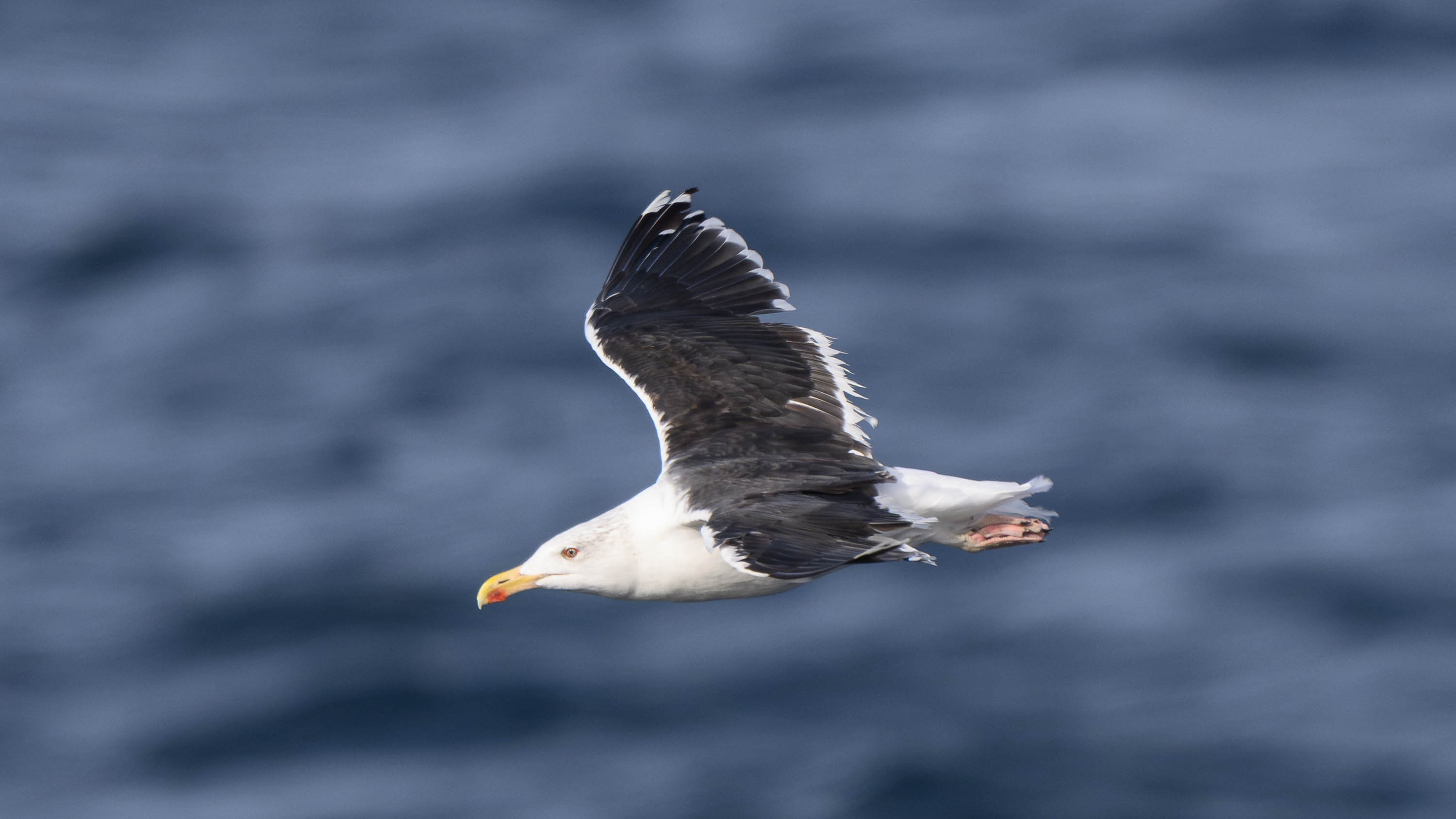
A trawl an hour from the end of the first transect drew only Great Black-backed Gull, likely because the catch consisted mainly of small Boarfish, something birds won’t touch, and they soon drifted off when they realised.
As we were approaching the Isles of Scilly I could hear a noise on the bridge that sounded very reminiscent of a Little Bunting call, however, it seemed to be from inside the bridge so can’t have been? Then a bunting flew down from above the bridge and perched on one of the foredeck rails – a Little Bunting! Presumably, it had been sat calling near the open vent to the bridge which had enhanced the volume of the call.
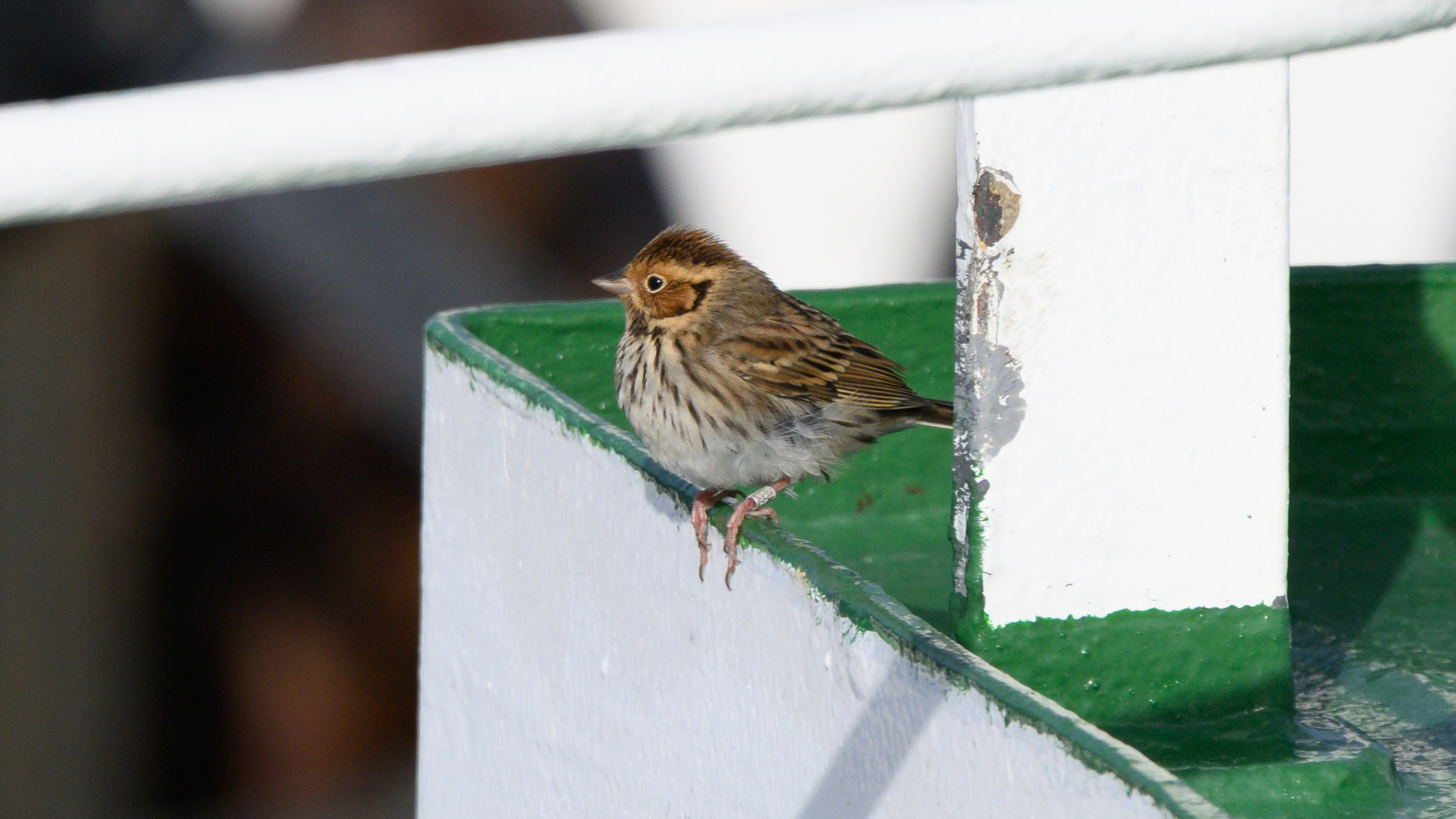
A radio call to Jeroen got him moving quicker than he has all survey and he and a few others managed to get sight of the bird as it flitted around the foredeck. I managed to get a few distant shots of it before it took flight and headed towards the Isles of Scilly, by this time just six kilometres to the north. A look at the photos revealed the bird had been ringed, and further enhancement, once downloaded to the laptop suggested the bird may have been ringed in Norway! For a bird that only turns up 50-100 times a year in the UK, this is the third we’ve had on board during a Peltic survey.
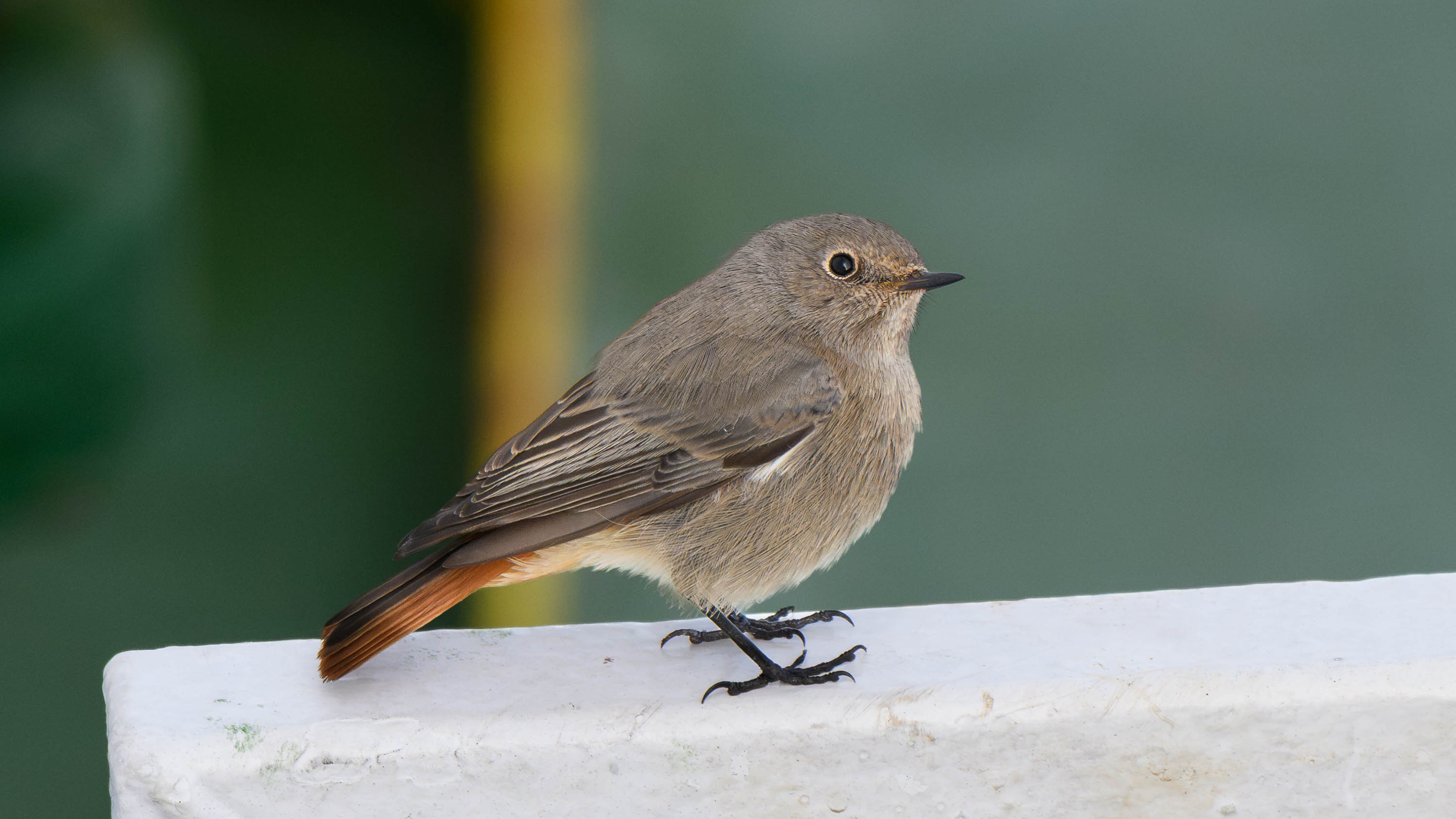
We’d also been enjoying the company of another small bird for much of the morning – a female Black Redstart. With the wind behind us the foredeck was the most sheltered spot onboard and she took full advantage of the shelter, catching the many flies that were travelling with us.
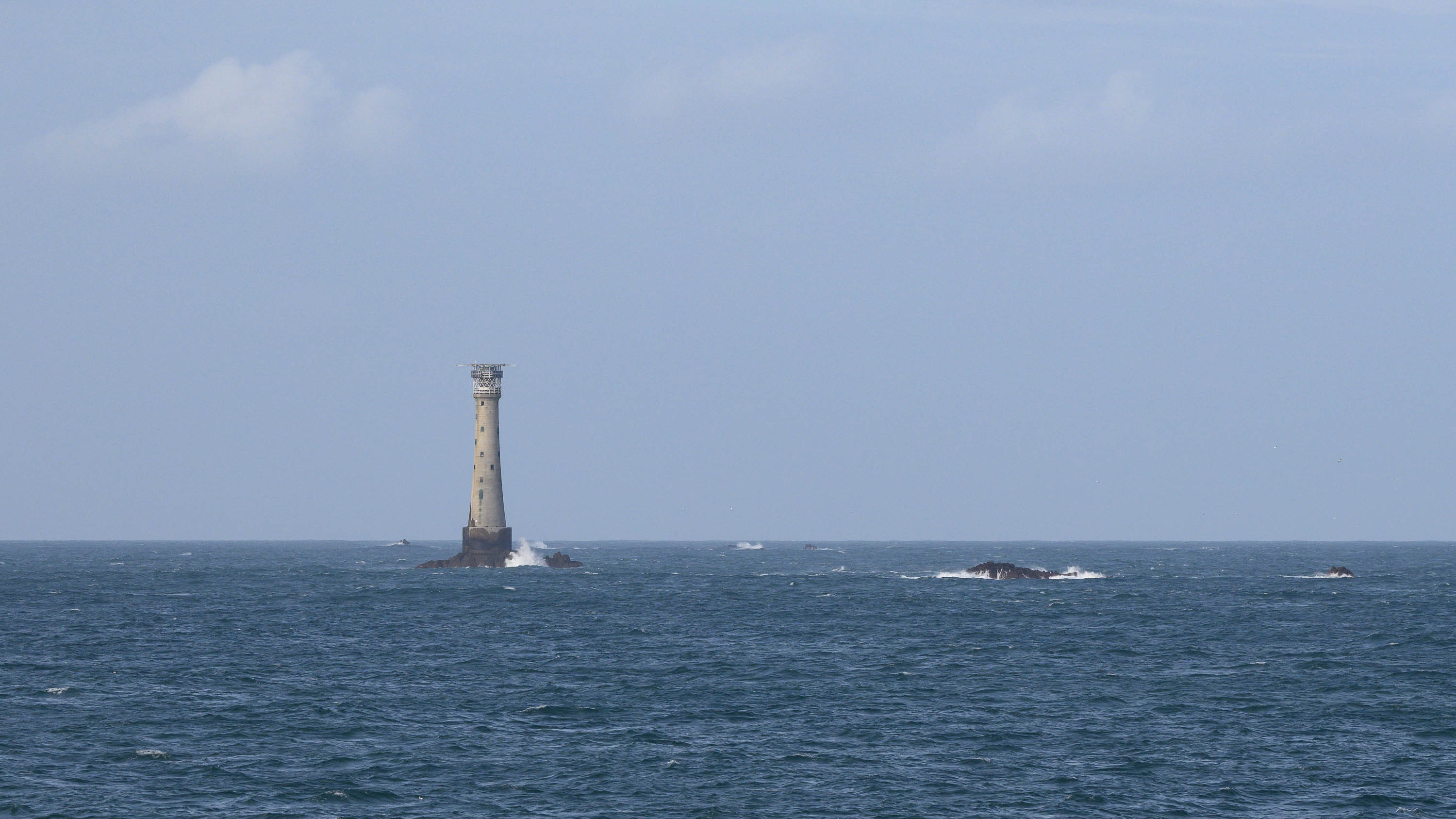
The short, connecting transect provided a few more Common Dolphin, a handful of Kittiwake and Gannet, and the traditional annual view of Bishop Rock lighthouse.
The time lost to the trawl meant we were unable to finish the final southbound transect. Conditions were tricky too; we were now heading into a 20-knot southeasterly wind which meant there was frequent spray being whipped over the bow. Kittiwake and Gannet predominated the birds again, with Puffin a close third. Sadly, unlike this morning, it turned out to be a dolphin-free afternoon.
Well, it’s on to the Celtic Sea next with a trio of transects just to the north of the Isles of Scilly.
Friday 30 October
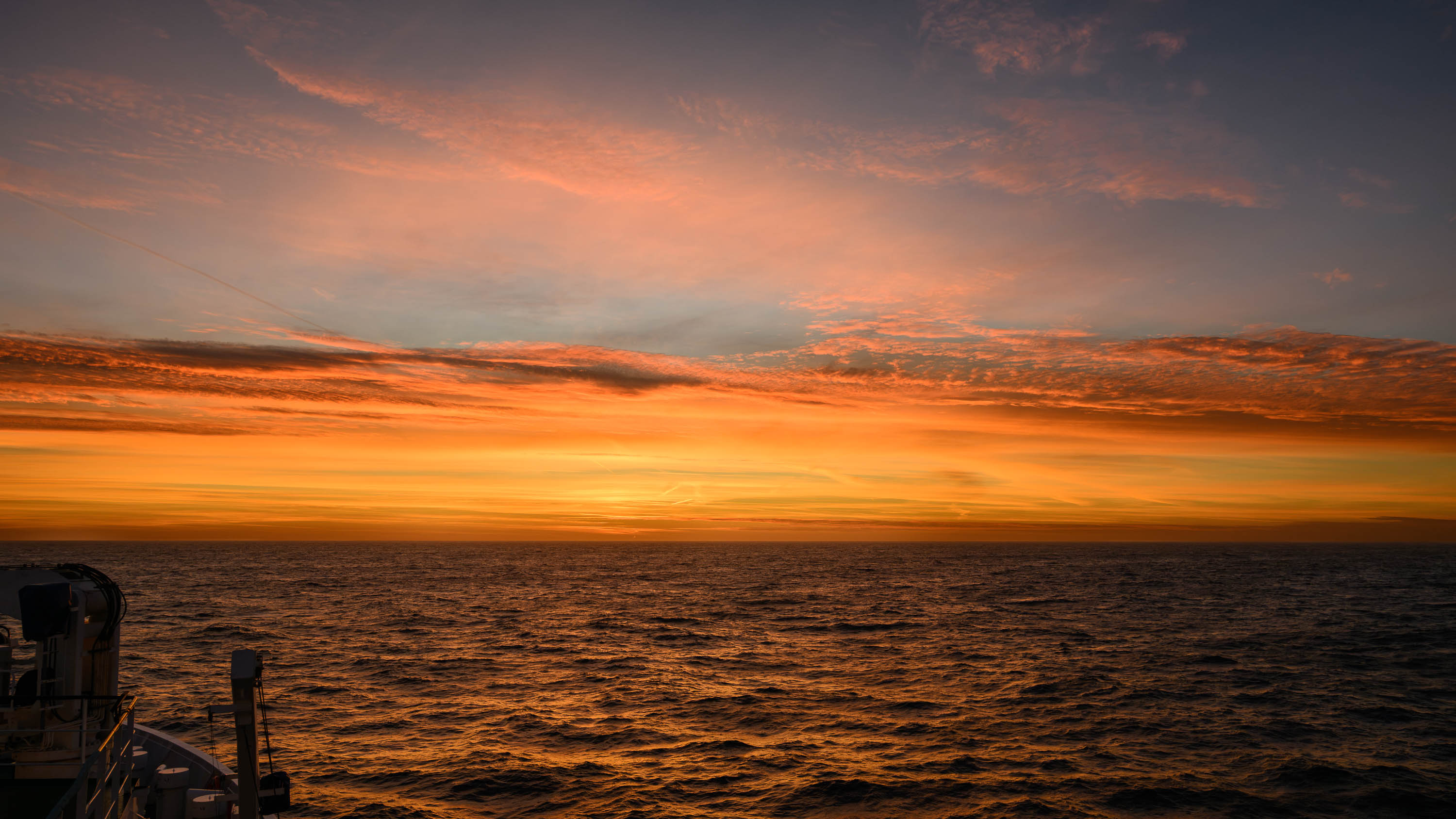
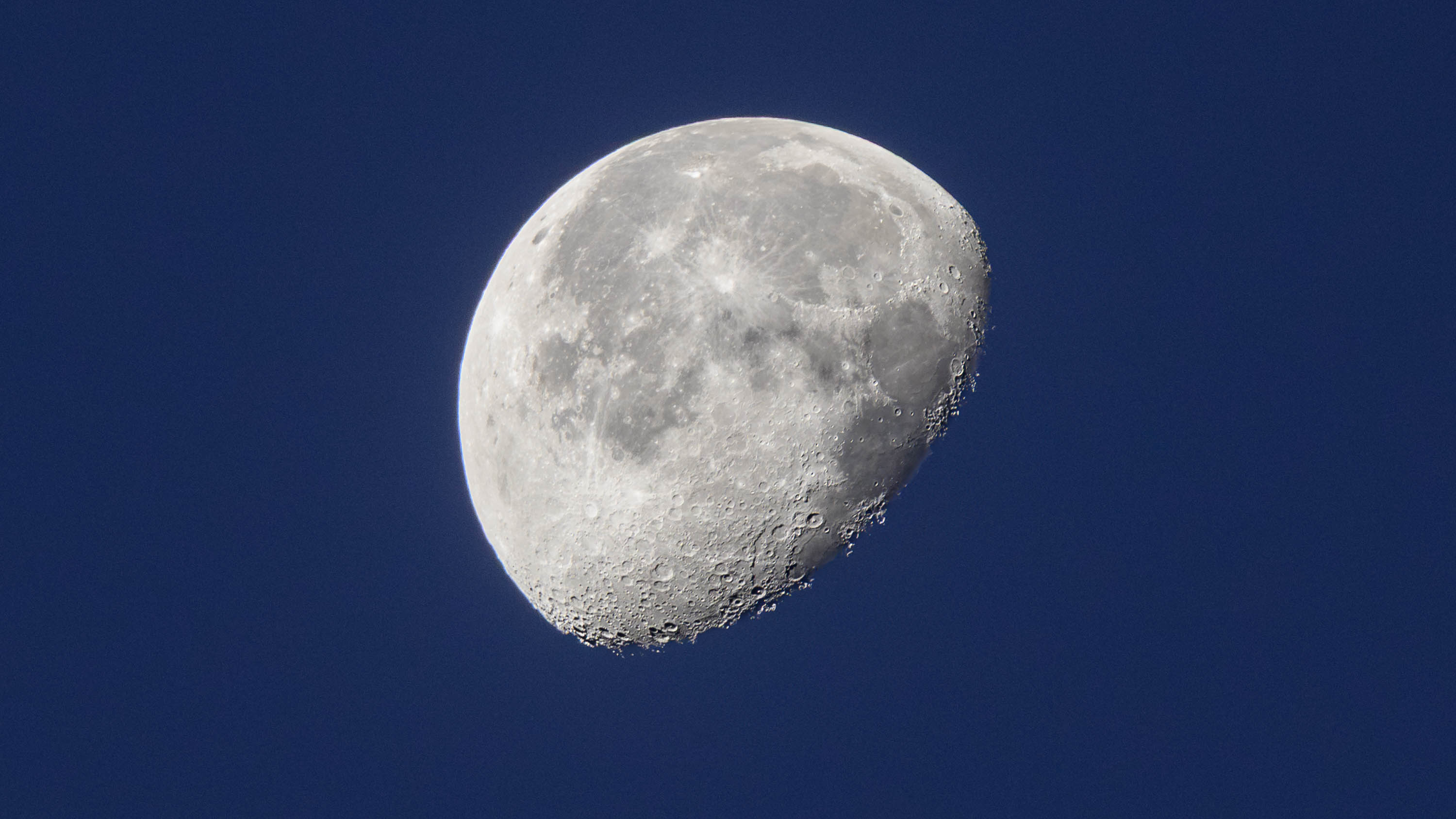
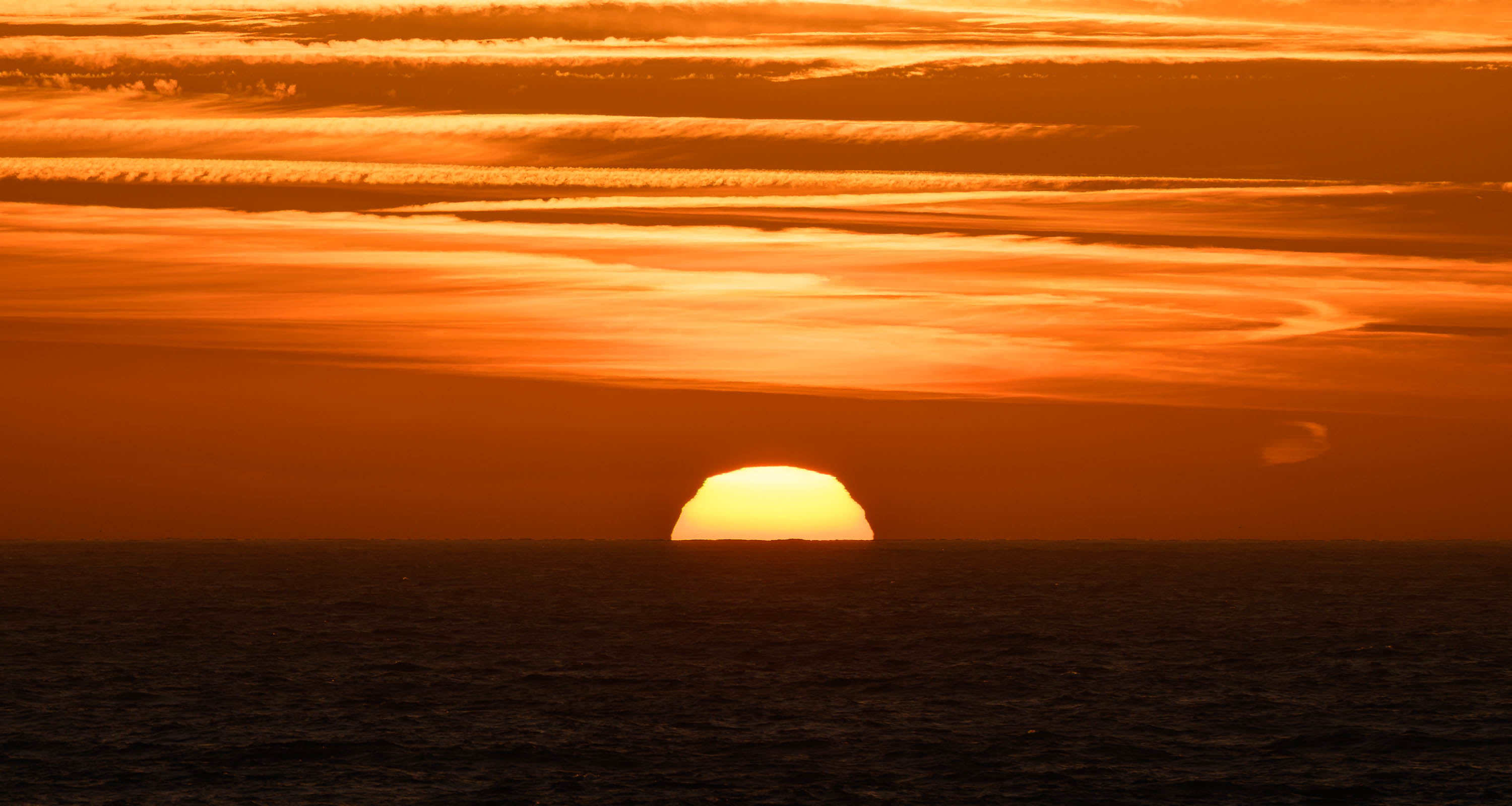
Even had I not been going to be doing anything else it would have been worth getting up to see the pre-dawn sky, it was glorious – easily the best of the survey, the 78% waning moon also looked crystal clear in the dark blue sky.
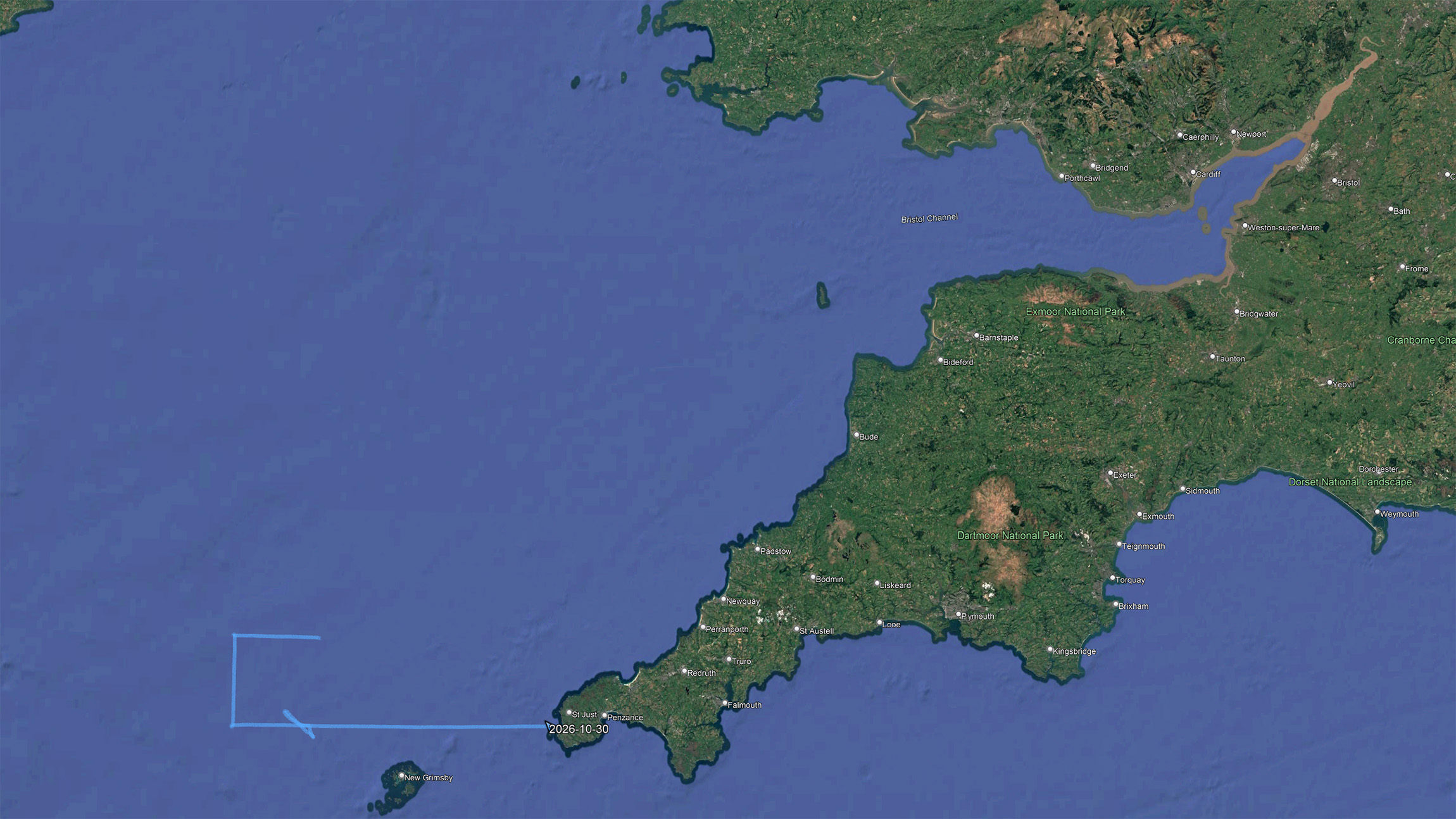
Conditions were pretty good with 16-18 knots of wind from the southeast, although there was still a very noticeable westerly swell rolling in. There wasn’t an awful lot to be seen though, Puffin was the only species into double figures. A solitary Stock Dove circled the Endeavour a couple of times before heading on its way and three Skylark flew across the bow, low to the sea heading south – hopefully they stopped at the Isles of Scilly.
If I thought the first transect was bad the second, albeit only for an hour and 20 minutes, was even worse – I recorded just five birds in that time! These three transects run into one another, so there’s only a 10-minute break while the vessel does a loop around and gets up to speed on the next one, just enough time to make a cup of tea.
The last transect started in the same fashion, with very few birds, at least a stop for a trawl after an hour gave us a much-needed break and fell conveniently on lunchtime. Sadly, for Jeroen and the fisheries scientists, the catch had nothing in it. Despite there being a decent number of schools on the sounder, they had all evaded the net. Leaving Jeroen unable to tell what the biomass they were recording consisted of.
The transect resumed and, as we headed closer to the Isles of Scilly and then towards the Cornish coast, the number of birds picked up a little. Kittiwake and Gannet predominated, with the backup of a decent number of Puffin again, and a few more Guillemot than earlier in the day.
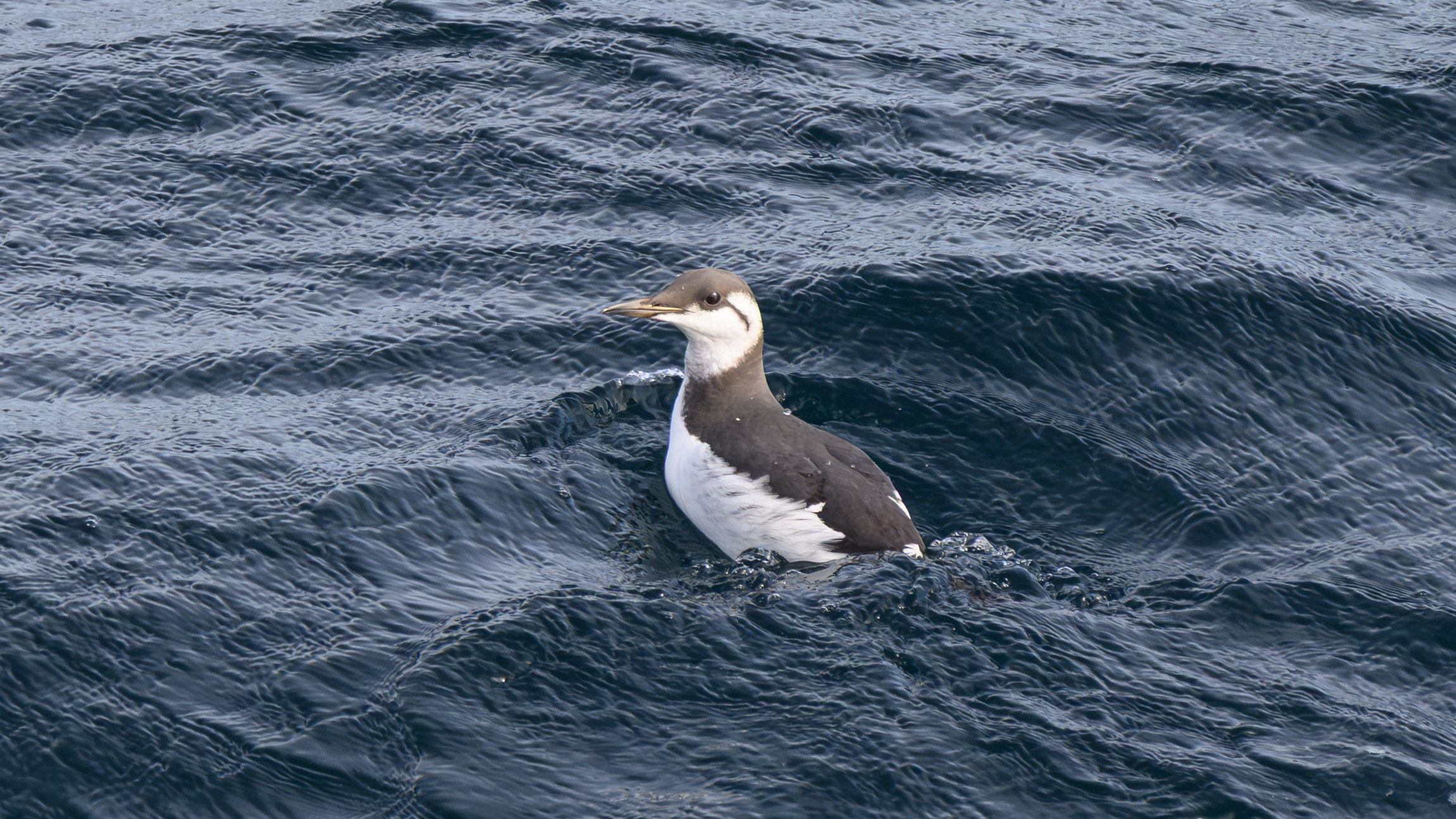
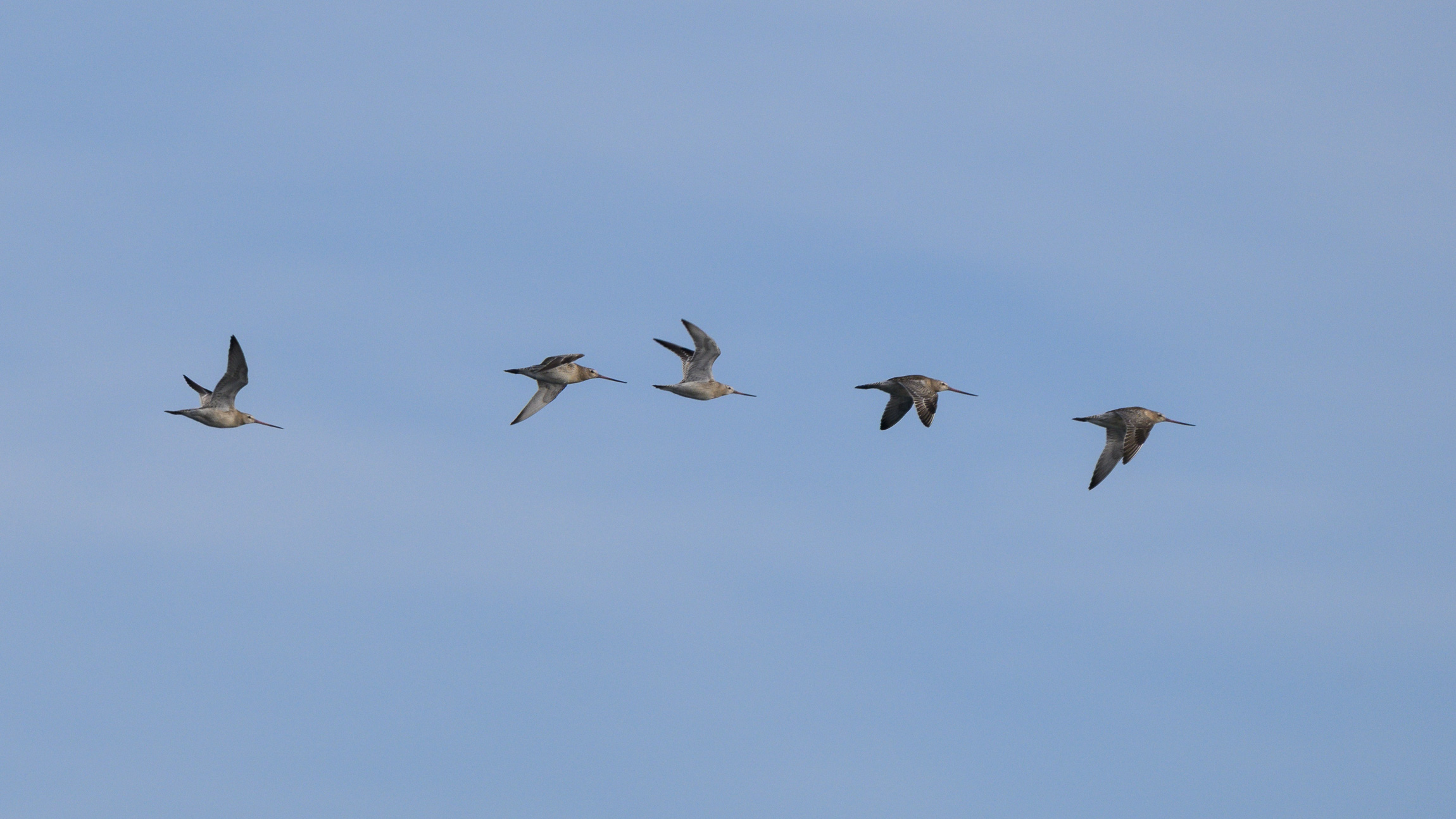
Bird sighting of the transect was a flock of five Bar-tailed Godwit, migrating waders are usually a frequent feature of the Peltic transects but these were the first this year. It was great to see another Grey Phalarope and also three Sooty Shearwater, two of which came very close into the bow.
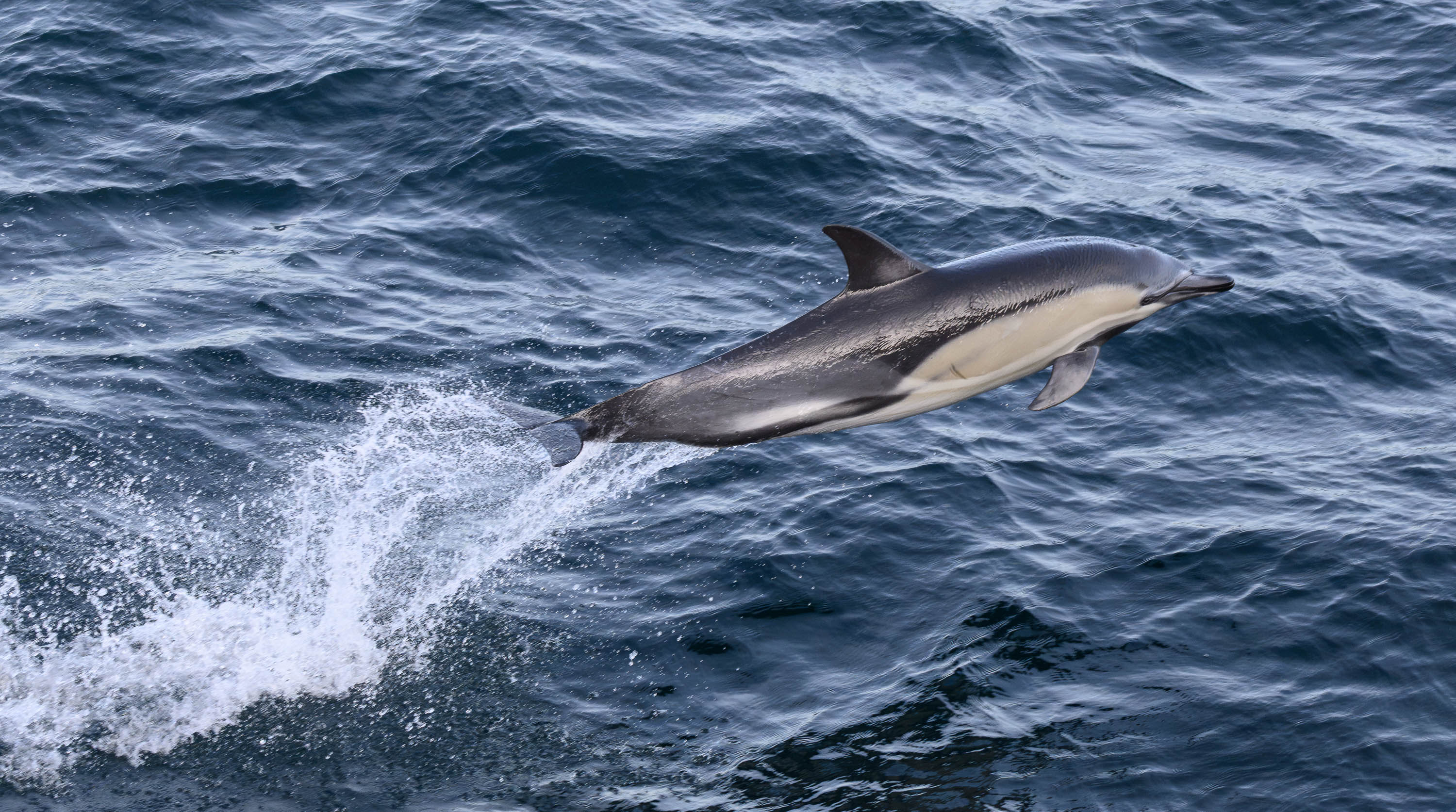
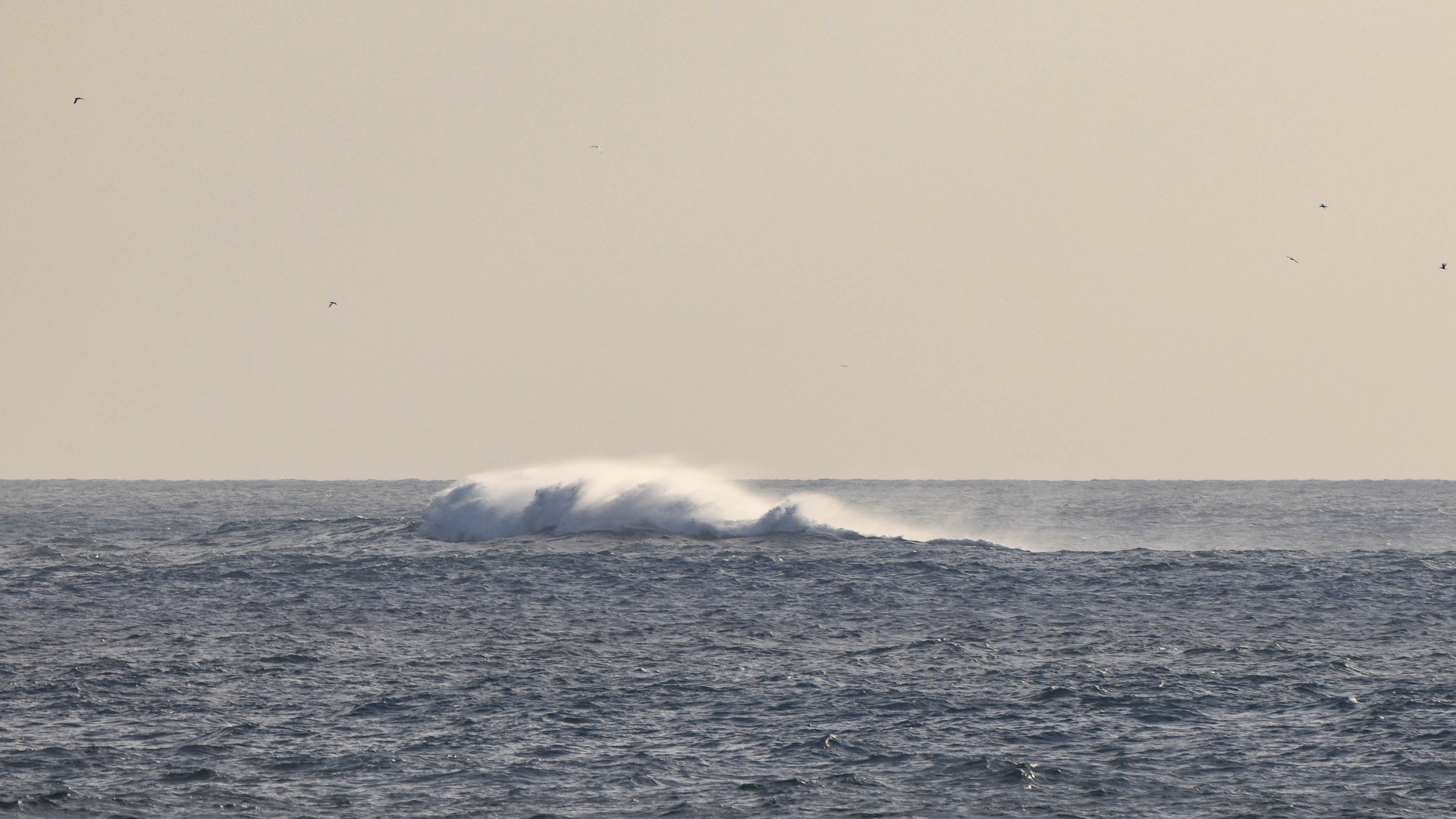
I finally saw a cetacean for the day with the appearance of 14 Common Dolphin in the space of 15 minutes or so – they’ve been very thin on the ground today. By this time, we were north of the Seven Stones reef, and the sea was shallow enough to create some impressive breakers as the Atlantic swell rolled in. The dots in the photo are Gannet, which have a near two metre wingspan.
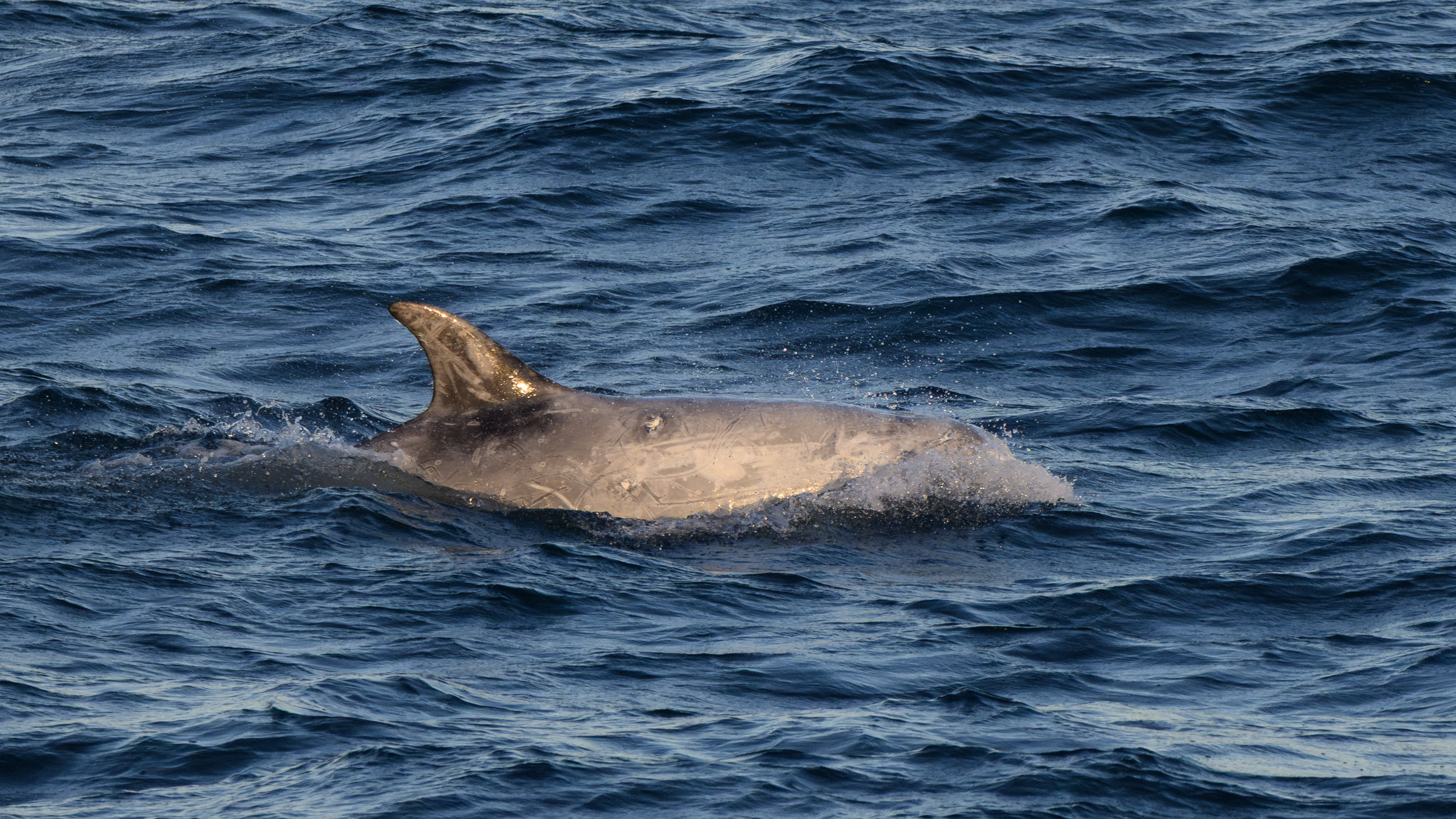
However, the sighting of the transect came within sight of Land’s End in the form of a pod of 16 Risso’s Dolphin. I’d given up on seeing them on the survey this year, we normally see them in the Channel. They were heading across the bow, and I got one decent photo with the sun behind me, which shows the scarring this species is known for.
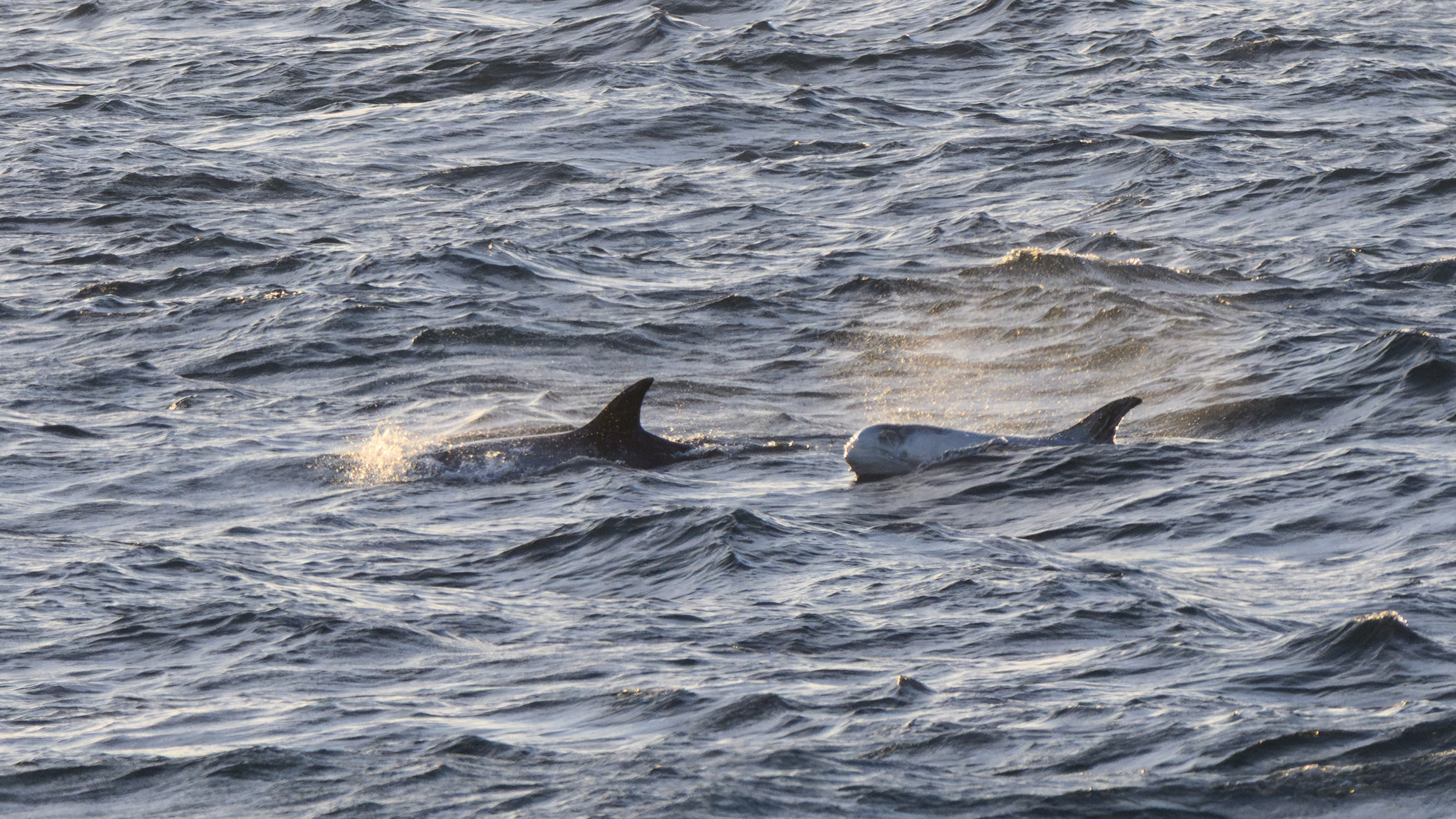
As is typical of Risso’s, they went sub-surface as we passed then popped up aft of us and continued their way south. There were at least a couple of calves in the pod which was nice to see.
That made a great end to what had been quite a long day. Hopefully, things will carry on in a similar vein on our last full day of surveying.
Species recorded
Marine animals
- Common Dolphin 150
- Risso’s Dolphin 16
- Blue-fin Tuna 3
Seabirds
- Kittiwake 287
- Gannet 125
- Puffin 82
- Guillemot 27
- Manx Shearwater 26
- Sooty Shearwater 11
- Fulmar 10
- Great Black-backed Gull 9
- Razorbill 6
- European Storm Petrel 3
- Lesser Black-backed Gull 2
- Grey Phalarope 1
- Herring Gull 1
- Auk sp. 13
Terrestrial birds
- Bar-tailed Godwit 5
- Skylark 3
- Chiffchaff 3
- Little Bunting 1
- Chaffinch 1
- White Wagtail 1
- Stock Dove 1