Driving down to Dover from Essex, I wondered whether the northerly winds currently blowing down the North Sea were bringing any migrating birds into the English Channel and considering the possibility of some unusual sightings.
Having met up with Alistair, my fellow surveyor, and driven into the port, we boarded the DFDS ferry Cote d’Opale, where we were welcomed by members of the crew and escorted to the bridge. Once the ship had left its mooring and made its way out of the harbour, we took up position and started surveying.
The wind was strong but variable and the sea state was moderate, with numerous whitecapped waves, so our chances of seeing any porpoise, dolphin or whales that might be around were not high. Our hopes were pinned on wind-blown birds.
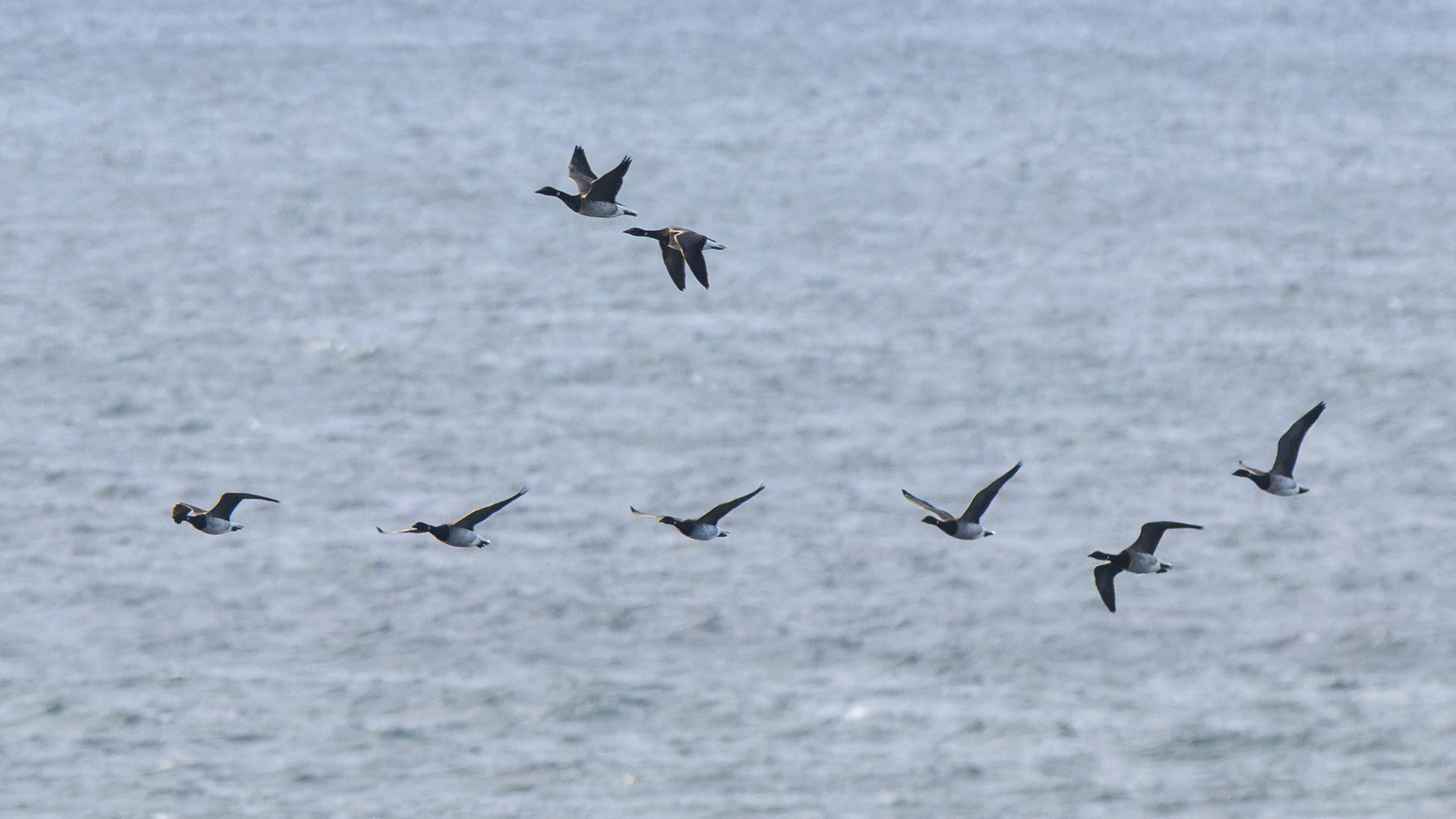
Unusually, there were no gulls around the harbour entrance, and our first bird was a Sandwich Tern, followed by a succession of Northern Gannet, mostly lone adults, along with several of the more common gull species. About twenty minutes into the survey, we spotted a small flock of Brent Goose and another of an unidentified species of auk.
Around mid-Channel, a Great Skua passed ahead of our vessel, a shearwater was spotted flying low over the waves, and a small flock of Little Gull crossed our bow. The shearwater was a dark bird and thought to be either Sooty Shearwater or Balearic Shearwater, but positive identification was not possible.
Closing in on the French coast, we added Razorbill to our tally, along with two more flocks of Brent Goose, two Common Scoter, a Black-throated Diver and a flock of about sixty small birds which looked like finches but evaded identification.
The turn around in Calais is fairly brief, so we remained on the bridge while passengers and cargo were unloaded and loaded. Just as at Dover, there was an unusual lack of gulls around the port.
During the return crossing, Northern Gannet was again frequent, with lower numbers of Kittiwake and other gulls, more auks and another flock of migrating Brent Goose. We also encountered our one and only Fulmar of the day, gliding over the waves on its stiffly-held wings.
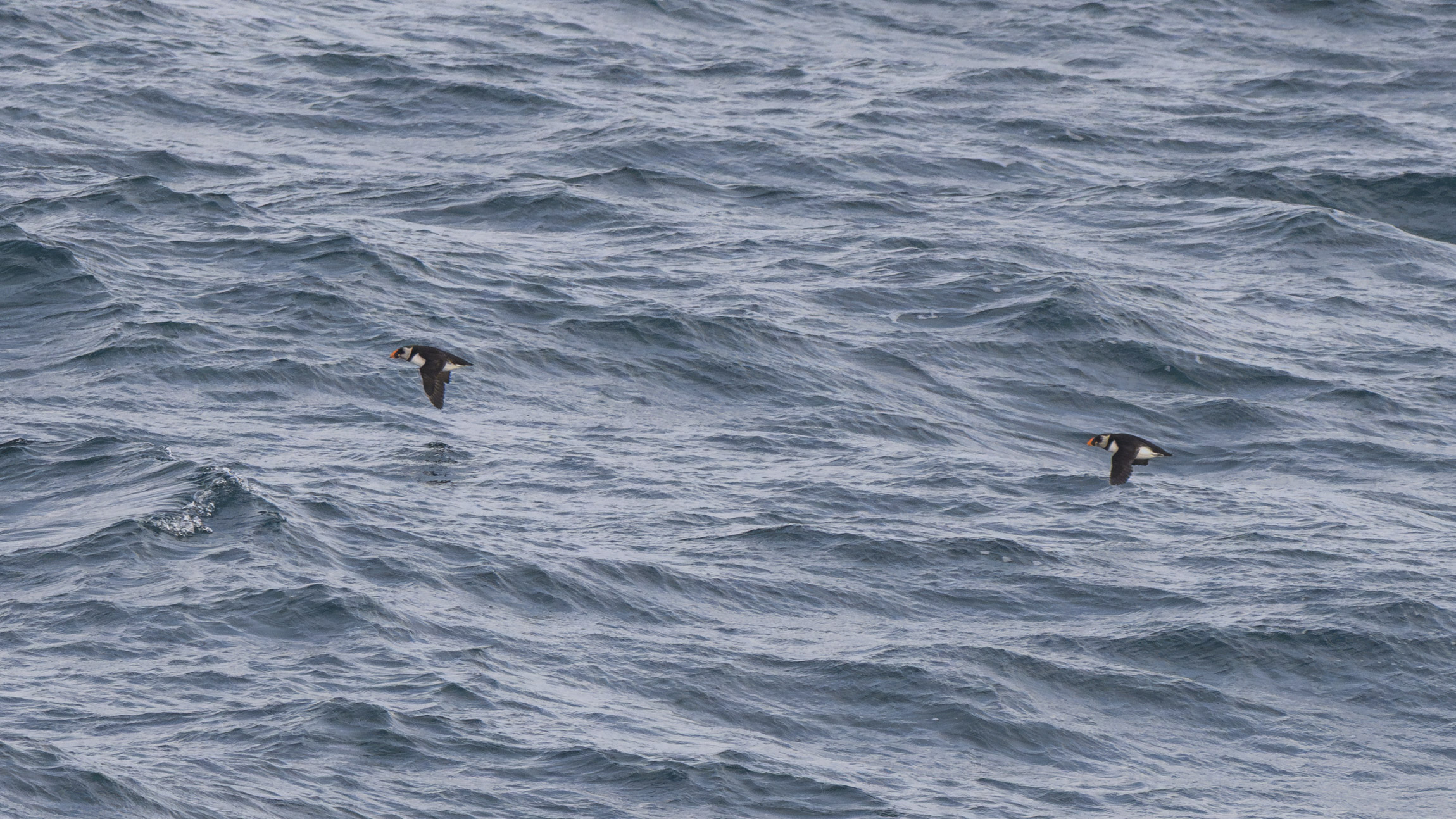
Among the auk sightings, one stood out. Puffin is not unknown in the Dover Straits by any means, but sightings are relatively few compared to the other British auks, so we were pleased to identify two birds hurtling past the ship as we neared Dover.
We would like to thank DFDS, Captain Francois de Jonckheere, his officers and crew for their warm welcome and for facilitating our survey.
Patrick Hatch and Alistair McKail, Research Surveyors for MARINElife (Registered Charity No. 1110884; Registered Company No. 5057367)
Weather
Outbound – good visibility, wind northerly force 5-9
Return – moderate visibility, wind northerly force 4-8
Species recorded
Seabirds
- Black-headed Gull Chroicocephalus ridibundus 11
- Black-throated Diver Gavia arctica 1
- Brent Goose Branta bernicla 170
- Common Gull Larus canus 7
- Common Scoter Melanitta nigra 2
- Fulmar Fulmarus glacialis 1
- Gannet Morus bassanus 84
- Great Black-backed Gull Larus marinus 4
- Great Skua Stercorarius skua 1
- Herring Gull Larus argentatus 5
- Kittiwake Rissa tridactyla 4
- Lesser Black-backed Gull Larus fuscus 5
- Little Gull Hydrocoloeus minutus 4
- Puffin Fratercula arctica 2
- Razorbill Alca torda 6
- Sandwich Tern Thalasseus sandvicensis 4
- Shag Gulosus aristotelis 1
- Shearwater sp.1
- Larus sp.4
- Auk sp.15