Wednesday 14 October
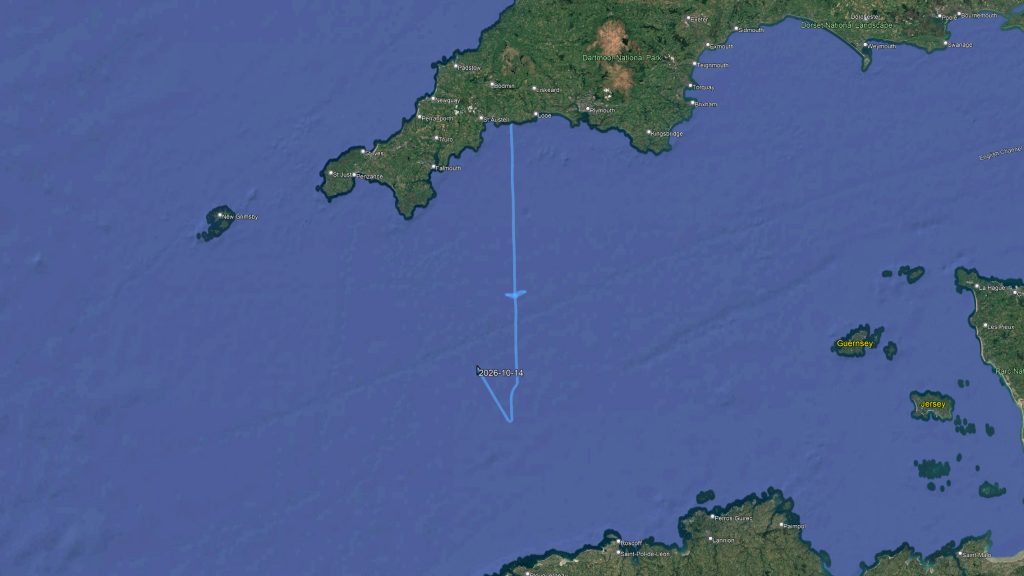
The first transect for today started just to the east of Fowey, Cornwall and head due south for 90km. The species du jour this morning was Gannet, we recorded 255 on the transect, compared to 92 Guillemot, Razorbill and auk sp. and then 27 European Storm Petrel, everything else was in single figures or low teens. The bird highlight of this transect was undoubtedly our fourth Grey Phalarope, which took off from right alongside the ship (sadly unseen until it flew).
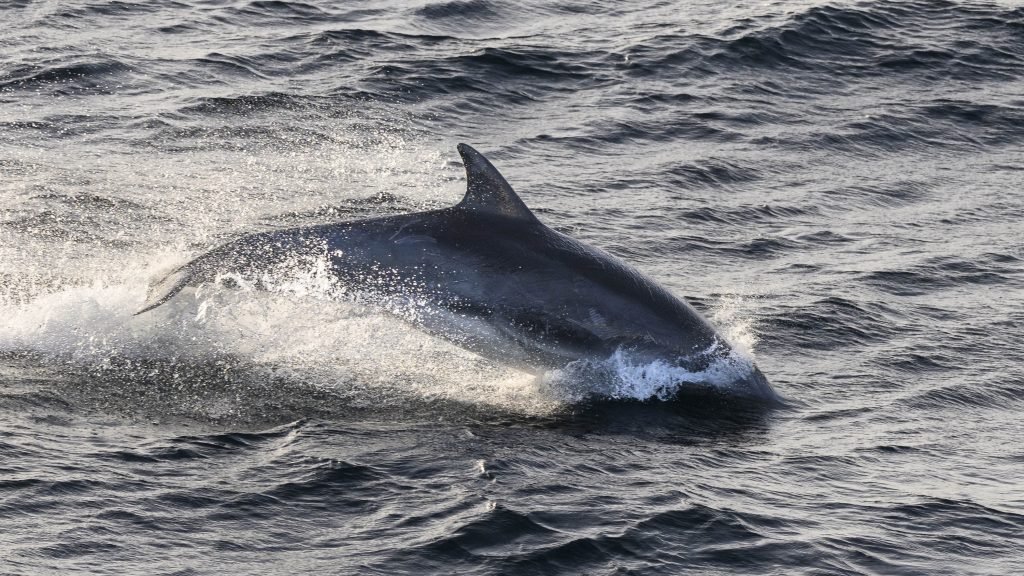
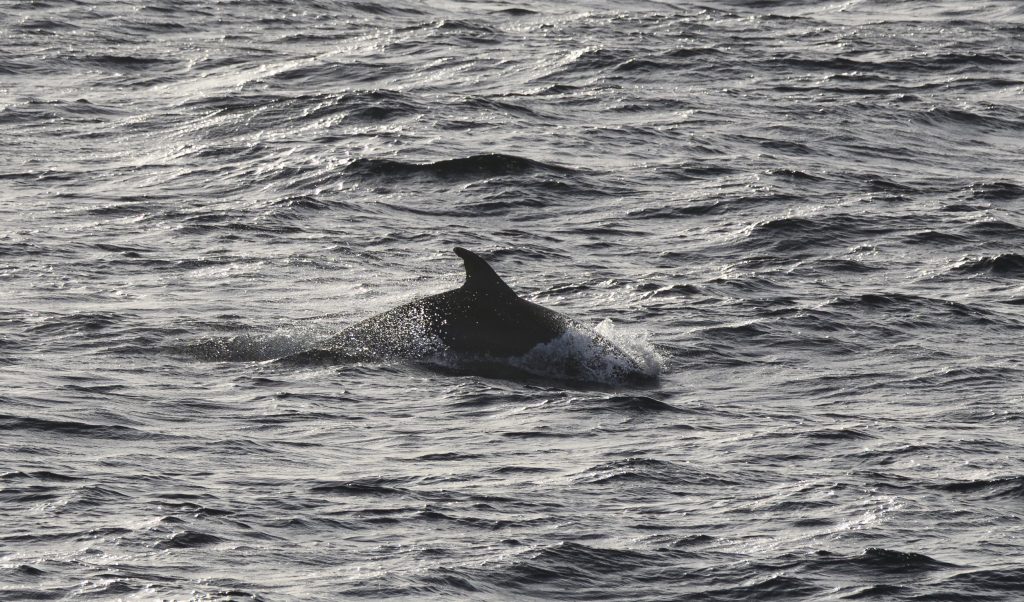
Cetaceans were few and far between but there was a bit of quality in the sightings, we finally recorded a third species of cetacean – Bottlenose Dolphin – it’s only taken 10 days! Unfortunately, they kept in the glare of the sun and only one leapt into the bow. Another had a distinctive notch in the trailing edge of the dorsal fin, I’ve sent it off to see if it can be matched with any in the English Channel Bottlenose Dolphin photo id database.
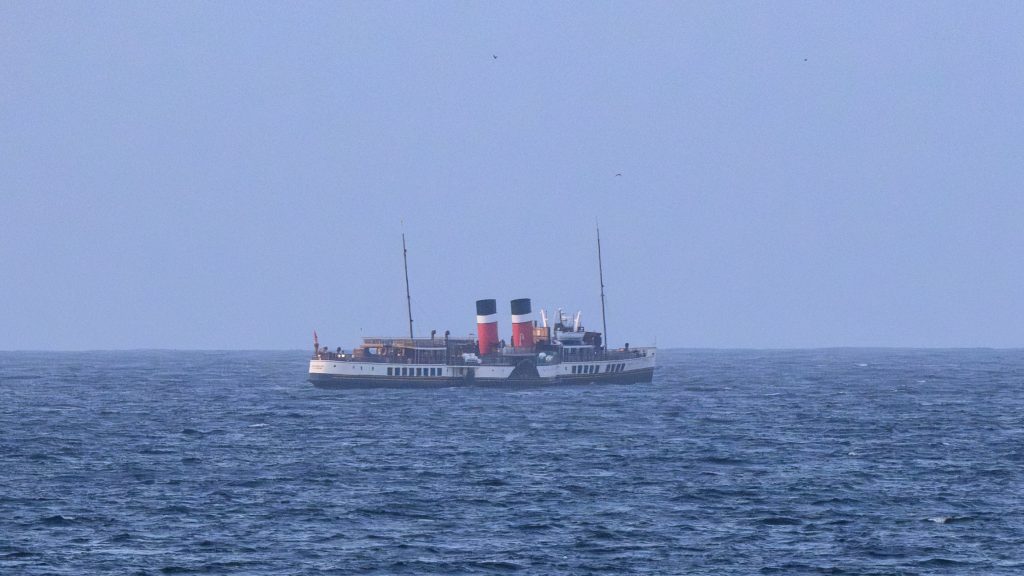
Just outside Fowey we passed the Waverley, the world’s last seagoing paddle steamer, on her way back to the Clyde for the winter.
Between transects we had two hours downtime as we were picking up the previous day’s transect where we finished rather than the nearest point to us. This was to allow time for an evening trawl at the end of the transect. There were few birds to be seen but there were about 50 Common Dolphin to watch. Many putting a huge effort into trying to get to the Endeavour, I picked out some starting off from over a kilometre away, only to have to give up a couple of hundred metres short as they ran out of energy for their high-speed pursuit. Still, there were plenty who made it.
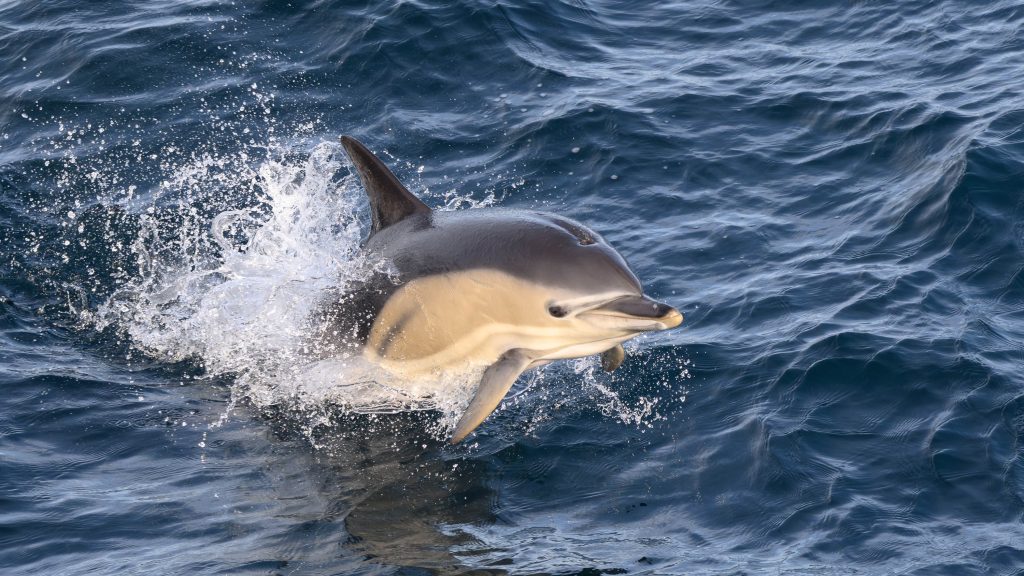

The last section of the transect only took an hour and a quarter to complete. It may have been short, but it packed a lot of Common Dolphin, we recorded 162, with another pod of over 100 animals. Strangely, almost all of them snuck into the ship, barely breaking the surface, that despite having been seen leaping about at distance from the ship.
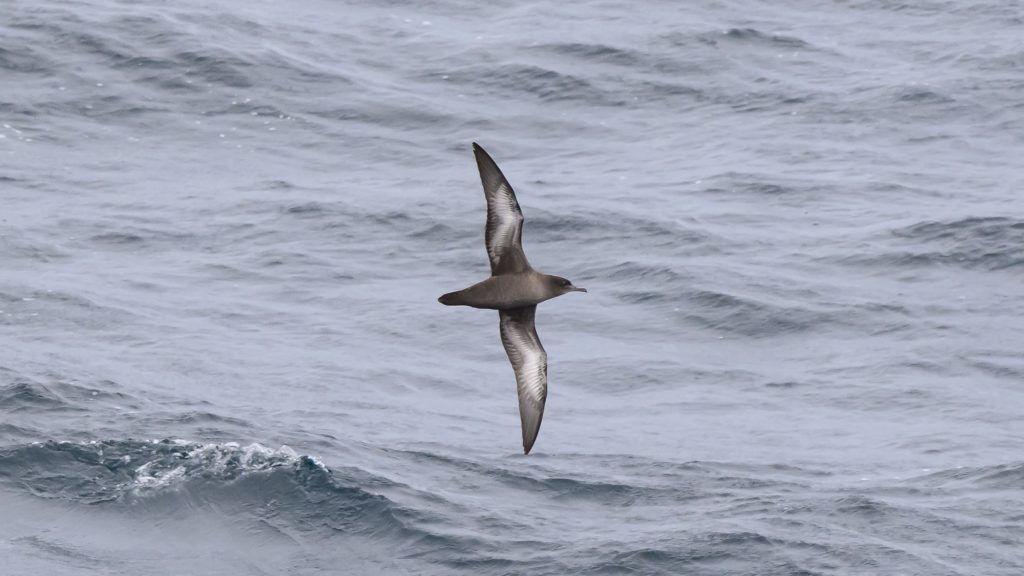
In contrast, we only recorded 19 birds but two of those were Sooty Shearwater, which are always a treat to see. In this case, the low sun catching the silvery underwing to very good effect.
We had a (relatively) early finish of the transect and, as it turned out, so did the scientists and crew. There were no fish in the area around the end of the transect, so the planned trawl didn’t happen.
Thursday 15 October
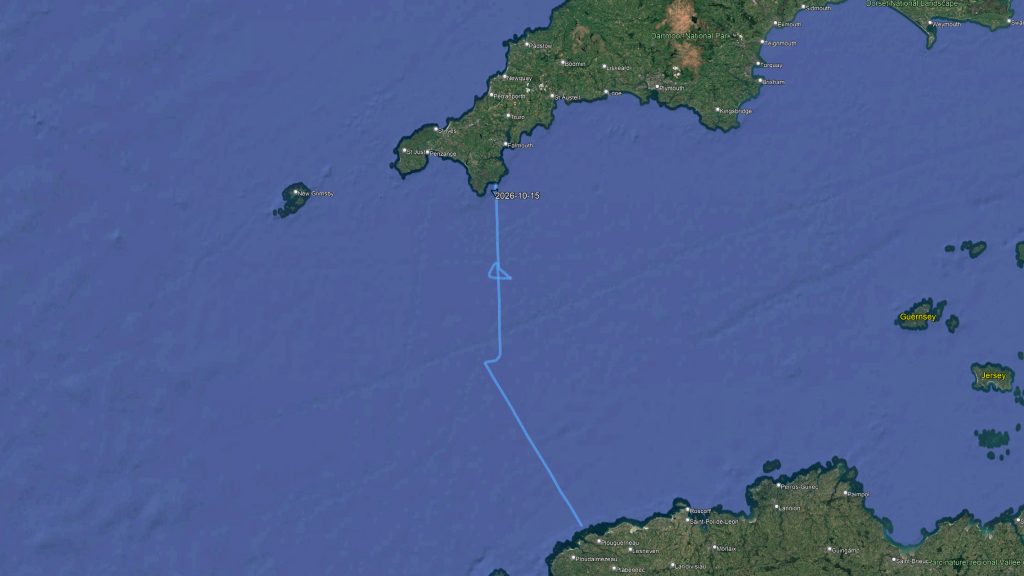
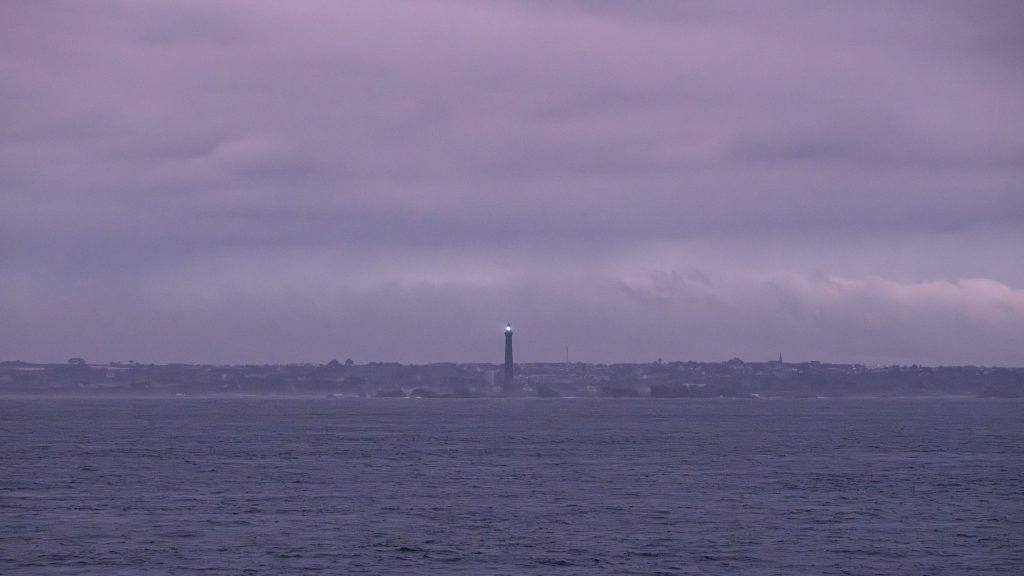
This morning’s transect started close to the world’s tallest traditional stone lighthouse, the 82m Île Vierge. Sea conditions were excellent with light southerly winds and a smooth sea, but it took a while to get light due to the cloud cover, although this broke up fairly quickly.
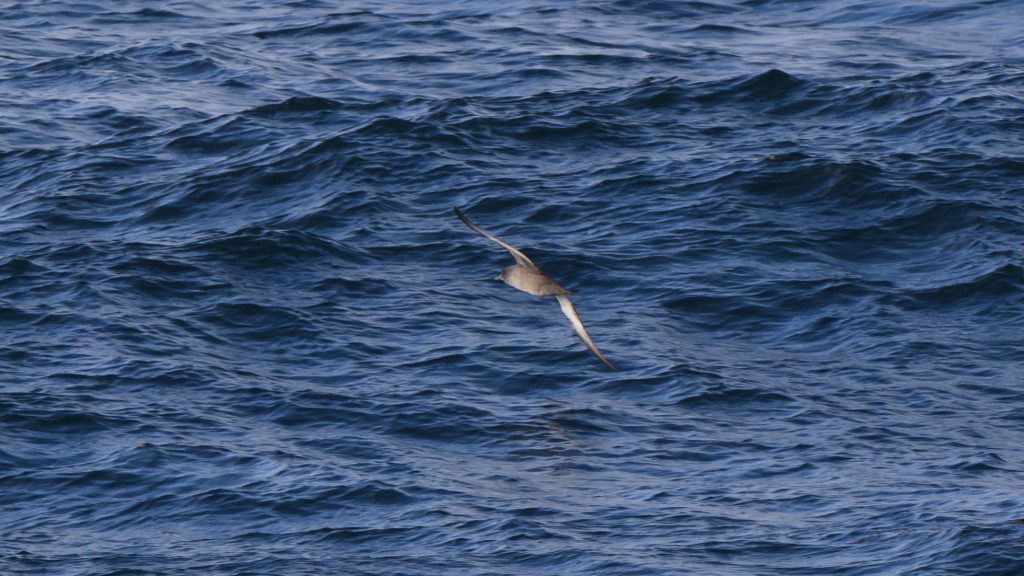
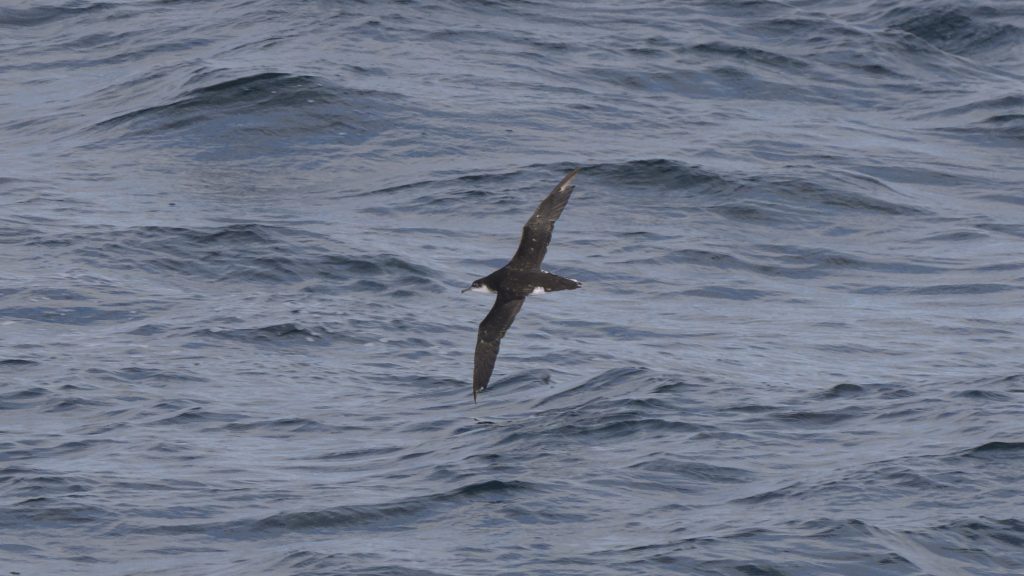
Things got off to an excellent start with Common Dolphin, and Balearic, Sooty, and Manx Shearwater within he first 10 minutes. Unfortunately, that was it for the Balearics, but we continued to see the odd Sooty and Manx over the rest of the transect. One of each even coming close enough for the first photos of them this survey, I’m hoping for better opportunities in the days ahead.
Dolphin sightings also continued with a total of seven encounters with 73 Common Dolphin. Slightly unusually, all of them carried on with the stealth approach we had seen the previous day – barely breaking the surface as they made their way in towards the bow.
About two-thirds of the way along the transect Jeroen came to the bridge, excited at the prospect of a trawl, the fish marks on the echosounder having been rather lacking so far on this transect. Unfortunately, wrecks and undersea cables scuppered his plans and we continued onwards.
We had a brief 20-minute pause between transects, which fortunately coincided with lunch, before starting the next transect. Once again it got off to a good start, with a lovely Sooty Shearwater across the bow but after that there was just a scattering of auks and Gannet, most of them out towards the edge of our one-kilometre survey area.
In the early afternoon Jeroen’s desire for a trawl to sample the species present in the marks they were seeing on the echosounder was finally realised with marks over a clear section of seafloor. This gave us a much-needed break from surveying, although relaxation was standing on the bridge wing looking for wildlife.
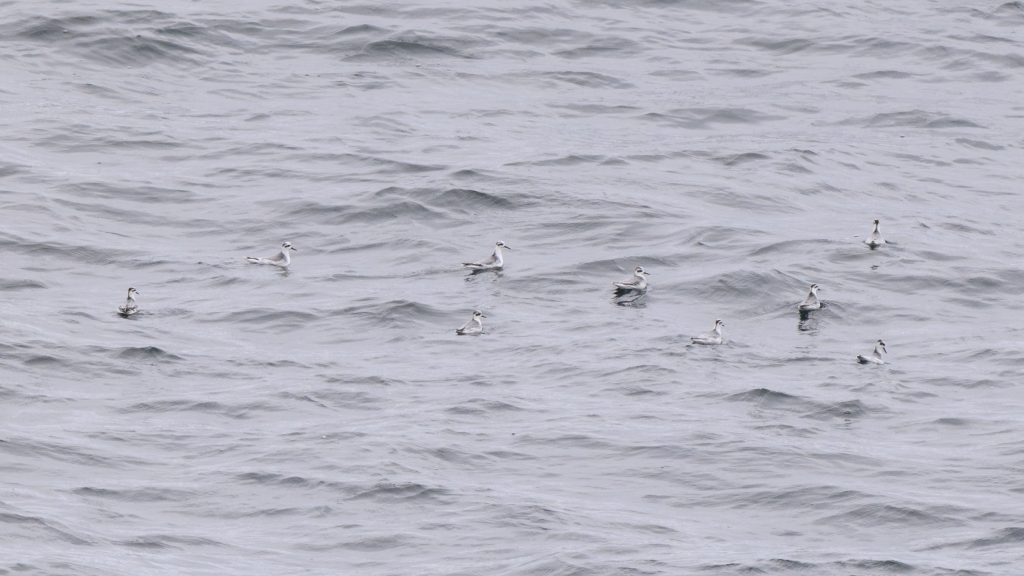
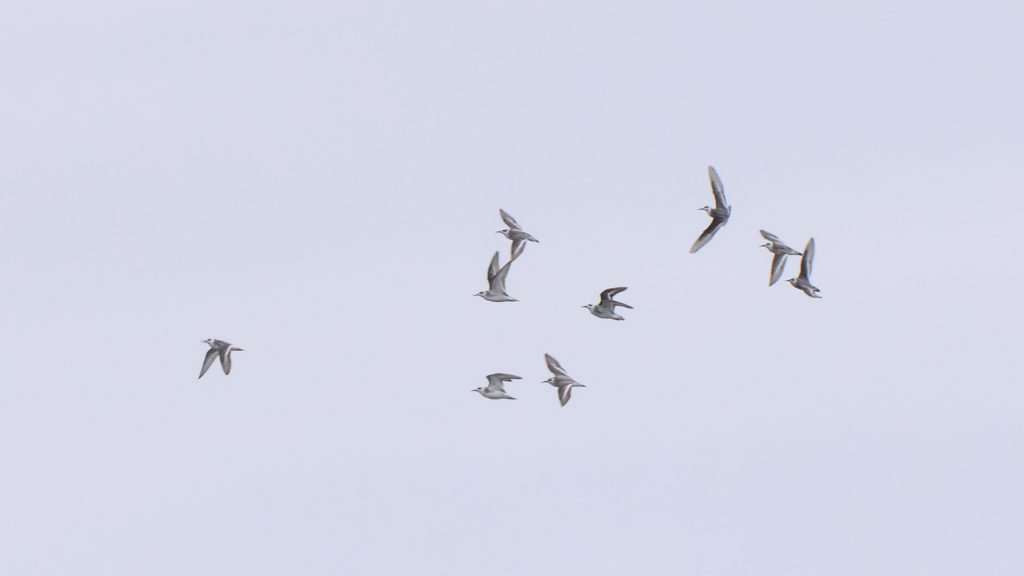
This paid off handsomely when a Grey Phalarope sped by. The JNCC observers had seen a couple during the morning, but we’d missed out so it was nice to see one. There have been spectacular numbers in the southwest of the UK this autumn (over 200 seen off the Isles of Scilly in September) and I had mused to Robin earlier that I was surprised we hadn’t seen a flock on the survey yet. A short time after the lone bird was seen I picked up a flock of birds over the water ahead – nine Grey Phalarope – they settled a couple of hundred metres ahead of us and we got to within about 100 metres of them before they took flight.
There were a small number of birds drawn to the net as it was hauled, despite there being a decent catch, just a few Gannet, two Manx Shearwater, and a solitary European Storm Petrel.
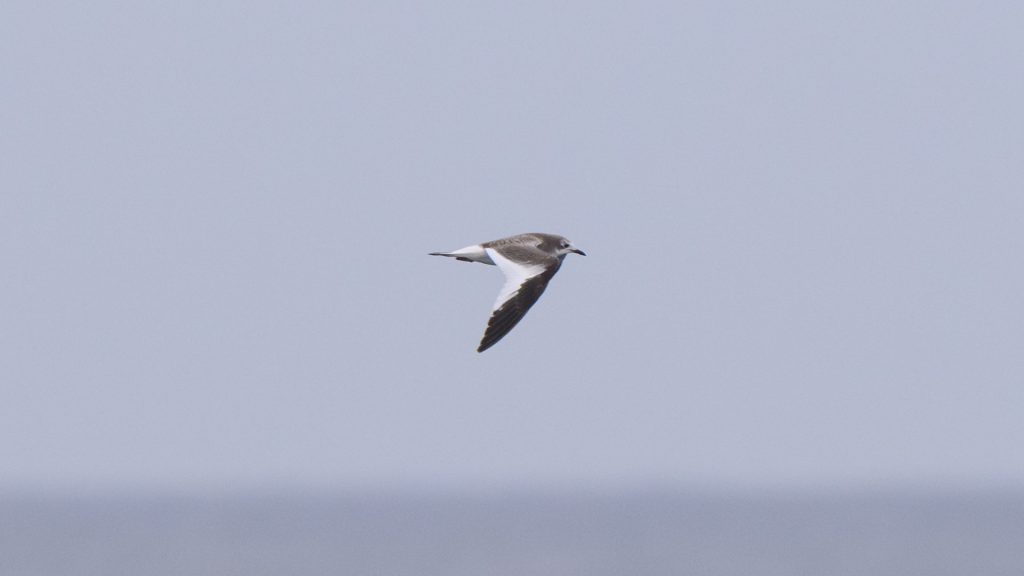
A small gull approaching the ship caught Charlotte’s eye (one of the JNCC observers) – a juvenile Sabine’s Gull – it was a little distant, but we all had a good view of it. This had turned into an excellent pause, although a shame these birds weren’t recorded whilst we were surveying.
On resumption the wildlife carried on much as it had before the trawl, Gannet and auks dominating the sightings, with just the odd Manx Shearwater and European Storm Petrel to break things up.
We had four encounters with 19 Common Dolphin prior to the trawl but nothing after we resumed. We made it to the end of the transect, just east of the Lizard, on sunset.
Friday 16 October
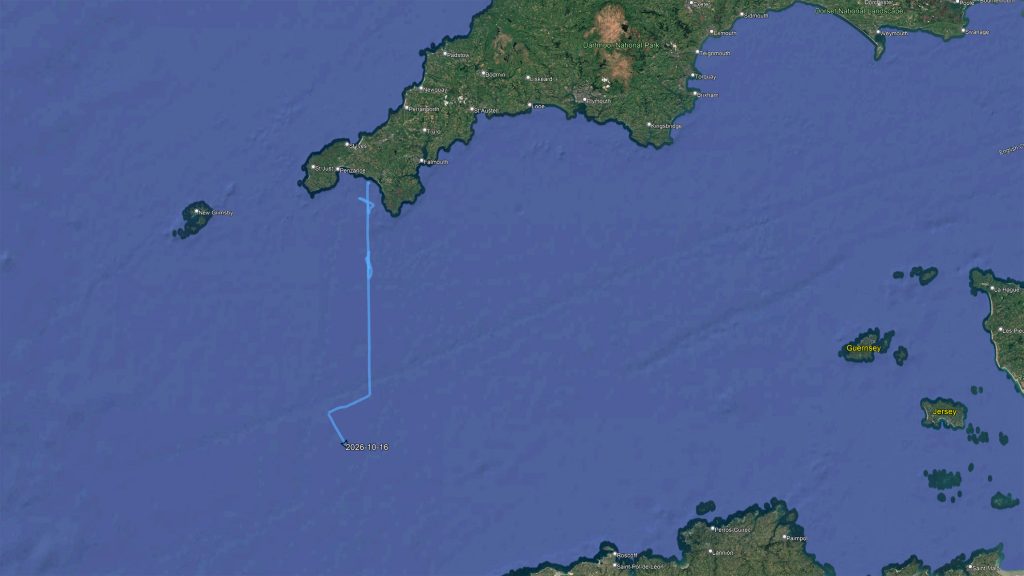
The weather front forecast for this morning had already passed through and we had clear skies and a noticeably fresh north-northwest breeze. This morning’s transect started in Mount’s Bay, Cornwall, heading due south for 86km. There were plenty of Gannet, Kittiwake and auks around, but we didn’t have long to count them as there were marks on the echosounder and we came off transect for a trawl after 35 minutes.
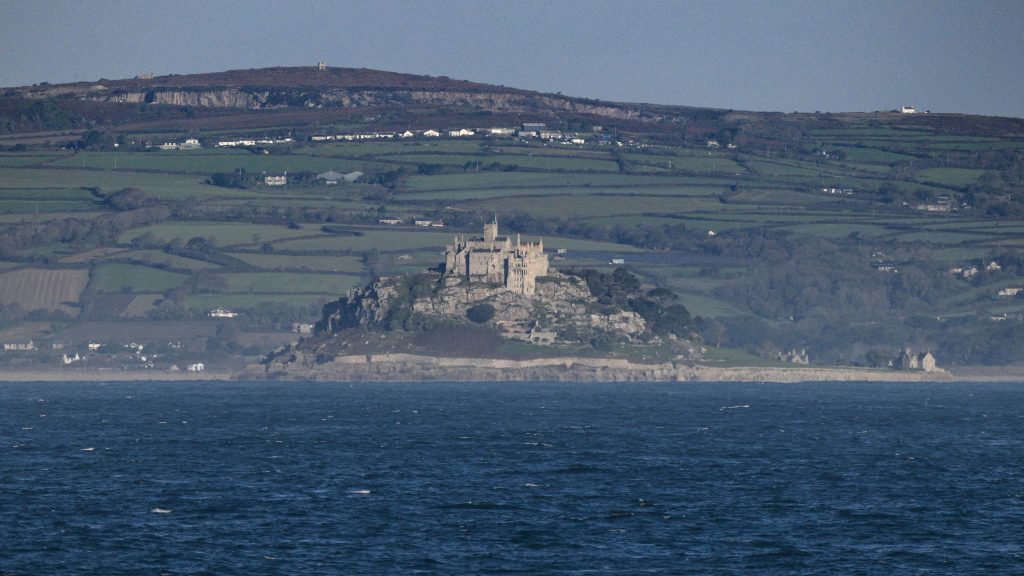
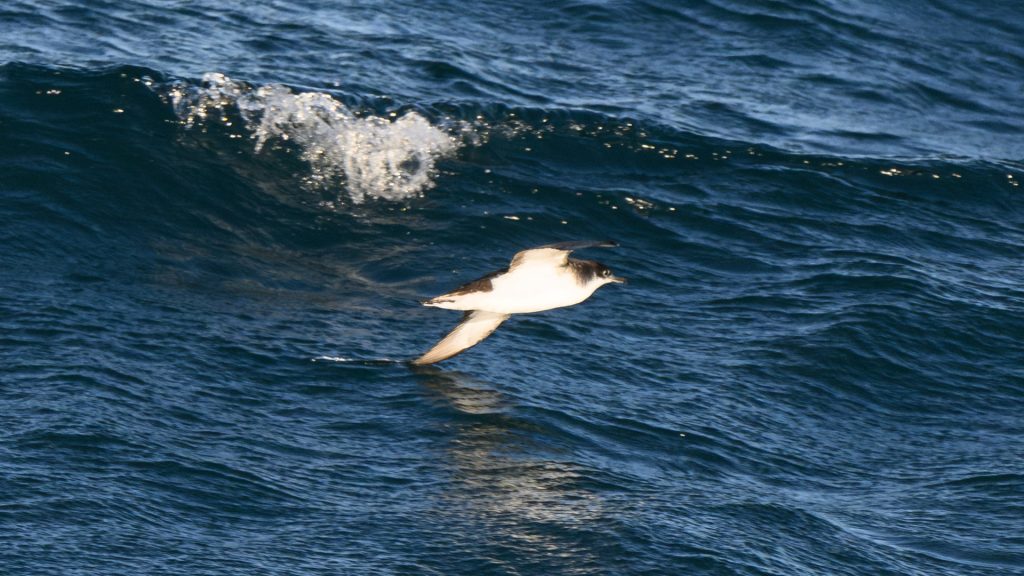
The trawl took us closer to St Michael’s Mount and also gave us a chance to look more closely at all the feeding flocks of birds dotted around the Bay – there were obviously a lot of fish around. We managed to find a couple of Sooty and a few Manx Shearwater at one of the feeding flocks but nothing else.
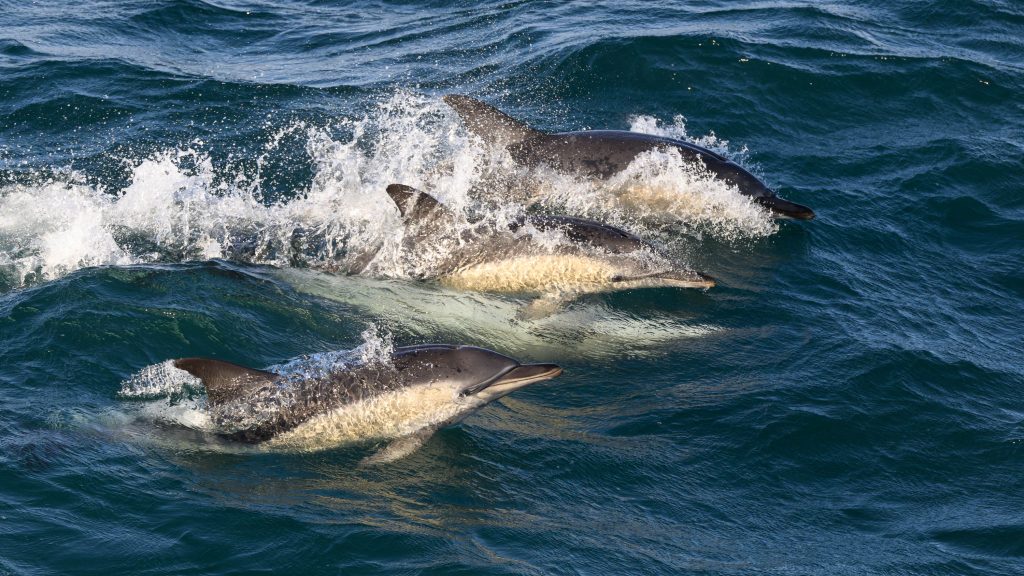
Despite much searching for whale blows or signs of Minke Whale we could only find Common Dolphin or, as the case was, they found us. A small pod came into the bow with three surfacing at once, it was only looking at the photo that I realised there was a fourth upside down underwater.
We don’t normally have a chance to trawl close inshore in Mount’s Bay, there are usually too many fishing pots laid, today there were none and Jeroen was glad of the chance to trawl. The catch was almost totally Sprat, one of his target species and not usually found this far west.
We resumed the transect, leaving the feeding groups behind – none were close to the transect line – which may have been a blessing, trying to count a blizzard of birds passing close to the ship is fraught.
Flocks of auks were on the move but unfortunately, due to the glare ahead, we didn’t have enough time on them to be able to identify many – pretty standard on a survey, it can be difficult enough to count the flock in the five-ten seconds they’re in view, let alone identify each bird in a flock.
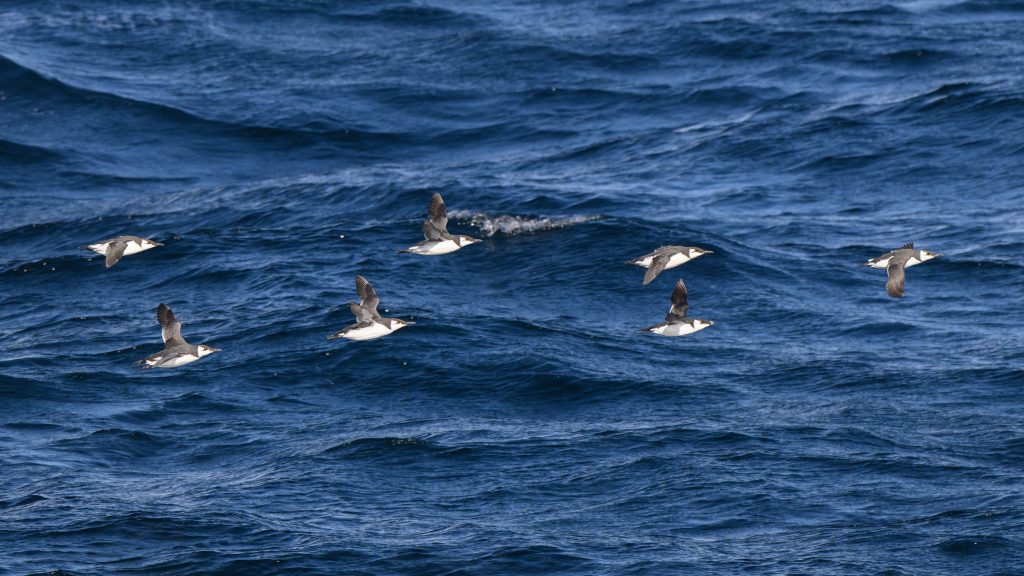
More marks on the sounder meant a break for another trawl, Jeroen was confident these would be Sardine, but he never found out. For whatever reason the trawl was unsuccessful and there was little in the net. We were 25km from the nearest land and there was relatively little about, the odd flock of auks flew past, and a distant flock of feeding Kittiwake attracted the attention of an Arctic Skua.
I was about to leave the bridge wing when Robin rushed towards me saying there was a Merlin coming around the ship. I turned just in time to see the Merlin attempt to land on the railings above the bridge, but it saw me and took flight and glided straight past me to land on the railings at the bow – a stunning view of this beautiful small falcon. It perched for a few minutes then took flight and headed off back towards land.
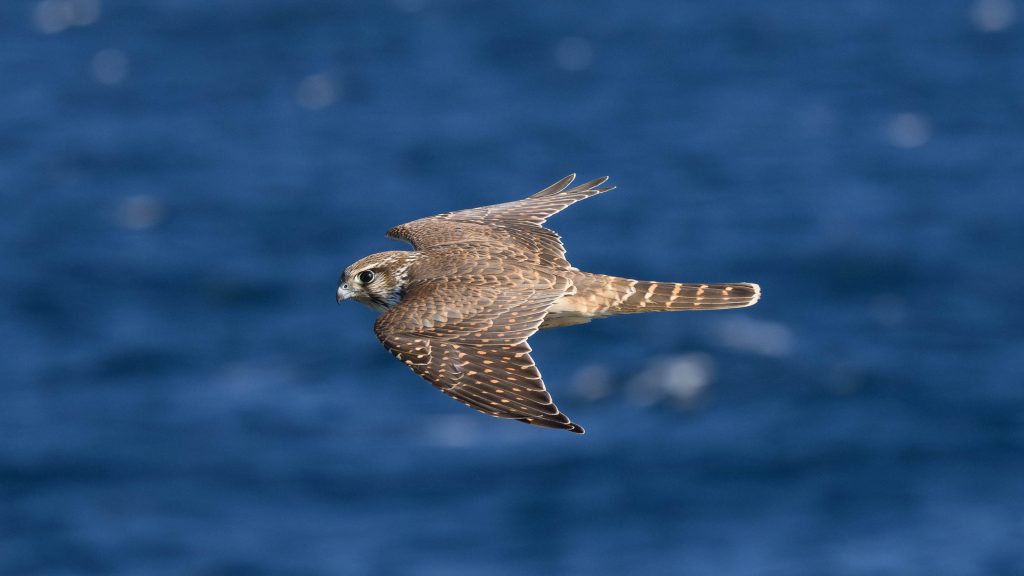
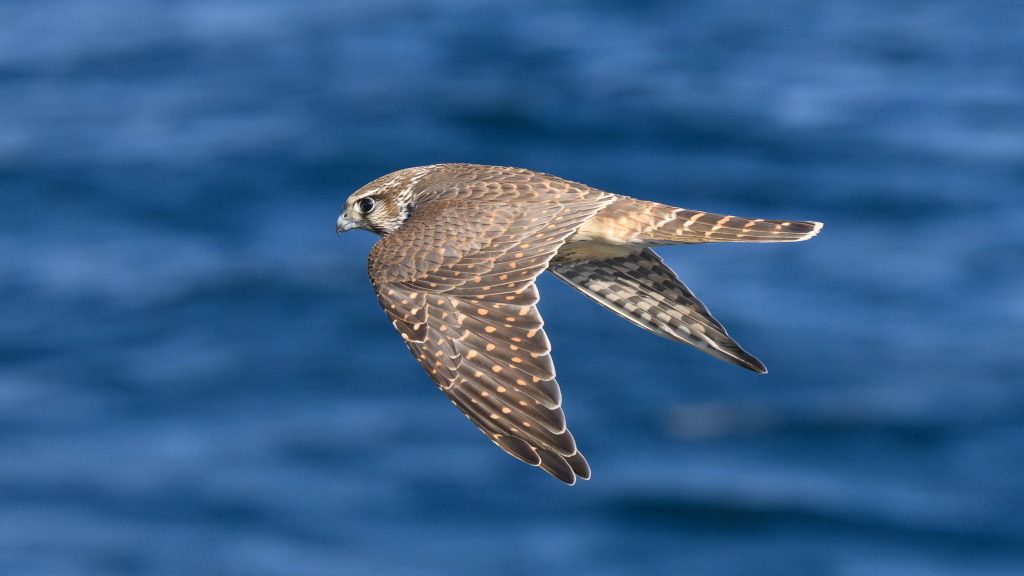
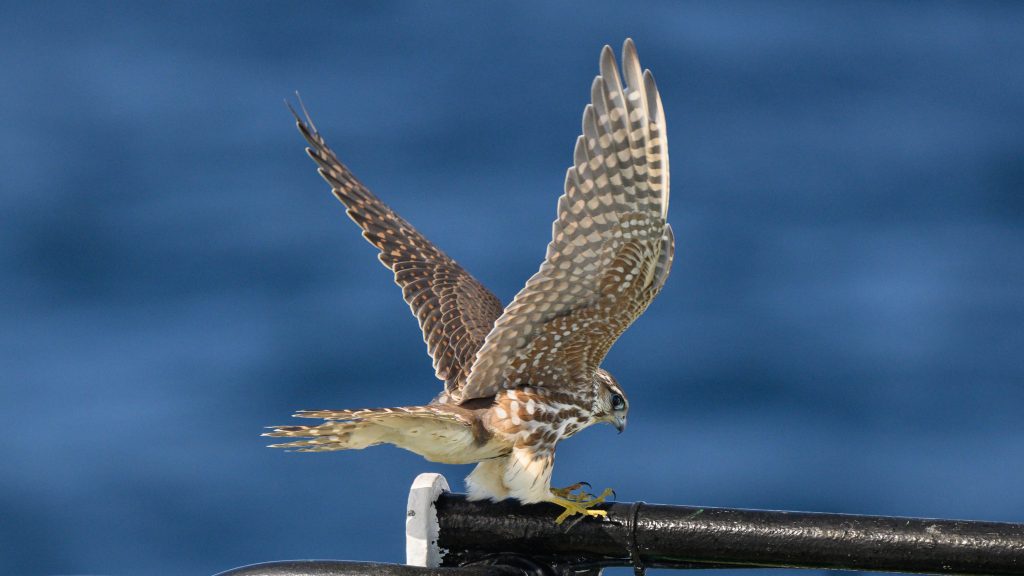
It’s interesting to speculate what it was doing out here. Merlin do migrate so it may just have been heading south and decided that it didn’t like the look a water crossing and turned back. Alternatively, could it have learnt that ships are a potential source of small birds (their prey) and had come out to scout around the ship?
Transect resumed and we continued south. There were now very few birds around, although two distant Grey Phalarope were nice to see – getting almost blasé about them this year. We also had a couple of encounters with Common Dolphin, both energetically leaping in towards the bow.

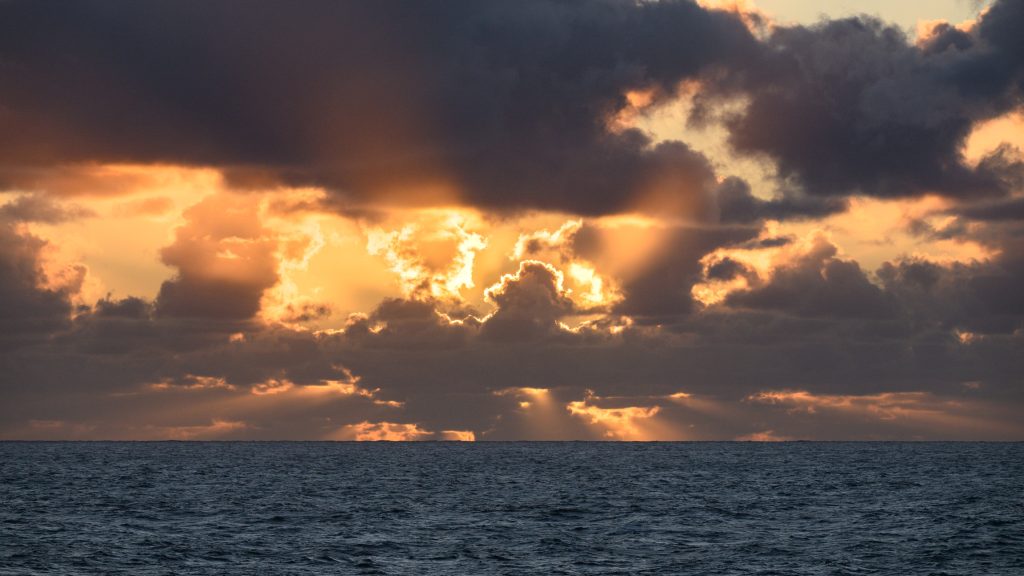
We finished the transect just in time for dinner – a rare treat to have a relaxed meal – and moved on to start the next transect. We managed 35 minutes before the sea got too dark as the sun headed towards the horizon. We’ll resume here the following morning.
Species recorded
Marine animals
- Bottlenose Dolphin 12
- Common Dolphin 296
- Tuna sp. 8
Seabirds
- Auk sp. 441
- Balearic Shearwater 2
- Gannet 518
- Great Black-backed Gull 10
- Great Skua 3
- Guillemot 73
- Herring Gull 7
- Kittiwake 72
- Lesser Black-backed Gull 8
- Manx Shearwater 40
- Mediterranean Gull 1
- Puffin 19
- Razorbill 58
- Sabine’s Gull 1
- Storm Petrel 42
- Sooty Shearwater 10
- Grey Phalarope 3
- Black-headed Gull 1
- Leach’s Petrel 1
- Commic Tern 1
- Shag 3
- Skua sp. 1
Terrestrial Birds
- Black Redstart 1
- Merlin 1
- Siskin 5