Monday 12 October
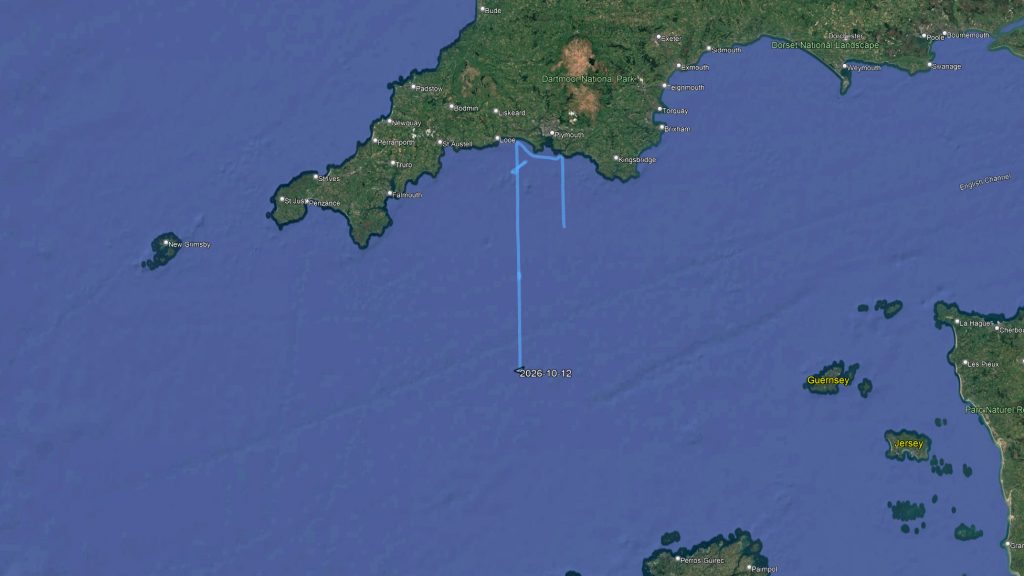
It’s really not what you want to see when you get to the bridge – or rather don’t see – fog and a visibility of around 500m We were about 30km south of Plymouth ready to run the remaining section of the transect from the previous day but it looked like it would be a struggle to see anything. Unfortunately, time is rather precious on the survey, and we certainly don’t have enough to sit around for hours hoping the weather clears, so we had to make a start. We could at least survey as our 300m survey box was visible, there have been occasions on previous Peltics where we had to suspend surveying because you couldn’t see beyond the bow.
Perhaps not surprisingly, things were a little slow but as we neared the coast the cloud lifted a little and sightings increased, especially of Kittiwake. We ended the transect with a flurry of sightings and a very close view of a juvenile Arctic Skua which passed just ahead of the bow.
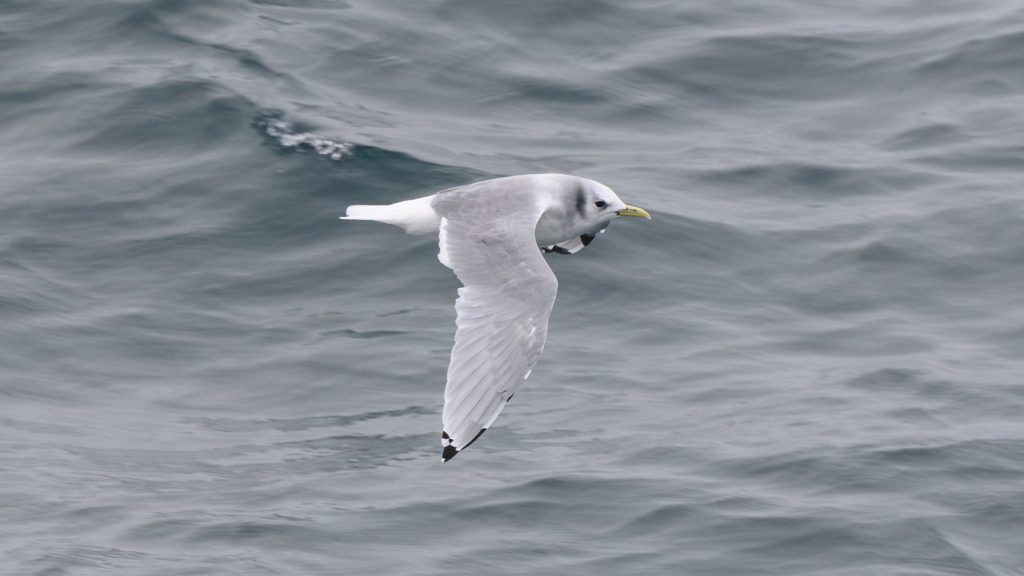
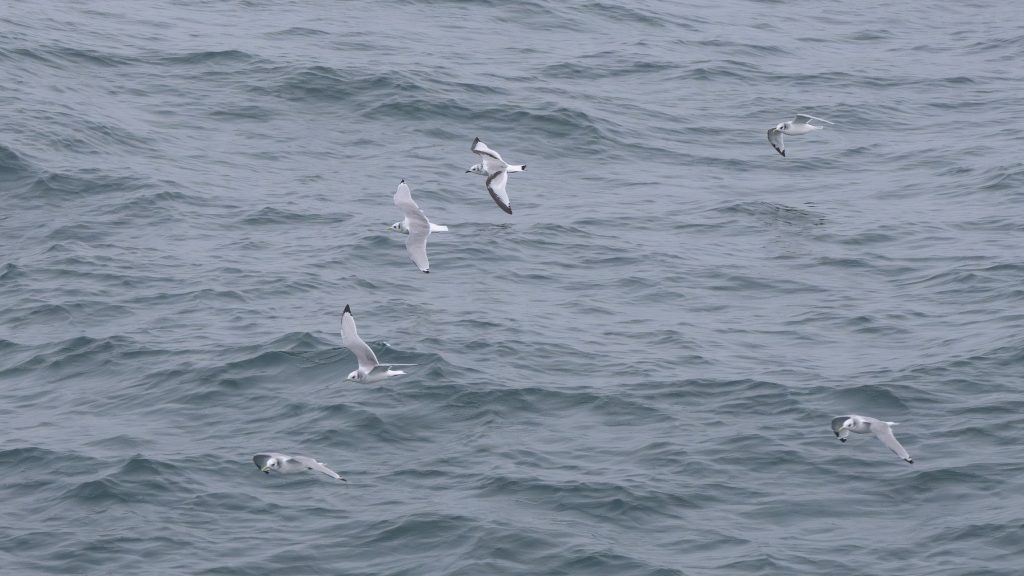
The crossing to the next transect was full of birds, with Kittiwake all over the place, which gave plenty of opportunity to watch this lovely dainty gull. The majority of the birds were still adults with only a few juveniles, suggesting that they may not have had a very good breeding season.

There are almost always Royal Navy or NATO warships around outside of Plymouth, but it was a little surprising to see the Indian Navy frigate Trishul going past.
The start of the next transect was a little frantic with Kittiwake and Gannet criss-crossing ahead of us and then throw in a Balearic Shearwater as well just to complicate matters (we collect extra data for this species). A few kilometres out we passed through the feeding area and things calmed down. We also stopped for a trawl, which gave us a break any way.


Given the number of birds around there were only a few attracted to the net when it was hauled, the natural feeding nearby was obviously a better option. There were around 50 each of Gannet and Kittiwake a handful of Herring and Lesser Black-backed Gull and a solitary Mediterranean Gull. Still the sun was out now and made the Kittiwake look even better. We also saw a handful of Black-headed Gull, although they migrate you don’t often see them out at sea and as that makes them scarce it reminds you that they’re actually very smart birds.
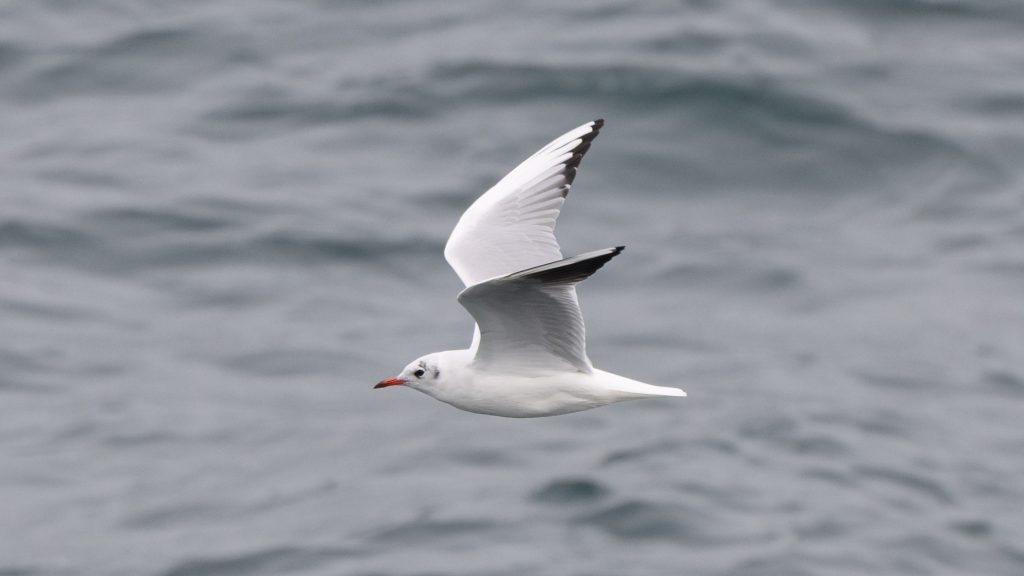
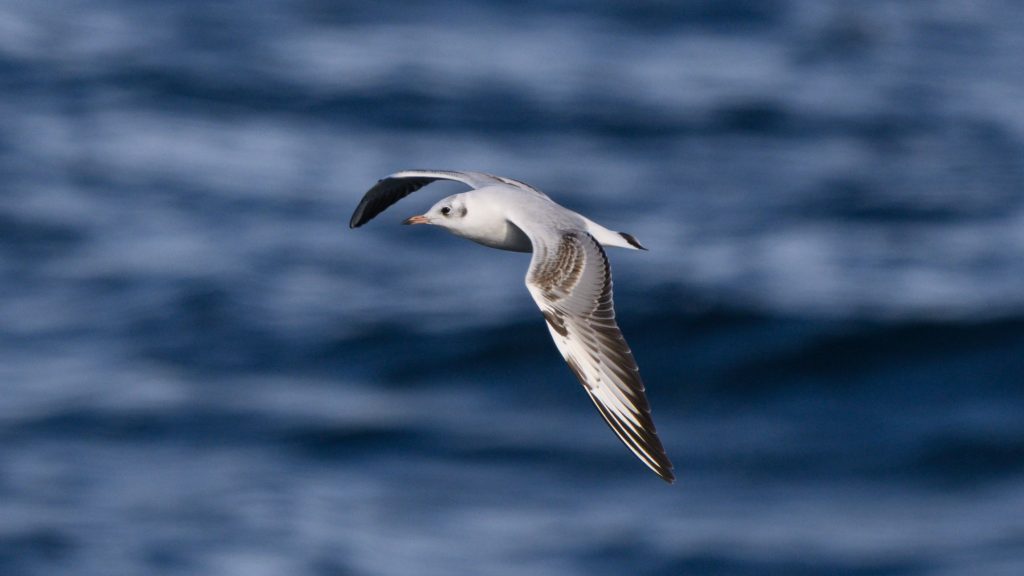
The sun didn’t stay with us for long after resuming the transect and the rest of the day was spent passing through fog patches and occasional drizzle. One minute the visibility would be 10km the next 500m.
It was hard work; there were few birds and long spells with no sightings which makes the transects seem even longer. A few European Storm Petrel brightened things but a glimpse of a petrel flying differently which promptly disappeared off was very frustrating. Occasionally we come across flocks of Great Skua in the Channel and today was another of those days with nine sat together in close proximity – adding to our good start for this species (at least since bird flu at any rate).
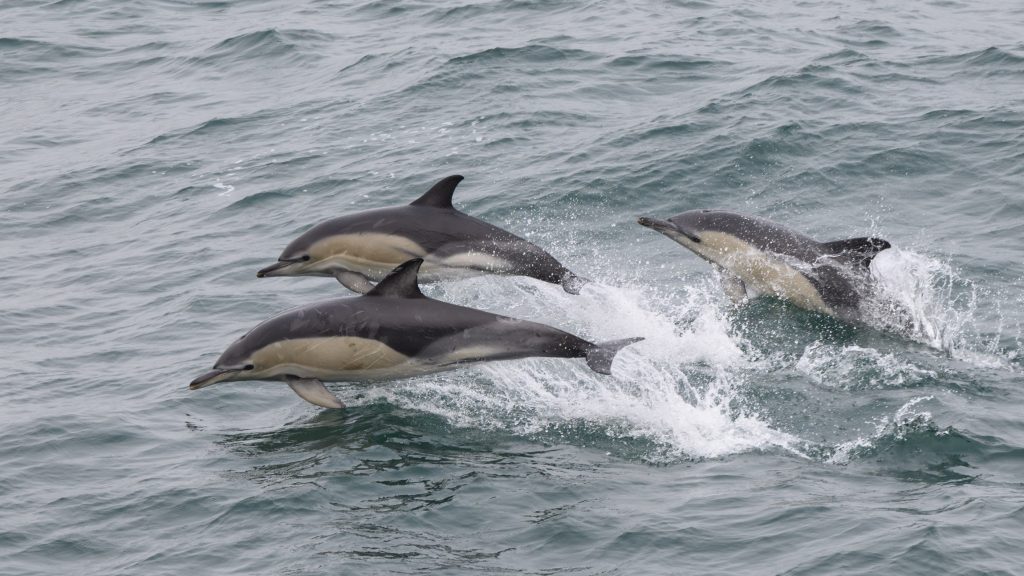
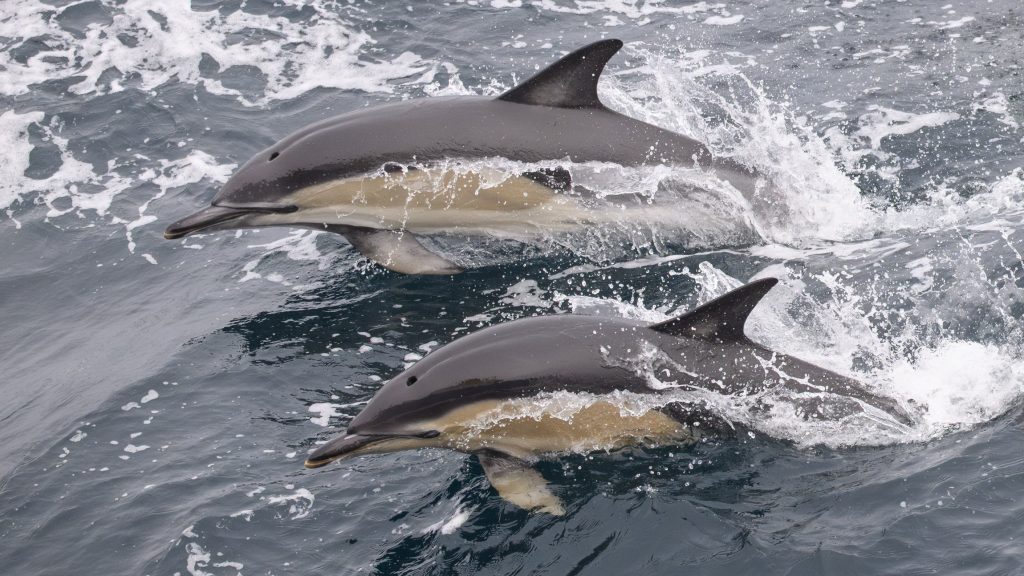
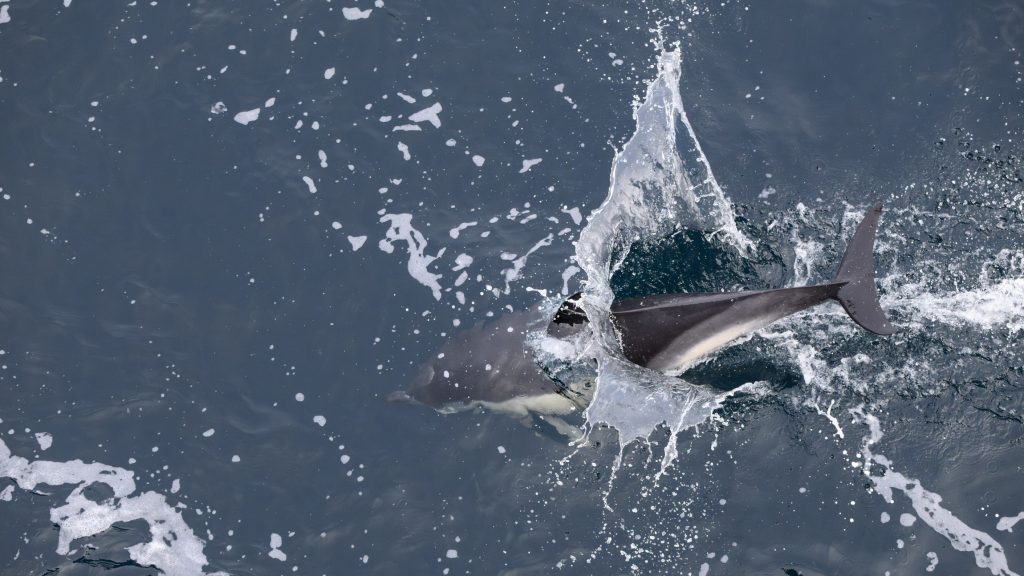
You can also rely on Common Dolphin to lift the spirits too, watching them leaping enthusiastically in towards the bow. We had a total of eight encounters with 73 animals.
It’ll be back on the French side of the Channel for next couple of transects – let’s hope the skies clear a little.
Tuesday 13 October

It’s surprising what impact one or two minutes a day has, that’s how much later the sun rises every morning. On the 5October we started at 07:20, this morning we started at 07:40. Admittedly, the weather had some impact on this, overcast with rain and poor visibility (again!) but start we did. Fortunately, even the simple act of turning to head southeast down the transect helped, as it put the wind on the beam and meant the windscreens were clear.
We had our first dolphin encounter just three minutes after starting when a pod of eight Common Dolphin leapt into the bow followed over the next 20 minutes by another three pods involving 30 animals. There were certainly far more dolphins than seabirds with just a handful of Gannet in the same period. At 08:36 another pod of Common Dolphin appeared in the waves 500m off the port bow, watching them a small black bird caught my eye passing in front of them – a Leach’s Storm Petrel – I nipped onto the bridge wing in the hope of getting a photo only to be faced by a continuous stream of dolphins heading towards us. There were groups of 10-20 or more dolphin popping out of the waves and we estimated there were a minimum of 150 in the pod but there could easily have been more. There were also a very good number of calves in amongst them too.
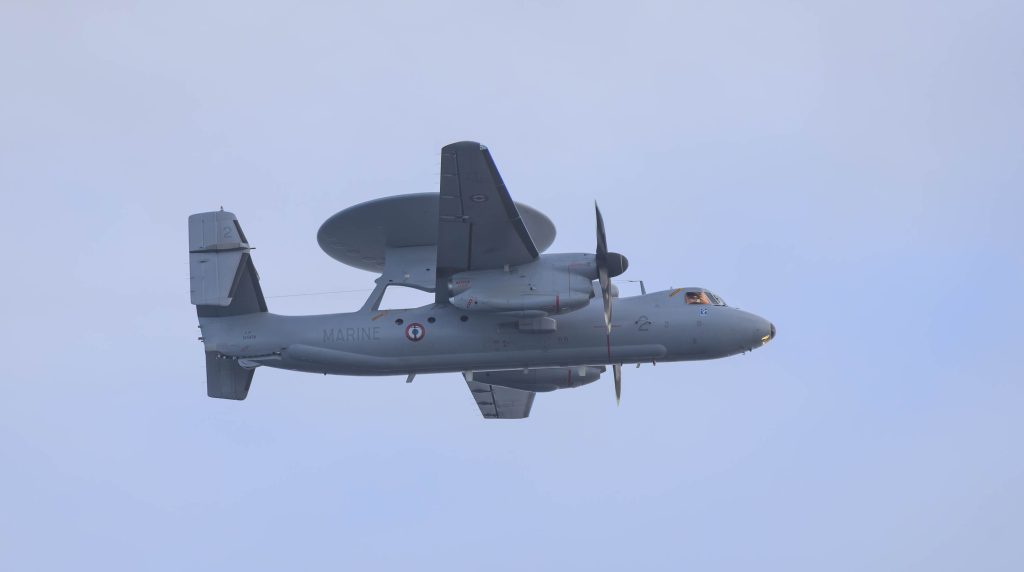
By this time the weather had started to clear and there was blue sky behind us, harbinger of the glare that we would suffer for the rest of the transect. With the lifting clouds we were surprised to see an aircraft approaching at low level, it did two low passes over us – a French Navy Hawkeye maritime surveillance aircraft – you could see the co-pilot eye-balling us from the cockpit. This isn’t the first time we’ve been buzzed by the French Navy.
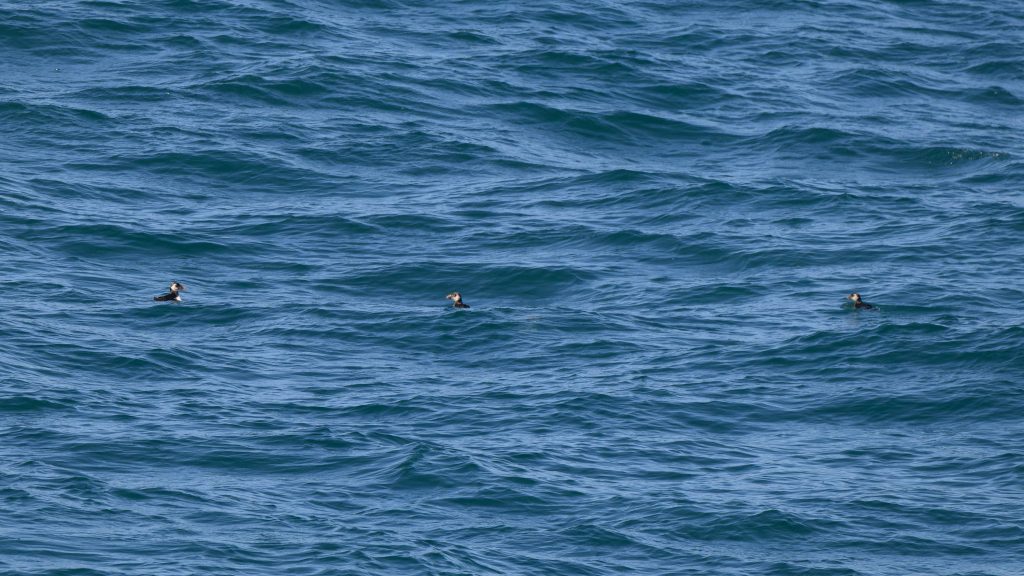
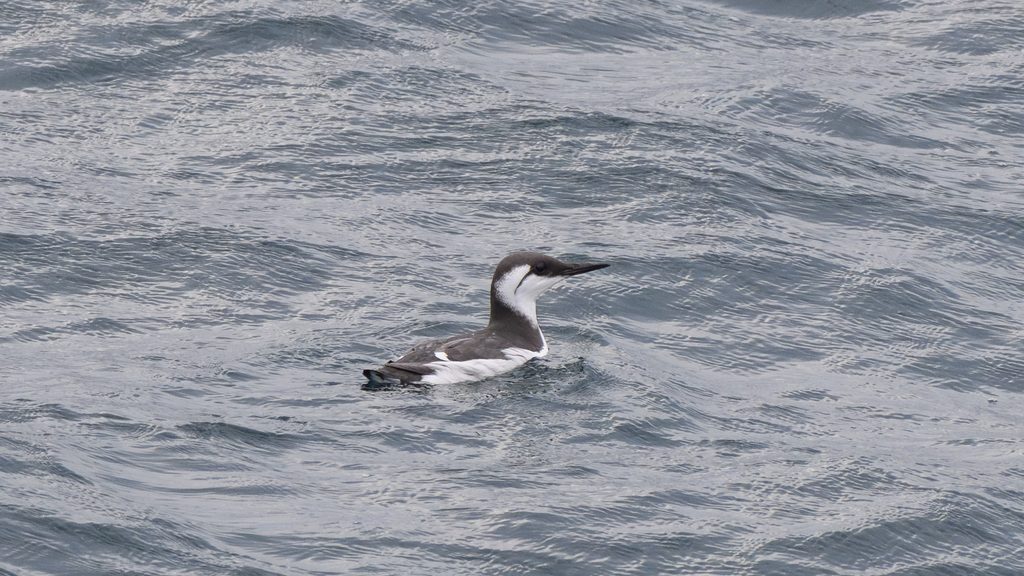
Amazingly, about 20 minutes later we had another Leach’s Storm Petrel, after a spell of 15 minutes without recording a bird. We had obviously used up all our dolphin credit for this transect as we only saw two more small pods in the next three and a half hours. Birds were also at a premium with Gannet, Guillemot and a few Puffin to record.
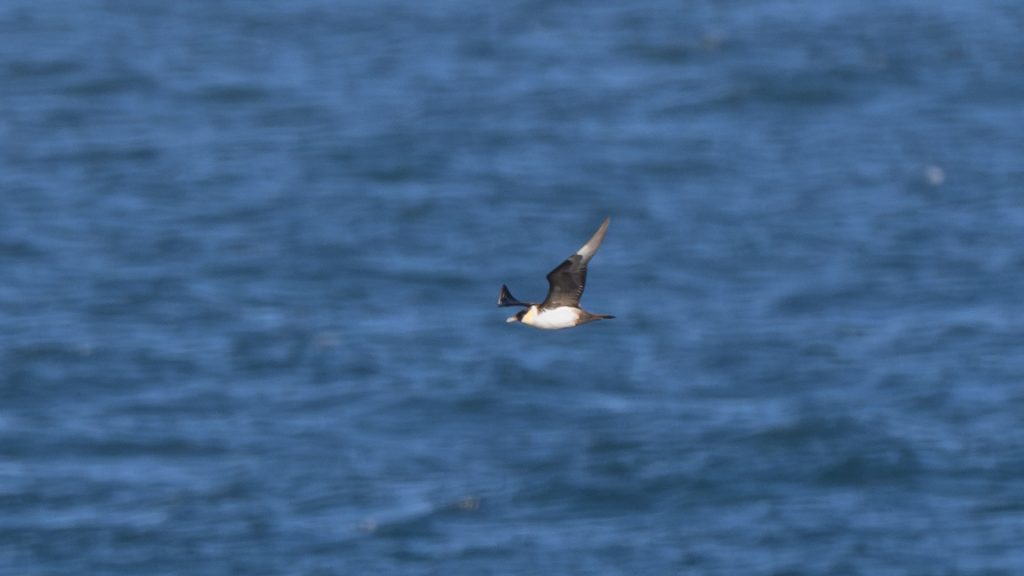
Near the end of the transect, Jeroen, the scientist in charge, popped up to see how we were doing and was standing on the bridge wing when he picked up a Merlin flying past, it’s a couple of years since we’ve seen one on the survey, so a nice spot. A few moments later a smart adult Pomarine Skua flew past – making it a full house on the usual skua species, it was distant so tiny in the photo but gives you the general idea. He’d picked a good time to come up.
We finished the transect close inshore near the Baie de Morlaix east of Roscoff, but instead of heading straight off for the next transect we headed back on ourselves a short distance for a trawl. On the haul there wasn’t a bird in sight until a lone skua turned up, remarkably it was another adult Pomarine Skua. Unlike the first this one put on a good show and in some good light too.
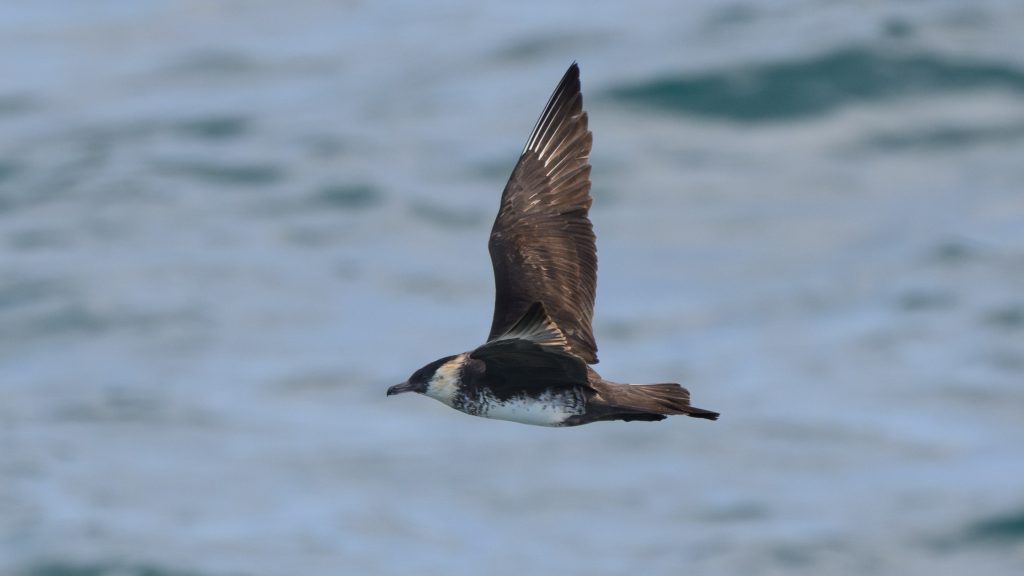
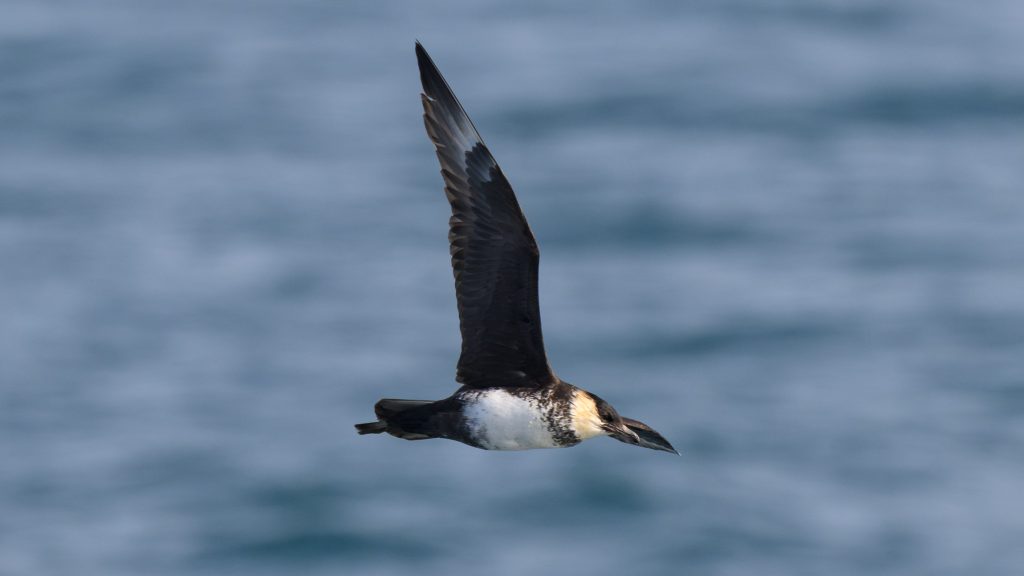
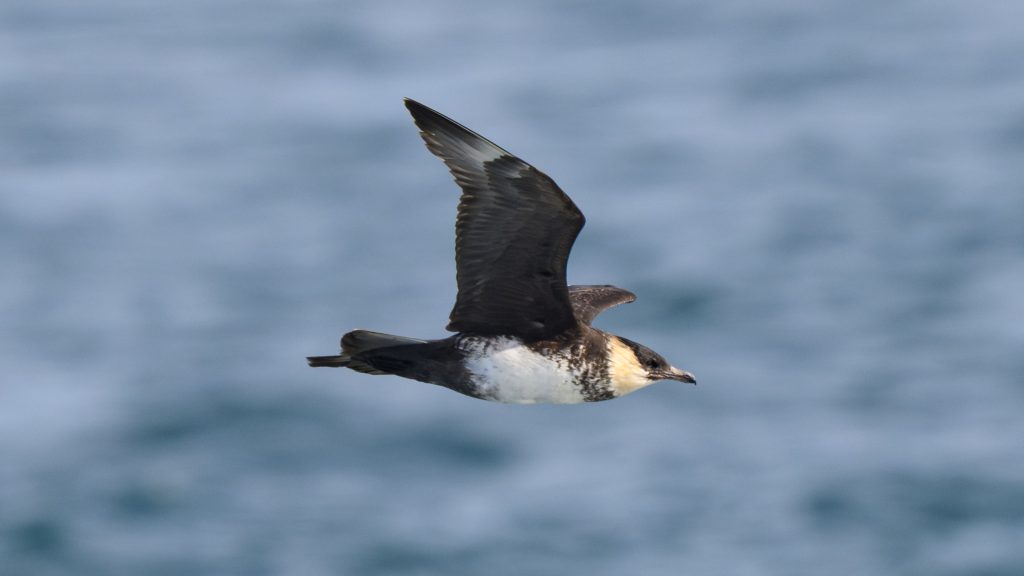
The steam to the start of the next transect was quiet, which was a shame as there was some lovely light. Unfortunately, that lack of birds continued into the transect and it was slow going. A couple of pods of Common Dolphin, the first an impressive 45, including several mothers with calves, in the first half hour got us off to a good start for cetaceans but we then had a two-hour gap until the next. The last hour of the day’s survey made up for it though, with six encounters in the space of 40 minutes, mostly small pods but also one of 30.
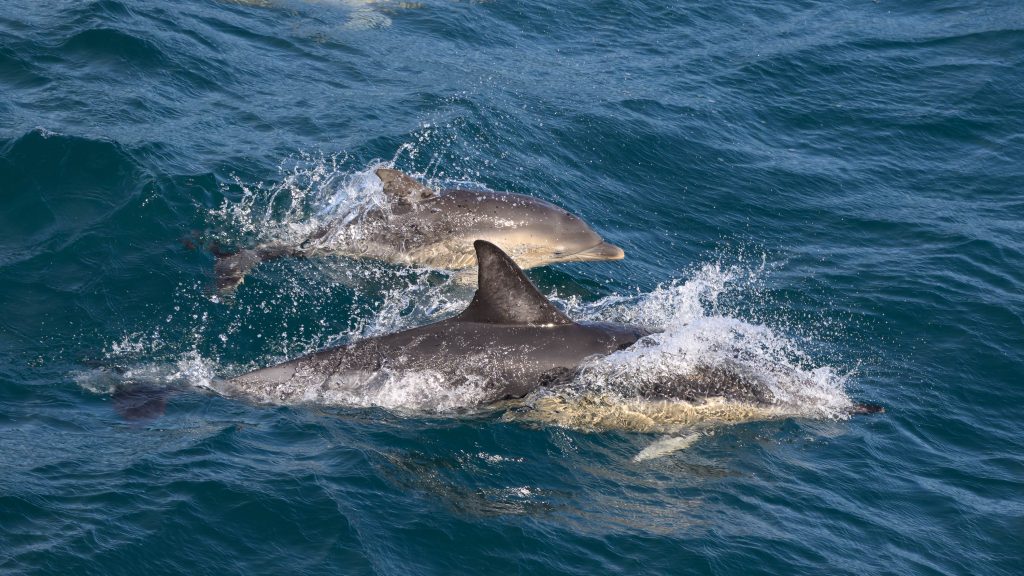
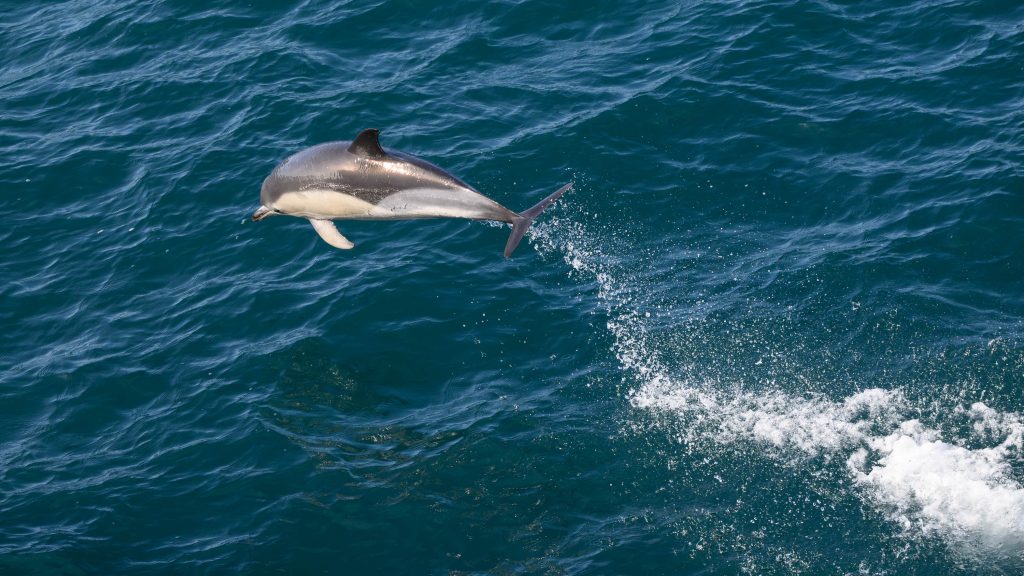

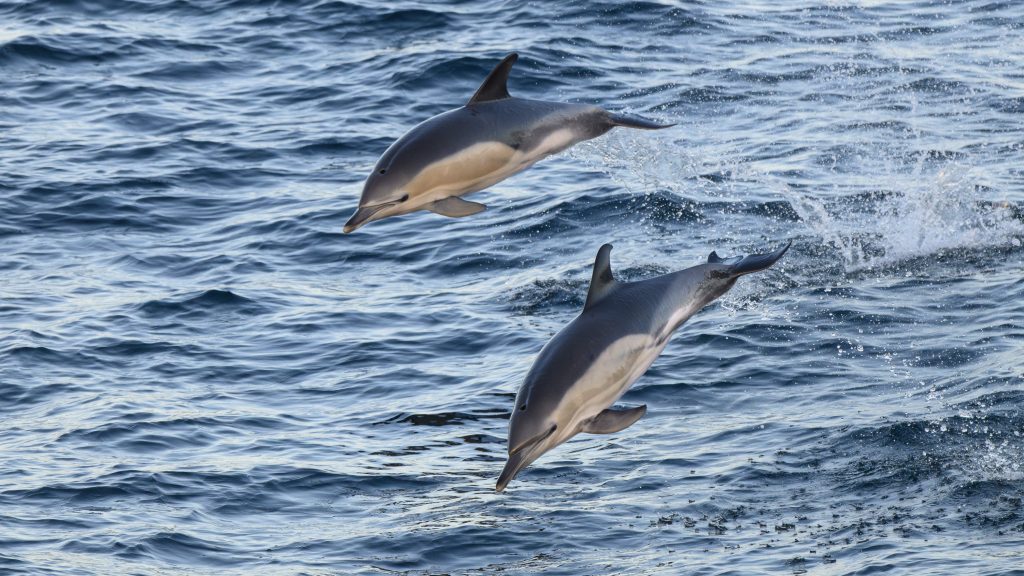
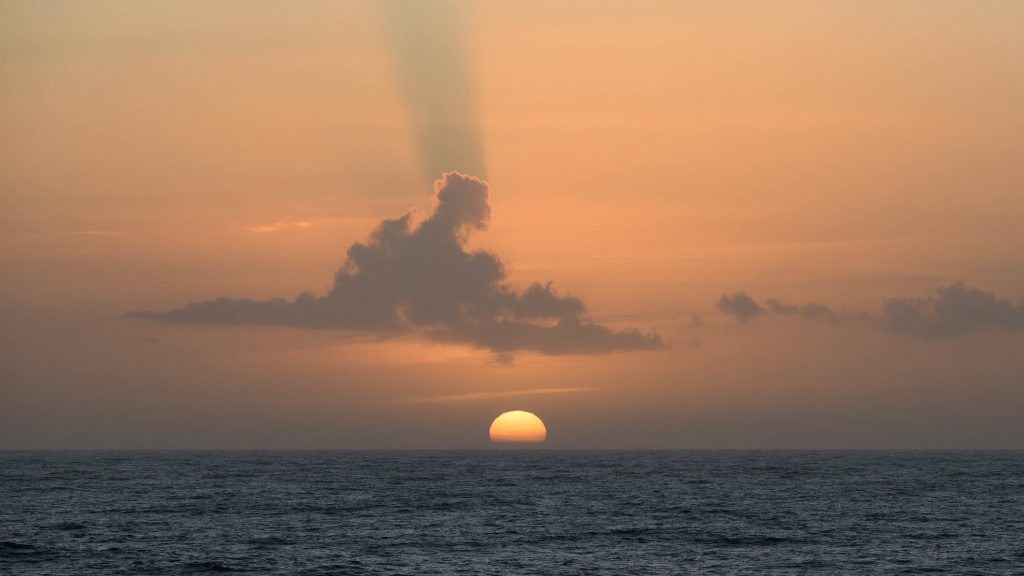
A lovely mellow sunset brought the day to a close and what an impressive day for Common Dolphin, they out-numbered seabirds 314-268 for the day.
Species recorded
Marine mammals
- Common Dolphin 394
- Tuna sp. 2
Seabirds
- Arctic Skua 2
- Auk sp. 90
- Balearic Shearwater 2
- Fulmar 3
- Gannet 243
- Great Black-backed Gull 7
- Great Skua 11
- Guillemot 86
- Herring Gull 4
- Kittiwake 474
- Larus sp. 1
- Lesser Black-backed Gull 3
- Manx Shearwater 66
- Mediterranean Gull 2
- Puffin 7
- Razorbill 73
- Shearwater sp. 1
- Storm Petrel 37
- Black-headed Gull 1
- Leach’s Petrel 2
- Petrel sp. 1
- Commic Tern 1
- Pomarine Skua 1
Terrestrial birds
- Merlin 1
- Meadow Pipit 1